




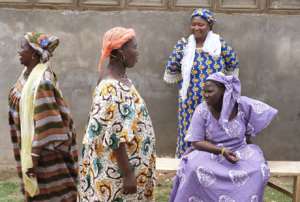
Tamale, March 15, GNA – The Ghana Demographic and Health Survey (GDHS) has revealed that 74.1 per cent of females in the Northern Region cannot read at all, with only 0.7 per cent able to read a whole sentence, while 1.4 per cent can partially read a sentence.
The Survey also revealed that generally, 65 per cent of females in the Region had no formal education at all and only 6.4 per cent had attained more than Senior High School education.
Zangbalun-Bomahe Naa Chief Alhassan Issahaku Amadu, the Regional Population Officer disclosed this at the regional celebration of the 2012 International Women's Day on Wednesday in Tamale.
Organized by the Department of Women (DOW) of the Ministry of Women and Children's Affairs, with support from its development partners, the celebration was under the theme “Connecting Girls, Inspiring Futures, Reducing Rural Poverty”.
Naa Amadu said access to quality education could brighten the future of females in the rural areas and could lead to poverty reduction.
He said, it was critical for females to be empowered through mentorship and modeling to impact positively on their self-esteem, behavior and educational progress.
He stressed the need to create an open door system for leadership development of females and involve them in educational planning at all levels.
“Government need to increase the political will, transparency and accountability in planning and implementation of Girls educational policies”, he said.
Mr I.P.S. Zakari-Saa, Northern Regional Director of DOW said despite the many commitments signed by government at the international level including the Beijing Platform for Action and the Millennium Development Goals that had implications for women's well being, they continued to lag behind their male counterparts in various areas of endeavour.
“Even though there has being significant achievements by women and attitudinal shift in society's thoughts about women's equality and emancipation, there are still issues concerning male dominance”, he said.
Mr Zakari-Saa said women were not significantly represented in equal numbers in business, agriculture, health, politics and many other areas.
Madam Bridget Parwar, Regional Officer of Women in Agricultural Development who delivered a paper titled “Women in Agriculture; A Way of Reducing Rural Poverty", said the Northern Region had about 5000 hectares of land some of which women could use for farming to help reduce poverty.
She said government had initiated many agricultural projects including the block farm system, fertilizer subsidy, agriculture mechanization and also extended credit to farmers and appealed to women to take advantage of these initiatives to generate income to support their families.
GNA

 Creative Arts Agency Board Engages Lands Minister Over Welfare Project for Aged...
 I will rebuild demolished La Pleasure Beach if elected in 2028 to save jobs — Ba...
 Free primary healthcare requires recruitment of more nurses – GRNMA
 Ethiopia's Tigray rebels abandon regional capital as govt advances
 Mahama in Egypt for AU Mid-Year Summit
 SSNIT defends La Beach demolition, cites encroachment and security concerns
 Russia strikes another major bridge across Kyiv's Dnipro river
 Co-pilot on Flydubai flight was banned from flying by Oman for holding extremist...
 Spanish lawmakers vote down affordable housing bills in blow to Sanchez’s govern...


