




Nigerians are heading to the polls for the final round in a lengthy election process marred by violence.
Elections for Nigeria's 36 powerful governors have been delayed in two of the worst-hit states.
A Nigerian human rights group says more than 500 people died when clashes broke out after the presidential polls.
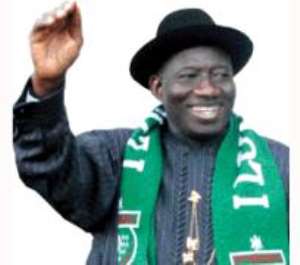
Violence erupted in the north after Goodluck Jonathan, a southern Christian, was declared the winner of the 16 April vote.
Churches were set alight and Muslims were then targeted in revenge attacks. Many Christians had to celebrate Easter in the police and military barracks where they had taken shelter from the riots.
Poverty and religion
For many Nigerians, governors represent the closest embodiment of power many ever see in African's most populous nation of some 150 million people.
Some governors, especially in oil-producing areas, control bigger budgets than those of national governments in some neighbouring West African countries.
The BBC's Caroline Duffield in Lagos says anxiety is high ahead of the polls, with checkpoints on all major roads.
European Union and US diplomats have issued a joint statement sharply criticising those behind violence and warning all of Nigeria's leaders to behave responsibly.
There are fears of intimidation and political thuggery in several areas, especially in the oil-producing Niger Delta, our correspondent says.
At least three people have been killed since Sunday night in a series of bomb attacks blamed on the Boko Haram Islamist group in the north-eastern city of Maiduguri.
A total of 29 states out of 36 are holding their gubernatorial elections. Several delayed federal legislative polls are also taking place.
Five governors only took office last year after winning their legal challenges against the 2007 elections and so new elections will not be held in those areas.
The head of the country's independent election commission, Attahiru Jega, said some Nigerians had paid "the ultimate price" for democracy.
"One way of immortalising them is to ensure that we complete the remaining elections successfully," he said, according to the Associated Press.
As in previous elections, voters are accredited from 0800 local time (0700 GMT), with actual voting due to start at 1230 local time.
Mr Jonathan was appointed to the presidency last year upon the death of incumbent Umaru Yar'Adua, a northern Muslim whom he had served as vice-president.
Many in the north felt the next president should have been from their region, as Mr Yar'Adua died before he could finish his term.
Analysts say the violence has more to do with poverty and economic marginalisation in the north than religion.
The north and south also have cultural, ethnic and linguistic differences.
 Israel must win 'because we’ve got no other choice’, PM Netanyahu tells UN
 Mahama reiterates Ghana's commitment to two-state solution to Palestine-Israel c...
 Ablakwa calls for Return of African Artefacts held abroad
 Madina MP Francis-Xavier Sosu reportedly collapses while speaking at GIMPA
 Kumasi drivers, passengers react to 8% transport fare increase
 I will unite Africa, Caribbean and Latin America into world's biggest trading bl...
 Mahama petitioned to halt Sentuo Airport Garden City construction after sod cutt...
 Government should not fund the $4 billion Accra-Kumasi Expressway project — Alan
 Democracy must deliver tangible social benefits to citizens – Mahama
 Court to rule on bail applications of six accused in 3.9-tonne cocaine seized in...


