




The government is embarking on an ambitious but herculean job to reduce the menace of corruption in the country’s administrative system.
It has consequently tasked a 24-member Working Group comprising representatives of government, parliament, private sector, civil society organisations and the judicial service to roll out a 10-year action plan for consideration by government.
The Commission on Human Rights and Administrative Justice (CHRAJ) is currently facilitating a workshop at Elmina in the Central Region to collate views and make suggestions on how to establish and co-ordinate a systematic approach of developing a National Anti-Corruption Plan (NACAP) that would help enforce laws to ensure financial accountability and eliminate loopholes in the country's legal act.
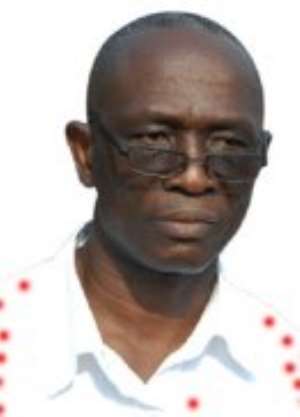
The Director of Legal Investigations at CHRAJ, Mr Joseph Whittal, said although corruption throughout the world was a threat to the moral, economic and social well-being of people, efforts to fight it had failed because it did not effectively delve into the root causes of corruption.
He attributes the causes of corruption to economic political, social and cultural factors, as well as to the weak enforcement of laws and regulations, weak institutions and lack of political will to fight corruption.
The destructive phenomenon of corruption and its apparent pervasiveness, both perceived and experienced, is perhaps one of the drawbacks of the developing countries to achieve economic prosperity.
Since 2006, Ghana's score and ranking on the Transparency International Corruption Perceptions Index has improved slightly. However, there is a growing perception in Ghana that government-related corruption is on the rise.
A research by Transparency International (TI) showed that 31 per cent of Ghanaians considered political parties very corrupt and cited the recent payment of exorbitant filing fees by political aspirants as a factor in deepening the country's political woes and destroying the hope of seeing an end to political corruption.
It revealed that there had been 63 per cent instances where security agencies had demanded bribes before providing services and another 32 per cent instances where bribes had been paid for the acquisition of permits and licence.
Mr Whittal did not spare some of the country’s business operators; he accused the private sector of contributing and facilitating corruption in the country.
The legal Investigations Director of Ghana’s anti-corruption body cited a survey by the World Bank that showed that 39 per cent of private firms make informal payments to public officials while 61 per cent give gifts to secure government contracts.
According to him, a recent survey by Ghana Integrity Initiative (GII), the local chapter of Transparency International, showed that Ghanaians had low rating for state agencies like the security, revenue collection, Metropolitan, Municipal and District Assemblies (MMDAs) in terms of honesty and integrity and a whopping 90 per cent of urban dwellers considered corruption as a serious problem.
Athough Ghana is not a signatory to the OECD Convention on Combating Bribery, it has taken steps to amend laws on public financial administration and public procurement.
The public procurement law, passed in January 2004, sought to harmonise the many public procurement guidelines used in the country and also to bring public procurement into conformity with World Trade Organisation standards.
The law aimed to improve accountability, value for money, transparency and efficiency in the use of public resources.
However, some in civil society have criticised the law as inadequate. The government, in conjunction with civil society representatives, has drafted a Freedom of Information bill, which will allow greater access to public information. The bill is currently before Parliament.
Notwithstanding the new procurement law, companies cannot expect complete transparency in locally funded contracts. There continue to be allegations of corruption in the tender process and the government has in the past set aside international tender awards in the name of national interest.
There are reports that businesses ask for 'favours' from contacts in Ghana, in return for facilitating business transactions.
The Government has publicly committed to ensuring that government officials do not use their positions to enrich themselves.
Official salaries, however, are modest, especially for low-level government employees, and such employees have been known to ask for a 'dash' (tip) in return for assisting with licence and permit applications.
Among other things, the Commission on Human Rights and Administrative Justice is charged with investigating all instances of alleged and suspected corruption and the misappropriation of public funds by officials.
The Commission is also authorised to take appropriate steps, including providing reports to the Attorney General and the Auditor-General, in response to such investigations.
The Commission has a mandate to prosecute alleged offenders when there is sufficient evidence to initiate legal actions.
The Commission, however, is under-resourced and few prosecutions have been made since its inception. It is yet to see how this new action plan will help curb the spate of corruption in Ghana. For now, time will tell, just time.
 'We will upgrade Ho Teaching Hospital to be worthy of the name of a teaching hos...
 'If you are a man of principle and have done nothing wrong please come home' – M...
 'Ghanaians gave me one additional term; it’s exactly what the constitution says'...
 EOCO questioned Miracles Aboagye over GH¢5million, not GH¢55million – Sammi Awuk...
 'I do not take enjoyment, pride in prosecuting people if they have done no wrong...
 Father arrested for allegedly forcing her 16-year-old daughter to sleep with men...
 Female ward assistant in court over alleged GH¢1.7million military recruitment s...
 "He stood for peace, good neighborliness" — Bawku Naba mourns demise of Yaa Naa ...
 Mahama targets completion of Ho Sports Stadium before Ghana's 70th anniversary

