




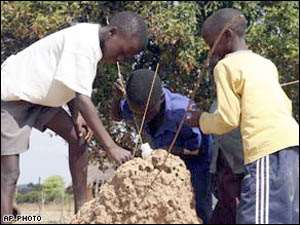
Katy Phiri, who is in her 70s, picks up single corn kernels spilled from trucks that ferry the harvest to market. She says she hasn't eaten for three days. Rebecca Chipika, a child of 9, prods a stick into a termite mound to draw out insects. She sweeps them into a bag for her family's evening meal.
These scenes from a food catastrophe are unfolding in Doma, a district of rural Zimbabwe where journalists rarely venture. It's a stronghold of President Robert Mugabe's party and his enforcers and informants are everywhere.
At a school for villagers visited by The Associated Press, enrollment is down to four pupils from 20. The teachers still willing to work in this once thriving farming and mining district 160 miles (250 kilometers) northeast of Harare, the capital, say parents pay them in corn, cooking oil, goats or chickens. One trip by bus to the nearest bank to draw their government salaries costs more than teachers earn in a month.
Meanwhile, the country is in political paralysis following disputed elections in March. A power-sharing deal signed two months ago has stalled over the allocation of ministries between Mugabe's party and opposition leader Morgan Tsvangirai's Movement for Democratic Change.
Shingirayi Chiyamite is a trader from Harare who brings household goods to the countryside to barter for crops. He says a 12-inch bar of laundry soap exchanges for 22 pounds of corn. He crisscrosses the land in search of the few villages that have corn to spare, hauls his purchases to the highway and hitchhikes back to the city. Some of the corn will feed his family, the rest he sells. He is constantly on the move.
"If you rest, you starve," he says.
Information is almost as scarce as food. Survival is the obsession.
Cell phones operate only sporadically. State radio has not been received since the district relay beacon broke down eight months ago.
Mhangura, a town of about 3,000 people, has had no running water for months. Power outages happen daily because of a lack of cash to maintain utilities. People walk about three miles to a dam to fill pails or gasoline cans.
Some of the scarce water is used to embalm the dead in wet sand, a centuries-old African tradition to preserve a body until family members gather for the burial.
CNN

 GPRTU, GRTCC announce new fares for trotros, taxis and inter-city services as 8%...
 GES orders SHS, SHTS heads to stop collecting unauthorised fees and levies
 Damanko residents demand immediate commissioning of abandoned E-Block SHS projec...
 “I’m not dead” – Kwame Dzokoto breaks silence on rumours
 Many Ghanaians can’t wait to vote NDC govt out over ‘Rambo-style’ arrests – Akim...
 22 mortuaries in Ashanti Region operating without licences — MoFFA
 EOCO clarifies Nana Baffour Awuah's parliamentary immunity amid attempted arrest
 Ghana Jollof case: High Court adjourns Salomey Bafoh's bail application to Septe...
 Osahen Afenyo-Markin hands over as head of Ghana’s delegation to ECOWAS Parliame...


