




In order to deny States the right to control excavations on their land and to prevent them from claiming ownership of artefacts found in their countries, James Cuno, Director of the Art Institute of Chicago, in his new book, Who owns antiquity? Museums and the battle over our ancient heritage, goes so far as to deny any continuity between the peoples of present States and those of ancient civilizations. He denies that the present-day Egyptians have any links with ancient Egyptians:
“What is the relationship between, say, modern Egypt and the antiquities that were part of the land's Pharaonic past? The people of modern-day Cairo do not speak the language of the ancient Egyptians, do not practice their religion, do not make their art, wear their dress, eat their food, or play their music, and do not adhere to the same kind of laws or form of government the ancient Egyptians did.” (1) This astonishing declaration is typical of the controversial pronouncements made by Cuno in his book which can be easily proven to be unfounded or mere speculation and in any case, not very helpful in finding workable solutions to present controversies concerning the retention of illegally exported or stolen cultural objects. Some of his statements are of such a nature that one wonders whether they are worthy of detailed examination. They are probably better left uncommented but since they come from a director of one of the most important museums in the Western world, they cannot be simply ignored. Take the statement that the present Egyptians do not eat the same food as ancient Egyptians. Is this serious? When Zahi Hawass claims the return of the Rosetta Stone or the bust of Nefertiti, should we examine his diet in order to establish his links to ancient Egypt which permit him to claim on behalf of present-day Egypt? Does our consumption of particular food establish our links or affinity with other peoples? Does the consumption of rice by many Africans establish in any way their links to Asians? What about MacDonald's food which is wide spread in our world, does that make all of us Americans or one people? What about variations in food consumption patterns within a country along north/south lines or class lines? So who cares whether Zahi Hawass eats the same food as Tutankhamen did? For most of us, it is enough to know that they are both Egyptians and the one can legitimately claim the cultural achievements of the other on behalf of the Egyptian peoples of to-day.
Similarly, the other factors mentioned by Cuno, language, dress, religion, and music are not decisive for determining whether a State has a right to artefacts found on its soil. Sharing the same religion, music or language with a people does not help to settle this issue. Many Nigerians and Ghanaians share the same religion, music and language with the British. Does this give them any rights to Stonehenge? Cuno should have reflected a little on the multicultural and multireligious States of Africa to realize that within the same State or even within the same family there are different religions and languages and that the rights of succession are not affected or determined by these factors.
Whilst Cuno denies to States like Egypt the right of ownership, he seems to be willing and prepared to share with them artefacts found on their soil. But what is the basis of this sharing? Cuno does not explain how he comes to this position. A State which has no right of ownership is accorded by Cuno a right to share. Does this constitute ownership in that part which the State receives from partage? Is the right to partage based on Cuno's idea that antiquities do not belong to the State on whose soil they are found but belong to all of us? If so, in what proportions? If Egypt and Cuno's Art Institute were to share in a particular excavation, what are the rights of other States and institutions in the objects which belong to all of us?
Cuno seeks to return to the past. His nostalgia for the past freedom of the powerful nations and their museums is expressed clearly in his introduction to the book:
“For many decades in the late nineteenth and early twentieth centuries, archaeological finds were shared between the excavating party and the local, host country through partage. This is how the great Ghandaran collection got to the Musée Guimet in Paris (shared with Afghanistan), the Assyrian collection got to the British Museum in London (shared with Iraq, before the formation of the modern, independent government of Iraq), the Lydian materials from Sardis got to the Metropolitan Museum of Art in New York (shared with the Ottoman Empire, now Turkey), the Egyptian collection got to the Museum of Fine Arts in Boston, a number of collections got to the State Hermitage Museum in St. Petersburg, and of course how the great collections were formed at the university archaeological museums, like the Peabody Museums at Harvard and Yale, the Oriental Institute at the University of Chicago, and the University Museum at the University of Pennsylvania. But this principle is no longer in practice. With the surge in nationalism in the middle decades of the twentieth century, it has become almost impossible to share archaeological finds. All such finds belong to the host nation and are its property. Only the state can authorize the removal of an archaeological artifact to another country, and it almost never does. Even when one lends antiquities abroad, it is for severely restricted periods of time. Antiquities are cultural property, and cultural property is defined and controlled by the state for the benefit of the state.” (2)
Does Cuno expect people outside the narrow circle of his friends and supporters in the Western world to share his views about the benefits of the partage system which allowed the Western world great freedom of choice in antiquities and deprived countries such as Egypt of their cultural treasures such as the Rosetta Stone, now in the British Museum and the bust of Nefertiti, now in the Alte Museum in Berlin? The partage system allowed the rich countries which financed many of the exploration and excavation of archaeological sites to regard the countries of these sites, so called “source countries” as some sort of archaeological supermarket. Would Cuno present such an argument to the Egyptians, including Zahi Hawass, the Secretary-General of the Egyptian Supreme Council on Antiquities under whose leadership Egypt has recovered a lot of stolen objects and has also regained control over what leaves Egypt?
Cuno is understandably worried that his museum and the other big museums can no longer take whatever they want from other countries. His reasoning is strange and somehow always ends with the conclusion that stolen objects should be left where they are, i.e. in the United States and in Europe. Take for example his discussion on what he calls Merryman's second principle:
“Merryman's second principle - the quest for knowledge - would ask us to consider whether it serves our best interest in searching for knowledge to have the antiquity remain in its presumed country of origin, or to be housed elsewhere. In other words, is there a compelling reason, in terms of research and scholarship, why an antiquity should be in a particular place? One can imagine cases when it makes most sense for an antiquity to be with like things: similar artifacts from the same culture and time period. But of course this could mean that a newly discovered Ottoman ceramic ought to be in New York rather than in Istanbul, or a Khmer sculpture in Paris rather than in Phnom Penh. One can also imagine cases when it makes sense for an antiquity to be with similar artifacts from different cultures: Han Chinese ceramics with Roman and Mayan ceramics in London, and Greek classical bronzes with Han bronzes and even much later Benin and Italian Renaissance bronzes in New York. Why should we want to see an antiquity only within the country of its presumed origin? Why does it have its greatest meaning there? Why shouldn't we want to see the art and antiquities of China, for example, also in New Delhi, Athens, Rome, or Mexico City (or London or Chicago, for that matter) with examples of comparable cultural artifacts from India, Greece, Rome, and Mesoamerica?” (3)
Cuno seems to be aware that much of what he writes in his book will appear to support the claims made for the so-called “universal museums” now re-baptized “encyclopaedic museums”. These are the imperialist museums such as British Museum, Louvre, Art Institute of Chicago, Musee Guimet, Ethnology Museum, Berlin which amassed immense number of objects largely through the colonial system and now feel handicapped or inhibited by national laws in the so-called source countries from filling their museums with more cultural objects:
“Some readers will interpret my arguments as favoring museums in the developed, first world at the expense of those in the developing third world. Nothing could be farther from the truth. That encyclopedic museums are currently predominantly in the developed world is not an argument against the idea of the encyclopedic museum. Indeed, the promise of the encyclopaedic museum is an argument for their being everywhere, in both the developed and developing world, wherever people are broadly curious about our common past, from New York to London, Berlin, Istanbul, Cairo, Lagos ,Mumbai, and Teheran, Beijing: everywhere.” (4)
The mind of Cuno works in a way many of us may not find easy to follow. He himself suspects that readers may consider his arguments as a plea and defence for the so-called universal museum which has, by all accounts, been only possible in a colonial situation which allowed some States to take whatever cultural objects they wanted from others. This has been the historical experience of humankind in the last two thousand years. Cuno does not advance any argument or information to counteract this perception. In answer to criticisms that all the so-called “universal museums” are in the West, Cuno suggests that we create “universal museums” in Lagos and elsewhere! Will the Nigerian Army be able to invade Britain and collect some thousands of cultural objects in Britain which we would need for a truly universal museum? Where in Germany could we send our forces to collect whatever we thought could be useful? And how do we secure some of the cultural objects now in the USA and in France? The raising of these questions is enough to demonstrate the inherent link between the “universal museum” and the use of force which facilitated these huge collections in the imperialist and colonial days and the clear impossibility of repeating this historical phenomenon in our days. How does Cuno read colonial history and all the complications and traumatic events of empire-building? There is no way Nigeria could establish a “universal museum” in our days. The Nigerians would be happy if they could establish a Nigerian museum with most of the stolen Nigerian cultural objects, including the Benin bronzes, the Nok terracotta, the Ife objects etc back to where they belong. There is no desire on the part of the African people to steal cultural objects from other lands. We just want our stolen cultural icons returned. We have no desire to inflict on other peoples the atrocities we experienced for having been in possession of rich raw materials and precious minerals. The world of the 21st Century is different from that of the 19th Century. This is what Cuno does not easily accept. His friend, Neil MacGregor, Director, British Museum finds the history of the British Empire such a handicap that he thinks we should re-write history. Cuno is advising us to do what the West did, without showing any sign of regret or repentance for those thousands of lives lost in the process of acquisition. The imperialist enterprise does not appear to him to be wrong and he recommends it to victims of imperialism. We shall not follow him.
Most of Cuno's statements are controversial but some also either misrepresent the truth or at least convey an image that is far from what most scholars would recognize as accurate. Take for instance this statement about Benin:
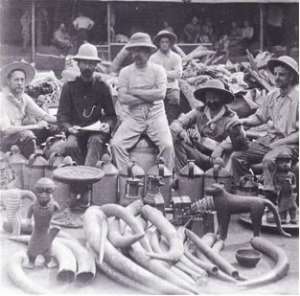
“In the late nineteenth century, the Benin coast was dominated by the British. In 1897, violence erupted between the British and forces loyal to the Benin king. As retribution for the death of members of the British mission, a punitive Exhibition (expedition?) was organized, which occupied the royal city of Benin in 1897 and led to the removal of hundreds of Benin plaques, brass sculptures, and ivory tusks to Britain. The British Museum acquired a number of them and the rest were distributed throughout Europe, mostly to museum collections in Germany and Austria, while a few made their way to the United States, including this one in the Art Institute, which was acquired by the museum in 1933.” (5)
Almost every word here requires elaboration in order to obtain the full picture of the nefarious invasion of Benin in 1897. The impression is given by the first sentence that the situation in the Benin coast had been accepted by all as a British territory or, at least, an area of legitimate British control. On the contrary, the Oba of Benin had been resisting British attempts to gain full control of the area, including Benin and this is what led to eventual British invasion. The ambush of the British force under Captain Phillips which was sent to surprise Benin and overthrow the Oba is described as “violence erupted”, like some skirmishes in a Chicago neighbourhood between the police and some gangsters. The attack on Benin City, the looting of thousands of cultural objects, the burning of the city, the execution of the Oba's advisers, the exile of the Oba are all left out. Cuno writes about “removal of hundreds of Benin plaques” etc. when his sources must have informed him that thousands of objects were stolen. We are informed that “The British Museum acquired a number of them and the rest were distributed throughout Europe” to museum collections. The fact that the British Foreign Office sold these objects is entirely suppressed and, of course, there is no mention of the fact that the British Museum has some 1000 Benin bronzes, the Ethnology Museum, Berlin has some 700 and the Ethnology Museum of Vienna has some 300 pieces. It seems to me there is here a deliberate attempt to hide the violent nature of the British invasion and the commercial motives. Cuno obviously does not want to admit that the „universal museum” has so far been realized only with the use of excessive force. He of course does not refer to the French, German and British colonial histories.
Throughout his book, Cuno constantly attacks those who seek the restitution of their cultural objects as nationalist retentionists who are motivated by political ambitions:
“Nationalist retentionist cultural property laws segregate the world's cultural property within the borders of modern nation-states. Most often, as I have discussed them in this book such laws are focussed on antiquities; that is, on works of art made long before there were nations. National and international laws, regulations, and agreements typically define antiquities as works of art made at least 150 years ago. They claim antiquities found(or thought to have been found) within their national borders as a nation's patrimony, as important to that nation's identity and esteem, and not to our understanding of the world. Quite explicitly, they claim them as a nation's property, as bearing the imprint of a national identity.” (6)
It is really remarkable that Cuno considers all who seek the return or retention of antiquities in the countries where they are found as nationalist retentionists and politically motivated. He seems incapable of envisaging that there are some of us who believe, as a matter of justice, that every country should have control over the artefacts that are found in its territory and should be in a position to determine what goes out and that those objects that have been illegally or irregularly taken out should be returned. Some of us believe that Egypt should control all artefacts found on its territory and those artefacts, like the Rosetta stone or the bust of Nefertiti which were illegally or surreptitiously exported should be returned. Does this make us “nationalist retentionists” even though we are not Egyptians? Or are we nationalists of no nation? Could it be that we are more internationalist than Cuno and co who seek to retain stolen cultural objects in London, Paris, New York, Chicago and Berlin?
Can anyone explain why the large museums, which have more objects than they can display, which cannot properly catalogue the thousands of objects lying in their depots, many of them still in the original packing materials and which constantly complain about not having enough space for their objects, still want to acquire more objects? Does anyone know of any large museum that has issued a catalogue of all its African objects? This has not been done because it will be a gigantic and expensive operation. Nor have the museums, despite all the talk about digitalization, been able to put much of their objects on the web for general consultation. Cuno criticises the 1970 Convention for supporting States in hoarding cultural property: “the Convention condones and supports the widespread practice of over-retention or, less politely, hoarding of cultural property.” (7)
One really wonders what kind of research or reflection Cuno did before making such a statement which surely applies more to the British Museum and the other “universal museums” than to museums in the source countries some of which do not even have many of their own cultural objects because they have mostly been shipped off to Britain and the United States. The British Museum, for example, has more Benin bronzes than the museums in Benin City or Lagos. The Ethnology Museum in Berlin has also more Benin bronzes than Nigeria, the Musée du Quai Branly, Paris and the Metropolitan Museum of Art, New York have all more African cultural objects than most museums in Africa. So who is hoarding? Those who have less or those who cannot even count what they have?
According to a US study, the American museums are unable to keep the precious objects and documents in their collections in acceptable conditions and have hardly any plans for emergency situations. (8) These museums may in the end prove to be a very wasteful and expensive enterprise for mankind, in terms of the loss of human lives in the acquisition process, costs of maintenance and the lack of proper conservatory methods leading to unnecessary loss of objects.
Cuno does not spare the archaeologists who, generally, are in favour of regulated excavations and do support laws which give a State control over artefacts found on its soil. Unlike Cuno, the archaeologists have no sympathy for looters and plunderers. They want to see archaeological objects in their location before the plunders get their hands on them and sell them to museums in Europe and America. Cuno thinks Western archaeologists have all too easily succumbed to the demands of nationalist laws, regulations and even encouraged them:
“Why do archaeologists accept this? Because they are dependent on nation-states to do their work. Nation-states hold the goods - antiquities and archaeological sites as national cultural property and cultural patrimony - and they control access to them. The history of archaeology as a discipline is deeply embedded in the history of politics of the regions within which archaeology has been practised. And some would say there is no way out of it, either. It is the reality of the conditions within which the archaeologists engage in the practice of their profession.” (9)
Cuno suggests that archaeologists should withhold their expertise until source countries agree to restore the practice of partage. He advises archaeologists and calls them to rebel against nation-states:
“Archaeologists should question their support of nationalist retentionist cultural property laws, especially those who benefit today from working among the finds in the collections of their host university museums, collections which could not now be formed, ever since the implementation of foreign cultural property laws. And they should join museums in pressing for the return to partage, the principle and practice by which so many local and encyclopedic museum collections were built in the past.” (10)
This is surely an unprecedented call from a museum professional to archaeologists to refuse their services to the so-called source countries. It is not for me to defend archaeologists against this arrogant advice and call to rebellion from a museum director who does not seem to have any regard for the established associations of archaeologists and their governing bodies. Suffice to say that such a call to rebellion is hardly a good sign from a person who pretends to be interested in the spread of knowledge about antiquities. His call to rebellion is, with all due respect, motivated by political ideology and not by any desire to further knowledge. He reasons that if the so-called source countries would not allow Western States freely and without inhibition to take whatever antiquities they want, then archaeologists from the West should refuse to work with those source countries. But who told Cuno that all archaeologists in the West share his political posture? (11)
Cuno, like all those who do not believe in international rules and regulations and prefer to leave relations to the forces in play, does not particularly like the international organizations and has some harsh words about UNESCO:
“But UNESCO has proven ineffectual in its efforts to promote greater understanding and preservation of the world's common artistic heritage. This is the organization that by the terms of its charter had no grounds on which to act to prevent the Taliban from shooting rockets at the Bamiyan Buddhas and destroying much of the Kabul Museum's collection (in fact, it refused to allow foreign acquisition of antiquities likely to have been pirated from Afghanistan during the troubles, preferring instead that they remain in Kabul, subject to the Taliban's senseless destruction): or for protecting the Iraq Museum and the archaeological record of that vitally important part of the ancient world (and calling for the return to Iraq of any undocumented antiquities thought to have been improperly removed from that divided, failed state; or for protecting the archaeological sites that will lie beneath the body of water created by the Three Gorges Dam; and so much more. And this is the same organization that brought us the 1970 Convention on the Means of Prohibiting and Preventing the Illicit Import, Import and Transfer of Ownership of Cultural Property.” (12)
Cuno's hatred of UNESCO is based on the fact that the 1970 Convention vests in the State certain rights and duties as regards archaeological findings in the soil of that State. Under the 1970 UNESCO Convention on the Means of Prohibiting and Preventing the Illicit Import, Export and Transfer of Ownership of Cultural Property, a State has the duty
“to protect the cultural property existing within its territory against the dangers of theft, clandestine excavation, and illicit export.”
Moreover, Article 4 of this Convention provides that : “The States Parties to this Convention recognize that for the purpose of the Convention property which belongs to the following categories forms part of the cultural heritage of each State:
a. Cultural property created by the individual or collective genius of nationals of the State concerned, and cultural property of importance to the State concerned created within the territory of that State by foreign nationals or stateless persons resident within such territory;
b. cultural property found within the national territory;
c. cultural property acquired by archaeological, ethnological or natural science missions, with the consent of the competent authorities of the country of origin of such property;
d. cultural property which has been the subject of a freely agreed exchange;
e. cultural property received as a gift or purchased legally with the consent of the competent authorities of the country of origin of such property. (13)
These provisions are in stark contrasts to the free-for-all system which Cuno would like to see in place so that the powerful States could take whatever artefacts they wanted since they would often be faced with weaker source-countries. He would also leave some room for illicit traffic in antiquities which he thinks is inevitable and is actually made profitable by the existing restrictive laws. He blames restrictive laws but not the plunders and the museums which purchase unprovenanced objects.
Cuno's attack on UNESCO is, to say the least very strange. For a scholar such as the Director of the Art Institute of Chicago, to blame an international organization for not doing what the member States do not want it to do shows very little understanding of the present international relations system which leaves to each sovereign State the conduct of its own affairs, including cultural affairs. It is not the business of UNESCO to tell any government, be it the Taliban or the United States of America, on how to manage its cultural affairs. In the specific case Cuno mentions, some had wanted UNESCO to prevent the Taliban from destroying statutes over which that government undoubtedly had legal control. Such a power has not been vested in UNESCO and would never be accepted, above all, by the Western governments, some of which are not even ready to give the International Criminal Court jurisdiction over crimes committed by their soldiers. Cuno should discuss this with his government and persuade it to vest such competence in international bodies.
Cuno declares UNESCO a failure and suggests its time to examine what he calls “the nation-state bias of UNESCO”: “It is time to question whether the nation-state bias of UNESCO and its Conventions has proven it to be a help or hindrance to the protection of the world's cultural and artistic legacy. To date, some thirty years after it was drafted, UNESCO 1970 has failed, and failed because it has no teeth: it cannot contradict the authority of its Member States.” (14)
Maybe some one should point out to Cuno that most international organizations, reflecting the structure of the world after the collapse of the colonial empires, are based on State membership and that this is the only way one could get States to pay dues and provide other financial assistance as well as assume the obligations that membership implies. If the Director of the Art Institute of Chicago has a better way of organizing the world, without leaving the countries of Africa and Asia at the mercy of the erstwhile colonial and imperial masters, he should inform the world.
For African States, the concept of the nation State is still viable and we should be careful how we criticise a concept which offers a chance for a better life on the Continent. Irresponsible criticism of the concept as practised by Cuno should not be encouraged.
Again, Cuno's attacks against UNESCO for its alleged failure to protect the Iraq Museum, from plunder when that country was invaded by the United States of America, is, to say the least, shocking as it comes from a person who should know better and should have at least the same information as the average person who listens to television news. Tom Flynn has dealt adequately with this unjustified attack:
“Cuno's dismissal of UNESCO as an organisation grounded in nation-state politics and respect for nationalism is more than a little reminiscent of the scorn poured on UN resolutions against the Iraq war (UNESCO is indeed the UN's cultural body and thank heavens for that).
He also refers to the Taliban destruction of the Bamiyan Buddhas (right) as evidence of what he sees as UNESCO's emasculated function in cultural heritage protection and then has the temerity to blame UNESCO for failing to protect the Iraq Museum following the 'Shock and Awe' campaign. At least UNESCO initiated a dialogue with the Taliban in an attempt to dissuade them before the destruction began, which is more than can be said for Rumsfeld's finger-puppets in Baghdad, who watched as the museum burned”. (15)
Tom Flynn has also a vigorous response to the unfounded attack against the 1970 UNESCO Convention: “The UNESCO Convention has not failed. But no amount of international conventions and agreements can overcome the obstacle represented by bellicose developed economies imposing their will on weaker nations, which has become a signal factor in the rise of cultural heritage desecration.
Mr Cuno, like many leading museum directors, is currently suffering from post-colonial tristesse — that melancholy condition which descends with the realisation that the great universal museum collections over which they preside are no longer able to maintain the upward growth curve that began during the imperial era. Get over it.
We must now look forward to a more equitable distribution of material culture. It is the American neoliberal psyche that needs to move beyond its "pervasive misunderstanding, even intolerance of other cultures."
A proper understanding of that sense which Mr Cuno refers to, that "ancient and living cultures belong to all of us," will only really set in when European and North American museum directors cease believing in their eternal and divinely-endowed role as custodians of global cultural heritage.” (16)
Cuno repeats his idea that Nok terracotta found in Nigeria do not belong to the present-day Nigeria since these objects were made before the Nigerian-State was established. Cuno, whose Art Institute of Chicago is currently hosting an exhibition on Benin art should explain his way of thinking about Nok terra cotta and the Nigerian State to his colleagues and guests from Nigeria. Would he dare to press his thinking to its logical consequences before the Benin Royal Family? (17)
It is clear from Who owns Antiquity? as well as from other writings of Cuno that he, like some of his supporters, do not accept developments in the world since 1945, at least not easily and wholeheartedly. They are nostalgic about “the good old” days when their museums could obtain whatever cultural object they wanted - from Egypt, Iran, Afghanistan, Cambodia, China, Ghana, Nigeria, Turkey etc - and now see their possibilities severely limited by the international system based on the recognition of several States with authority to regulate their cultural affairs and pass legislation restricting the export of antiquities. Cuno would want us to go back to the partage system which, as he states, allowed, Western countries to create large museums, the so-called “universal museums.” It is symptomatic of Cuno and the defendants of the “universal museum” or, as they now call it, “encyclopaedic museum” that they show no understanding or sympathy for the States of Africa and Asia which after decades of imperialist rule are gradually trying to recover their dignity and self-respect, a process which requires the recovery of their cultural objects which were seized by European States as symbols of their final victory over the “natives”. Is this really very difficult for Cuno and co to understand? I did not find In Who owns Antiquity? a single expression which would indicate that Cuno has understood any of the reasons for Africans and Asians to try to seek the recovery of their cultural objects. He is keen to disqualify all of us as “nationalist retentionists”, politically motivated in our demands but in no way really interested in the spreading of knowledge about culture, an insulting insinuation which he apparently shares with some other museum directors. Apparently, for Cuno and his supporters, the only Africans who are really interested in culture, as opposed to political demands for cultural objects and the desire to create a national identity, are those Africans who share their views.
Cuno touches upon too many issues which could be discussed at length but we will resist that temptation and simply mention that his idea that some how we have multiple identities and that we could choose among these identities is only partially correct. He seems also to be confusing multiple roles with multiple identities. Most of his fellow citizens in Chicago will no doubt explain to him that their identity as African-American is not one they can put on and off as he seems to think. Discussions with the Senator from Illinois, Barack Obama, would have been helpful for Cuno. He could have learnt from the Senator, now a presidential candidate for the presidency of the USA, that his identity as African-American had been fixed even before he was born. He could not have chosen to present himself as a Caucasian candidate for in the USA half of one is not always 50 percent but sometimes 100 percent. Although the Senator has an African father and a Caucasian mother, he is not considered as half-white and half-black but as black, as African-American.
The example mentioned by Cuno regarding interconnections between nationalities involving an African is usual in our days. But every African would tell Cuno that his or her identity as an African, however that identity is defined, seems to take precedence over all others - class, race, gender, profession or political affiliation which often appear as irrelevant. Cuno could have learnt from his African friends that a man with a European mother and an African father would be considered in Ghana, for example, as “Obroni”(“European”) or more accurately, “Obroni Bibini” (“European African” i.e. a person who is a European but is also an African, and would suffer no discrimination from that fact. This may be difficult to accept for those who take the view that you are either an African or European but not both. Akan languages have no difficulty with the formulation presented here. That same person would be considered in Europe as “Black” with all the negative consequences. Clearly, the identities involved here do not depend on the will of the individual. They are fixed by society. Therefore, the following statement from Cuno cannot be accepted as a correct reflection of social reality: “Separating out any one determinant is a choice, a statement of one's priorities in determining one's own identity, and of course in determining the culture - and cultural limitations - of another's”. (18)
For those of us coming from former colonies, especially Africans, our identity seems to be largely predetermined by the former colonial masters, with the assistance of their museums, even before we are born. A visit to Europe, especially Germany and Austria, quickly reveals that the image and the role of the African are fixed in the minds of many Europeans and there is no question about one seeking to determine his identity as Cuno seems to think. There are all these children and adults shouting at you and calling you names such as “Neger”. Any protest on the part of the African is seen as a very unfriendly gesture. Teachers travelling on public transport with children, some hardly able to walk, are genuinely upset that you react negatively to this name calling and that you do not contribute to the general hilarious atmosphere created by your very presence. You will be advised by the adults that the word “Neger” is a perfectly good German word for a “Black” man and that you are not going to teach Austrians and Germans how they should call you in their language. That Africans object to such a designation is considered to be completely irrelevant. The dominant group decides what is correct. Cuno should know that our identity does not always depend on us alone. He should look into the Southside of Chicago for a proper understanding of the issue of identity. He could also consult the studies on race relations in Chicago. (19)
The unwillingness by many Europeans to accord the right of self-designation is also seen in the difficulties Europeans seem to have in coming to terms with changes of names by former colonial countries. Many are still talking about “Ceylon” and do not seem willing or able to adopt the designation “Sri Lanka”. Newspaper reports on recent catastrophes mostly wrote about “Burma” and seem to ignore completely, Myanmar. Some alleged that the word “Myanmar” was difficult for Europeans to pronounce. Interestingly, it seems only Europeans have difficulties in pronouncing foreign names. You will not hear Africans or Asians refusing to use foreign names on grounds of difficulties of pronunciation. The summit in this European denial of the right of self-designation to others must surely be the French Olympic Games Committee which decided that as far as they are concerned the next Olympic Games are taking place in “Pékin” and not in “Beijing”. The French arrogate to themselves the right to designate the Chinese capital and do not feel bound by the designation of the Chinese government.
Cuno is full of praises for the European Age of Enlightenment and believes we should learn from this period:
“We may acknowledge the limitations of our efforts, and the false pressures of classification. But the Enlightenment's ambition for universality - for discovering the underlying principles of all things and all knowledge - and its emphasis on unprejudiced and open inquiry about the world and its people should inspire us still. It is an argument against prejudice and specialization and for ideals that we can or should attempt to grasp and appreciate the whole of human knowledge in all its untidy and glorious strangeness. And its museum - the British Museum and all encyclopaedic museums since-should strive to be “a repository of the achievements of the human endeavour, and there is no culture, past or present, that is not represented within its wall It is truly the museum of mankind.” (20)
There is much that can be said for the European Enlightenment but when Cuno presents this as an age of “unprejudiced and open inquiry about the world and its people”, I start wondering whether he is also familiar with the writings of Hegel, Hume and Kant where Africans are reduced to the level of animals. Surely, these philosophers did not approach the explorations about the human species as “unprejudiced and open inquiry”. They bear a heavy responsibility for the continued racial prejudice which persists even to our day in many academic and popular writings. (21)
Obviously views regarding the possession of illegally exported/stolen antiquities cannot be expected to be uniform and indeed in recent years there have been a lot of discussions and writings about the legality, morality and finally, the need for keeping such objects. I would have thought however that those who have these stolen objects in their museums in Europe and America are better served by not discussing too much the issue. Apparently, this view is not shared by the proponents of the “universal museums” who feel they have not acquired enough of the cultural objects of others cultures and would like to go back to the good old days of imperialism when they could take whatever they wanted from anywhere in the world.
James Cuno, Director of the Art Institute of Chicago, the guru and the high priest of this group has in this new book Who owns Antiquity? more than confirmed all the doubts and fears one had about the proponents of the “universal museums”, especially their lack of respect and understanding for the needs of other nations and peoples to ensure that their cultural objects, most of which are already in Europe and America, do not continue for ever to be taken away and kept in the big and rich museums of the Western world: Louvre, Musée du Quai Branly, Musée Guimet, The British Museum, The Metropolitan Museum of Art, the Berlin Museums etc. Cuno's nostalgia for the past freedom of the powerful and the rich as well as his attacks against those trying to prevent plunder can be read on almost every page of this book. Cuno's hatred of the present international system which is based on respect for sovereign States is evident and explains his wild attack against the 1970 UNESCO Convention.
Who owns Antiquity? is clearly a book we could have done without; it does not advance an inch the discussions on restitution of cultural objects. Through its provocations and extreme insensitivity towards the feelings and needs of the so-called source countries, it can only help to harden positions. Cuno acts like a person who sees an outbreak of fire and instead of trying to quell the fire with water pours out some petrol. I often could not believe what I was reading from Cuno. Fortunately, we know that Cuno's views are not shared by many Europeans and Americans but how could one convince Africans, Asians, Latin Americans and others that Europeans and US Americans are abandoning imperialism when they read Cuno's statements? I am extremely worried by the radicalism of the extreme right-wing fundamentalism that permeates Cuno's views. These views indicate an unwillingness or inability to come to terms with the changes in the world since the end of 1945 and amounts to a dangerous denial of reality. Such views always involve a rejection of the United Nation system in so far as it limits the power of the strong to act as they want without any regard for the rules of International Law. This explains the venom against UNESCO and other bodies that seek to assist the weaker countries and those most in need of assistance.
The governments and leaders of the culture world of the West must consider seriously whether they want their views to be presented in the way it has been done in this book; they may wish to consider whether a more conciliatory and tactful approach would not contribute to a better understanding and useful relations between the West and the other parts of the world which are still harbouring resentments from the colonial and imperialist past. Who owns Antiquity? is clearly not aimed at improving cultural relations but to emphasize the pre-eminence and the strength of the West and, incidentally, its insensitivity to the rest of the world.. Is this what is required in our times?
I hear that Cuno may be moving to a more prestigious post and that a requirement of the job-description is:
“The individual will be: a person of unassailable integrity, diplomatic and tactful; a strong leader who is decisive, fair and a confident and wise delegator; a broad-minded humanist who inspires institutional pride; highly intelligent; a good communicator and an even better listener; flexible and in possession of a sense of humor.” (22)
I hope for his sake that those selecting the candidate for the post do not read Who owns Antiquity? for they will readily realize, on the very first page of the preface to the book, that the author cannot be said to be diplomatic and tactful. Regarding the historical and on-going dispute between Britain and Greece concerning the Parthenon/Elgin Marbles, Cuno refers to the interpretation of a document Lord Elgin is alleged to have obtained from the Ottoman authorities, granting him permission to remove the Marbles and declares:
“The document is not clear. And without greater clarity (and, at this point, probably even with it) no legal case can be made against Britain's ownership of the marbles. Still, the modern government of Greece has consistently called for their return.” (23)
The absence of a diplomatic and tactful approach here is more than worrying. If Cuno is going to discuss legal issues, why does he not sometimes consult the Law professors at the University of Chicago Law School, one of the best in the world?
Those African countries that co-operate with museum directors with such views must seriously ask themselves how long they can continue co-operation with such museum without appearing, in the eyes of their people, to be conniving to sell their cultural heritage. My advice would be that if they cannot persuade such museum directors to refrain from issuing unnecessarily provocative statements which can easily throw doubt on their integrity, they should consider the eventual cessation of all relations until further notice.
A truly universal museum can be established but on different basis from those of existing museums for it cannot be a national institution. One would have to denationalize the existing museums such as the British Museum and the Louvre and put in their place international institutions, governed by international regulations and above all, their board of trustees would have to be appointed in a democratic way by the various interested governments. I know that the idea of denationalizing the British Museum, i.e. making it a non-British museum, is a non-starter. But this very fact shows that nothing is more British than the British Museum. Neil MacGregor, James Cuno and Philippe de Montebello should stop trying to convince us that the so-called universal museums are there for all humanity. They are not.
It is remarkable that in all these discussions about “universal museums”, “encyclopaedic museums”, none of those pretending to be concerned about humanity and international cooperation has come up with any proposal for creating, from scratch, “International Museum“, to which all nations and cultures would make their own contributions. Such a museum need not be in London, Paris, New York or Berlin but could be in New Delhi, Accra, Lagos, Rio de Janeiro, Salvador de Bahia or elsewhere in Asia, Latin America and Africa. It would have not only objects from Asia, Africa and Latin America but also cultural objects from Europe and North America as well as paintings from Picasso, Goya, Andy Warhol etc. In short, it would be a show case of all the best that mankind has produced in the area of culture. It would also change the perception of many persons about museums. The British, French, Germans and US Americans will, not unexpectedly, be shocked by this very notion of International Museum, not because of any difficulties in setting up such an institution but because the said museum will not reflect the positions they now occupy in the museum landscape and will not give them full control over the running of the institution. Their excessive nationalism will suffer. It is ironical that Cuno, MacGregor and Philippe de Montebello do not see in themselves the “nationalist retentionists” mentioned in Who owns Antiquity? They will fight tooth and nail to keep the objects in their museums no matter how they were acquired. Certainly the present so-called “universal museums” are the most nationalist that exist. They have become part of the very self-definition of their peoples in the way that most of the stolen cultural objects they harbour are part of the self-definition of the African, Asian and South American peoples.
The structure of Who owns Antiquity? is worth mentioning. The book has a preface of some 28 pages, followed by an introduction of 20 pages, The Crux of the Matter and subsequent chapters entitled, 1 Political Matters, 2 More Political Matters, 3The Turkish Question, 4 The Chinese Question and 5 Identity Matters. All this is followed by an Epilogue, 17 pages and Notes, 46 pages. I could not help feeling that there had been too many repetitions and that the book would have been better if it had been considerably reduced from its 228 pages.
Or was Princeton University Press under pressure to issue a book the publication of which had been announced some months earlier and had through partial publications generated enough controversy to ensure high sales? Could it also be that there was a desire to publish the book in time ahead for the selection of a candidate for the post of Director, Metropolitan Museum, New York? Perhaps to impress the selection committee with the image of a Knight of the West, in full battle dress, ready and willing to ward off the hordes of “savage natives”, shouting and agitating for the return of their cultural property and preventing the “universal museum” from acquiring what it considered necessary for the education and enlightenment of mankind?
Just before ending this review, which has been no great joy, I have received information concerning a new Report on Acquisition of Archaeological Materials and Ancient Art, issued by the Association of Art Museum Directors, AAMD, (Annex I)

 'Do I look like somebody who can be bullied as Majority Leader?’ – James Agalga
 Contractor hands over Weija Children’s Specialist Hospital to govt
 Car dealer shot dead outside residence at Beach Drive Estate near Tuba
 Former TOR boss Asante Berko convicted in US over Ghana power plant bribery sche...
 NDC slams Afenyo-Markin's 'nobody' remark against Nana Yaa Jantuah
 Heavy security deployed to Laboma Beach ahead of demolition exercise
 James Agalga named majority leader following Mahama Ayariga's ministerial appoin...
 Omane was a true friend, a younger brother and a loyalist — Mahama eulogises lat...
 'My focus is on delivering the mandate' — Prof. Opoku-Agyemang responds to rumou...
 US appeals court halts construction of Trump’s $400 million White House ballroom...


Comments
Very good criticism of Cuno's book. Based on his arguments, the Art Institute should hand over all of its objects to Native American tribes because the American government has no claim to any archaeological items.