




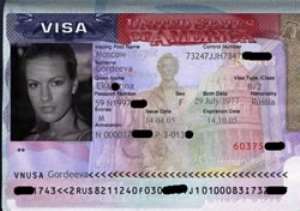
The US Embassy in Accra says applicants for United States of America Student Visas no longer require an appointment.
A walk-in visa regime is now place and Student Visa applicants, [J1, F1 and M1 visas] including people going for education exchange programmes, must present themselves at the Embassy anytime from 730am only on Wednesdays.
Vice Consul at the US Embassy, Johann Jones in the company of Chris Hodges, Head of Public Affairs also of the Embassy explained the procedures on Joy FM's Super Morning Show on Friday.
All an applicant needs is an approved Form DS-2019 or Form I-20, [A United States Department of Homeland Security document issued by colleges, universities, and vocational schools that provides supporting information for the issuance of a student visa or change of status.]
Prior to attending the walk-in interview, the applicant must have his/her programme of study due within sixty days, and anyone who has been refused a visa within the past year will however need an appointment.
After the walk-in visa requirements are met, there is an interview section which entails that the applicant provides proof that he indeed needs the visa to go to school in the US and that it is not to seek jobs. Proof [Bank statement] is also required of financial sufficiency (either by self or sponsor) for the cost of the first year of school and also the ability to foot bills for the rest of the programme. The sponsor need not reside in the US.
“You don't have to pay any money to the Consulate Section besides your $131 visa fee and you have to pay your SEVIS fee, which is usually a $100,” said Johann Jones.
Author: Isaac Yeboah
 One dead, fire officer hospitalised after bee attack at Quarry Site in Sokode Gb...
 Israel and Iran step back from further strikes after renewed clashes
 Patients stranded as doctors, nurses refuse to see new patients over KATH CEO su...
 Avenor Rural Bank CEO’s house destroyed by fire
 Three arrested in Winneba for illegal mining near GWL water lines
 Two pupils of Alice Elite Academy laid to rest after fatal school bus crash
 Here are areas to be affected by ECG's planned maintenance on Tuesday
 Family of civil engineer killed in alleged military shooting demands justice
 SHS teacher allegedly beats female student over unpaid hostel fees
 Blow to EU defence cooperation as France, Germany abandon joint fighter jet prog...



Comments
I feel the embassy is making things very difficult, for students who want to continue their education in US, for nothing. The requirement does not make any sense to me. Does it mean that a young American who wants to continue his education say,in RUSSIA, should not even be sponsored by his Daddy working in RUSSIA? Assuming i am working in America and i want to sponsor my younger brother in his education in America, why should the embassy be fassy about this? I think in such a situati...