




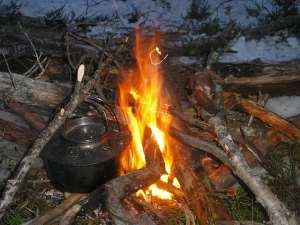
Cooking is a daily routine in the lives of many people around the globe to satisfy their hunger and enhance wellbeing. I remember my childhood days when I lived in a compound house somewhere in Ga. The different aromas coming from tenants' kitchens would force us to quit the playing ground and volunteer to help; either fan the coalpot whilst those who were not lucky guarded the kitchen like immigration officials at the border. Afterall we were all invited by the sweet aroma!
Whilst cooking may represent a pleasurable pastime often on an electric oven or a gas stove in some places; it is also a hazardous chore to the lives of many as an open fire in poorly ventilated enclosure.
Indoor air pollution has emerged as global concern which is ravaging rural and poor urban populations (WHO,2006). The use of woodfuels(fuelwood and charcoal) is widespread in Ghana and Africa. However these fuels often are not efficient and also cause a lot of pollution.
The inaccess to clean fuel in a household may affect its health. Though air pollution appears to be the direct effect of the inefficient burning of solid fuels, there are other health related impacts as well.
In Africa, lower respiratory infections (ALRI) are responsible for 11.2% of the overall disease burden on the continent, second only to HIV/AIDS (World Health Organization, 2008, Penisse et al,2009). Unduly exposing oneself to solid fuels increases the of risk of ALRI by 1.8 (Dherani et al., 2008).
According to the US EPA (2013), a myriad of scientific studies indicate particle pollution related to poor burning of woodfuels is responsible for challenges like:
premature death in people with heart or lung disease,
nonfatal heart attacks,
irregular heartbeat,
aggravated asthma,
decreased lung function, and
increased respiratory symptoms, such as irritation of the airways, coughing or difficulty breathing.
Victims of heart or lung diseases, children and older adults are most at risk of particle pollution exposure. Particles with an aerodynamic diameter less than 2.5 such as smoke particles are the most dangerous to human health (US EPA, 2013).
Ambient and indoor (PM2.5), causes millions of premature deaths worldwide, the bulk of which are registered in developing countries like Ghana. The World Health Organization (WHO) ranks indoor smoke from solid fuels as being amongst the top ten chief global risk factors; costing about 2 million lives annually. With women and children being particularly at risk (US EPA, 2013).
Given how widespread use of firewood is in the rural areas of Ghana, a large portion of our population suffering from the negative effects of wood fuel use, hence the need to make accessibility of cleaner fuel sources such as briquettes, LPG accessible. This will go a long way to improve rural health as well as livelihoods.
 Nyinahin Catholic SHS teacher seen fighting female student in viral video arrest...
 Beijing condemns US move to blacklist Chinese companies
 Trump gets a cold reception at NBA Finals game as Spurs beat Knicks
 One dead, fire officer hospitalised after bee attack at Quarry Site in Sokode Gb...
 Israel and Iran step back from further strikes after renewed clashes
 Patients stranded as doctors, nurses refuse to see new patients over KATH CEO su...
 Avenor Rural Bank CEO’s house destroyed by fire
 Here are areas to be affected by ECG's planned maintenance on Tuesday
 SHS teacher allegedly beats female student over unpaid hostel fees
 Blow to EU defence cooperation as France, Germany abandon joint fighter jet prog...


