




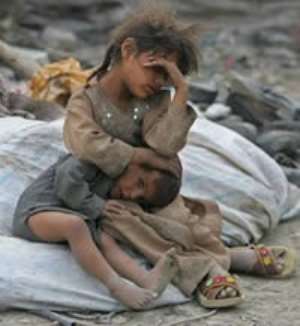
That children and young people are the future of any society cannot be over emphasized. As they approach and move into their teenage years, the circumstances children and young people face and the choices they make become more and more challenging, such as moving from primary school to junior high school, making new friends and the pressures that come with it, how to deal with their own physical, emotional and psychological changes.
Significantly, children and young people sometimes find themselves unable to address these challenges effectively and efficiently if at all. They come face to face with these challenges of lifestyle changes, which more often have profound impact on them, resulting into different situations, which affect their development, well-being and indeed their general welfare.
Practice evidence highlights some of these challenges as criminality/crime, or anti social behaviour issues, relating to bullying, drugs, alcohol, and sexual lifestyles/health, for which children and young people have limited or nonexistent social skills to address Early intervention strategy or initiatives can provide the framework and the opportunity for the development and acquisition of the relevant and appropriate socio-cognitive skills which empower them to respond positively to these challenges.
Clearly, cognitive interventions help in changing wrong beliefs, attitudes and values that have proved to be realistic options in restoring self confidence, self esteem and self value in children and young people. Based on the concerns of most if not all parents and the society in general, in particular the worries about increasing anti-social behaviors lifestyles of the youth more so within the context and phenomenon of surging drug and alcohol misuse, a pragmatic response should and must be the development of early intervention policy, programmes/strategies that can assist and support our children and young people. As the saying goes' catch them young', a significant element of any early intervention strategy should focus on raising the moral standards of children and young people, promote awareness, knowledge, advice and education on the core criminogenic features of anti-social behaviors, and hopefully divert children and young people from the inherent dangers of recklessness, risks and vulnerability and self harm.
In general terms, early intervention programmes can assist, support and empower children and young people think about their choices/actions and the consequences within the context of relevant and appropriate lifetime choices, with the overall aim to develop, positive social skills and peer friendships, co-operative classrooms and school relationships, self control, decision making , positive behaviour styles and appropriate group skills.
The approach should focus on crime awareness, advice, support and education for children and young people on causes of criminal behaviour, consequences for themselves and their families/ friends, the victims and their families /friends and their communities, within the context of law and order, whilst exploring the constitutional role of the police, the courts and the prison estate.
The commitment should be identifying and promoting effective and efficient practice delivery across the educational spectrum and ensure that work with children and young people is as effective as possible and is based on research evidence and best practice.
The early intervention offending behaviour programmes should be designed to prevent or at least reduce the propensity to offend or re-offending, given that it is to influence the behaviour of children and young people in a manner that makes it less likely to give rise to criminality/anti social behaviour.
Research evidence from practice suggests that children and young people often do not see their substance use/misuse as problematic. Nevertheless, it is prudent to provide them with safe environment for the exploration of their beliefs and feelings around all forms of substances from cigarettes, alcohol to what has become known as 'illegal' recreational substances ranging from cannabis to ecstasy to cocaine and heroin. A preventative approach can assist and support children and young people with the framework which provides the relevant and appropriate opportunities for them to realize their potentials for health and satisfying lives, acquire the needed tools in life and participate socially, educationally and economically.
Although it may be said that most young people who experiment drugs/alcohol do not necessarily go on to use/misuse them on a permanent basis, it is vitally important that children and young people are made aware of the risks of substance use/misuse.
The professional view is that, it is relevant and important to start the discussion of substance use/misuse early enough even though some parents/caregivers may worry that doing this may encourage children and young people to indulge in the vice.
However , avoiding the 'talking' will not in any way protect our children and young people as they may be aware of drugs, alcohol and other substances in some way at an early stage of their lives. It is more likely that at this early stage, children and young people will be more responsive to being informed about the risks of substance use/misuse.
Accurate information and support will help them decide what to do, although this does not guarantee non-use, but can increase the chance of informed choice. Children and young people may use /misuse substances because they are curious, they want to break the rules, to relax, to escape reality, to cope with difficult and challenging situations or feelings, because they enjoy them or because their friends do it.
The responses to these worrying situations is a real planning mechanism for bringing the issue to the fore and develop the relevant strategy that can provide realistic opportunities by which theoretical and practical approaches to working with children and young people sees light.
A national framework of policy and practice development that ensures drugs/alcohol issues are not marginal extra curriculum activities, but important key components of the education and training of children and young people is of much importance at this time of our national development.
The view is that early intervention initiatives give positive messages to children and young people about their ability to address challenging issues of concern with the support of significant adults in their lives. Society might not be able to completely stop children and young people using or misusing substances, however we should be able to help them a lot and make sure they know about substances and have thoughts about them much more carefully.
The relevance is for education providers/teachers to develop the appropriate professional skills, knowledge and the expertise in drugs/alcohol awareness, advice and education that position them in responding to the needs of children and young people in our communities.
The writer is a social care consultant, offender management and rehabilitation consultant, is also a penal reform advocate. For further details contact [email protected] / 0248416287

 One dead, fire officer hospitalised after bee attack at Quarry Site in Sokode Gb...
 Israel and Iran step back from further strikes after renewed clashes
 Patients stranded as doctors, nurses refuse to see new patients over KATH CEO su...
 Avenor Rural Bank CEO’s house destroyed by fire
 Three arrested in Winneba for illegal mining near GWL water lines
 Two pupils of Alice Elite Academy laid to rest after fatal school bus crash
 Here are areas to be affected by ECG's planned maintenance on Tuesday
 Family of civil engineer killed in alleged military shooting demands justice
 SHS teacher allegedly beats female student over unpaid hostel fees
 Blow to EU defence cooperation as France, Germany abandon joint fighter jet prog...


