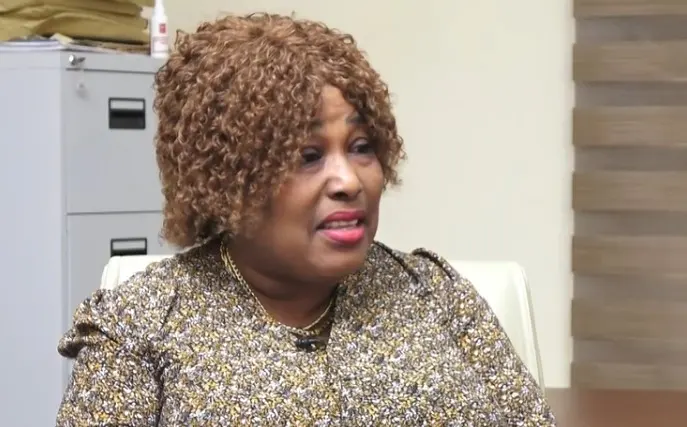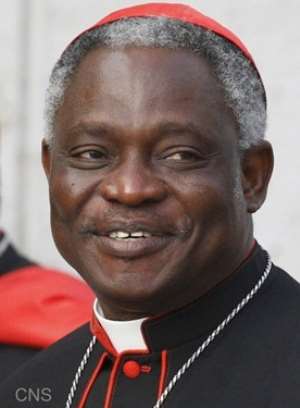
It is of great interest for all to understand that if any of the black cardinals is chosen it won't be the first. However, from the last African Pope St Gelasius to date will be 1,517 years for an African to be enthroned. It will be gratifying to see an African ascend again.
Reflections on the African Popes – is taken from The National Black Catholic Congress.
According to the Liber Pontificalis, three popes-Pope St Victor I (ca186-198), Pope St Miltiades (311-14), and Pope St Gelasius (492-496)-were Africans. The Liber Pontificalis is composed of a series of biographical entries, which record the dates and important facts for each pope. It is the oldest and most detailed chronicle dating from the Early Church. The Liber Pontificalis is dated from the sixth century. The record of names begins with St Peter. As the work progressed the entries became longer and more detailed. The Liber Pontificalis continued to be written until 1431.
The African popes in question are said to have come from the North African area that is present-day Algeria, Mauretania, Numidia, and Tunisia. Historians name this area the maghreb. Today it is mostly Muslim.
The indigenous people of North Africa are Berbers, brown skinned as among the Tuaregs and Algerians. By the time of Pope Victor I, the Roman aristocracy had large land holdings on the Mediterranean coast. Carthage was the center. The language was Latin.
The Berbers lived in the rural areas and the larger towns. Carthage was the primacy. Small scattered dioceses in the rural areas. The indigenous population, the Berbers, gradually accepted Christianity, but the details of evangelization are unclear.
Most historians today are of the opinion that Victor was a North African. He was the first Latin-speaking pope. He had to be persuaded to permit the Asian Churches of Syria to continue celebrating Easter on the 14th day of Nisan.
Victor had desired to force the Asian churches to accept the Roman method of calculating the celebration of Easter, that is the first full moon on the Sunday after the vernal equinox. Contemporary with Victor I was Tertullian, the North African writer, who reworked Latin for expressing second-century theology.
Just after the death of Victor I, St Perpetua and St Felicity underwent their martyrdom in Carthage (Perpetua was from the landowner class; Felicity the slave). The Scillian martyrs, first African martyrs put to death in Carthage just prior to the pontificate of Victor, with St Cyprian, the great bishop and martyr of Carthage martyred in 258 half a century after Victor.
As one historian writes, it was "remarkable… that Latin should have won recognition as the language of African Christianity from the outset, while the Roman church was still using Greek." Although martyrdom was the great seal of African Christianity, most historians have concluded that Victor I was not martyred in Rome.
St Miltiades (311-14) is the second pope identified as an African. The Liber Pontificalis names him as born in Africa. More recent scholars consider that Miltiades was probably from an African family in Rome.
In fact, Miltiades was pope in Rome at the time of the victorious battle of the Milvian Bridge when Constantine the Great defeated and killed Maxentius. With this victory, Constantine opened the way to the end of persecution of Christians. Miltiades is not recorded as making any intervention in drawing up the Edict of Milan that recognized the freedom of religion for all peoples.
When the Donatists in North Africa had recourse against the Catholic Church, Constantine asked Miltiades to listen to their complaints. At this time the opposition in North Africa are called Donatists. They are the poor and the peasants. They make up the opposition to the well-to-do landholders. At present there is much study of the Donatists.
These people are Berbers not Romans. Miltiades called a synod of bishops to examine the case. Historians have considered that Miltiades, seemingly an African, was chosen precisely because he had connection with the Church in North Africa.
More recent historical studies consider that the question of Donatism in North Africa are not only doctrinal but also sociological, economic, and political factors. The schism continued after the death of Miltiades.
Finally, St Gelasius (492-496) is called an African in the Liber Pontificalis. In another document, Gelasius referred to himself as "born a Roman." It is suggested that he was of African family origin.
He is known especially for his strained relationship with the Byzantine emperor Anastasius in Constantinople. Gelasius I unequivocally proclaimed his authority as pope over that of the emperor. The collection of liturgical prayers that bear his name belong to the seventh century.
A look at a list of current Roman Catholic Cardinals from Africa reveals that some are no longer eligible for consideration. No Cardinal over the age of 80 may be elected Pope.
| CARDINAL | PLACE OF ORIGIN | DATE OF BIRTH |
| Bernard Agre Francis Arinze Frederic Etsou-Nzabi-Bamungwabi Alexandre do Nascimento Bernardin Gantin Wilfrid Fox Napier Anthony Olubumni Okogie Polycarp Pengo Christian Wiyshan Tumi Peter Kodwo Appiah Turkson Emmanuel Wamala Gabriel Zubeir Wako | Cote d'Ivoire Nigeria Congo Angola Benin South Africa Nigeria, Lagos Tanzania Cameroon Ghana Uganda Sudan | March 2, 1926 November 1, 1932 December 3, 1930 March 1, 1925 May 8, 1922 March 8, 1941 June 16, 1936 August 5, 1944 October 15, 1930 October 11, 1948 December 15, 1926 February 27, 1941 |
Except for introductory which are mine, all other was taken from the website. http://www.nbccongress.org

 Former MASLOC CEO Sedina Tamakloe returns to Ghana after extradition to serve 10...
 Tension in Birim North as angry NDC youth attempt to disrupt cooperative mining ...
 One dead, several injured in tipper truck and fuel tanker crash on Accra–Tema Mo...
 How 70-year-old building was finally demolished over fear of collapse in Osu
 Minority MPs thank Afenyo-Markin for capacity-building programme in Canada
 Ghana has everything needed to prosper yet graduates remain unemployed — Dr Step...
 June 9: Cedi sells at GHS12.50 on forex market, GHS11.85 on BoG interbank
 Stephen Amoah advocates mixed market economy to tackle rising cost of living in ...
 KMA to reintroduce enhanced ‘Samansaman’ sanitation enforcement system from July...
 Nyinahin Catholic SHS teacher seen fighting female student in viral video arrest...