




Political unrest in many parts of Africa especially in the Sahelien Regions has been on the ascendancy in recent months. From Mali, Guinea Bissau, Niger, Sudan, South Sudan among others have seen various rebel groups carry out deadly attacks on legitimate governments which have rendered those nations among the failed states of the world.
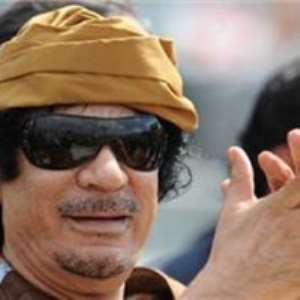
According to Ambassador Chris Kpodo, Ghana's Deputy Minister of Foreign Affairs, these political upheavals in the sub-region can be attributed mainly to the collapse of the Gaddafi regime in Libya in 2011, as the fall of that regime has led to internal tensions, illicit trafficking, violent extremism and terrorists activities.
Speaking at a two day Expert Workshop at the Kofi Annan International Peacekeeping Centre (KAIPTC) in Accra on the theme, “Exploring Post-Gaddafi repercussions in the Sahel”, the Deputy Minister noted that, the fall of Gaddafi and the Arab Spring had multiple implications on many states which has led to an increased rebellion by Tuaregs and the Azausad Group which contributed to the overthrow of President Amadou Toure of Mali.
He added that, “the overthrow of the constitutional regime in Mali and the seizure of power and arrest of political figures following the first round of elections in Guinea Bissau is worrisome and constitutes a reversal of democratic governance in the Sub-Region”.
He said this often place enormous responsibility on ECOWAS and African Union as such military takeovers undermine their resolve to promote democracy and good governance as enshrined in the African Charter on Democracy, Elections and Governance, and ECOWAS Protocol on Democracy and Good Governance.
Ambassador Kpodo noted, “There is also the threat of weapons making their way through Sudan and destabilizing South Sudan as well as Eritrea and Somalia where Al-Shabaab would certainly appreciate their use against Ethiopia and Kenya cross-border security efforts”.
He advised the Sahel Community of States to continue to use inter-state communication and intelligence sharing in order to effectively combat transnational and arms trafficking.
 Beijing condemns US move to blacklist Chinese companies
 Trump gets a cold reception at NBA Finals game as Spurs beat Knicks
 One dead, fire officer hospitalised after bee attack at Quarry Site in Sokode Gb...
 Israel and Iran step back from further strikes after renewed clashes
 Patients stranded as doctors, nurses refuse to see new patients over KATH CEO su...
 Avenor Rural Bank CEO’s house destroyed by fire
 Here are areas to be affected by ECG's planned maintenance on Tuesday
 Family of civil engineer killed in alleged military shooting demands justice
 SHS teacher allegedly beats female student over unpaid hostel fees
 Blow to EU defence cooperation as France, Germany abandon joint fighter jet prog...



Comments
It is not the collapse of Gaddafi's regime but rather the activities of his regime which has led to the political unrest in parts of West Africa. Gaddafi trained and armed these rebels and used them to intimidate his people. They fought on his side during the rebellion. On his overthrow and subsequent demise, arms fell into the arms of these rebels. These arms are being used in Mali and elsewhere t destabilise the regimes. The fact is Gaddafi did more harm than good for the subregion, and the af...