




LOYANGALANI, Kenya (AFP) - Poor, drought-prone and populated by pastoralists, northern Kenya was largely overlooked for decades. But new-found oil and Africa's largest wind farm could be set to change all that.
"This country has long been divided between low potential regions and high potential regions, according to a very deliberate government policy," said Mzalendo Kibunjia, who heads the national cohesion and integration commission.
"But now the low potential is becoming the high potential," he told a recent conference on the future of the north, organised at Loyangalani on the shores of Lake Turkana, one of the hottest and most desolate regions of Africa.
It started in early March with the launch of what has been presented as Africa's most ambitious infrastructure project: an oil pipeline, a railway and a highway across northern Kenya to Lamu on the Indian Ocean where a port will be built in order to give Kenya's landlocked northern neighbours Ethiopia and South Sudan port access.
A few days later UK-listed Tullow Oil said it had found very promising quantities of oil in the Turkana region.
Moreover in the coming months a consortium of European and African companies is to start building Africa's biggest wind farm, also in Turkana; it will have the capacity to supply 20 percent of Kenya's energy needs.
A few months may be all it takes to invert the historical configuration of the more developed south and the under-developed north.
Currently the north, which covers half of Kenya's surface area of 582,600 square kilometres (224,942 square miles) is home to a mere 10 percent of the country's 39 million inhabitants.
The three regions that make up the north of the country are also by far the poorest in Kenya. More than 94 percent of the population of Turkana lives below the poverty threshold, compared with 22 percent in Nairobi, according to the last census in 2009.
The north has long been cut off from the rest of the country.
Without coffee, tea, or industry, the British never saw any reason to build a railway to the north.
Even today the macadam road stops just north of Isiolo, normally considered the frontier town between north and south. Beyond that point there are only dirt roads, impassible in the rainy season and often unsafe because of bandits.
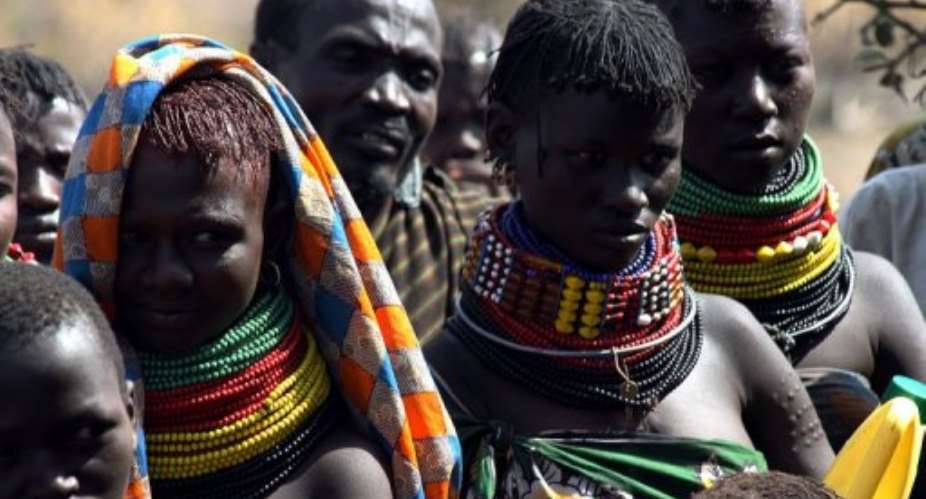
Turkana, Samburu, Somali, Rendille, Gabra and El Molo peoples, among others, raise goats and camels with no access to electricity or running water.
But that could change quickly.
"If we do a good job, less than five years is all the north needs to catch up with the rest of the country," said local MP Joseph Lekuton.
The transformation could be speeded by the fact that the new constitution adopted in 2010 will, starting next year, decentralise large chunks of the national budget.
That is, if this process is handled well, warned Lekuton.
"I think it will help if we have good governors in the country. I hope most of these governors will not go to jail in two or three years because of all this money they will have to manage," he said.
Hassan Wario, a director at National Museums of Kenya and a native of the northern Wajir district, voiced a similar concern.
He fears that any energy-based boom in Northern Kenya "would obviously benefit the elites" first and foremost.
Speculators are reportedly already snapping up land around Turkana's oil fields.
"It'll be a long time before a Turkana or an El Molo gets any petrodollars," Wario said.
 One dead, fire officer hospitalised after bee attack at Quarry Site in Sokode Gb...
 Israel and Iran step back from further strikes after renewed clashes
 Patients stranded as doctors, nurses refuse to see new patients over KATH CEO su...
 Avenor Rural Bank CEO’s house destroyed by fire
 Three arrested in Winneba for illegal mining near GWL water lines
 Two pupils of Alice Elite Academy laid to rest after fatal school bus crash
 Here are areas to be affected by ECG's planned maintenance on Tuesday
 Family of civil engineer killed in alleged military shooting demands justice
 SHS teacher allegedly beats female student over unpaid hostel fees
 Blow to EU defence cooperation as France, Germany abandon joint fighter jet prog...



Comments
In the picture,these people look even healthier than some poverished people in Ghana, i mean some, for some reason i dont know,to be honest.