




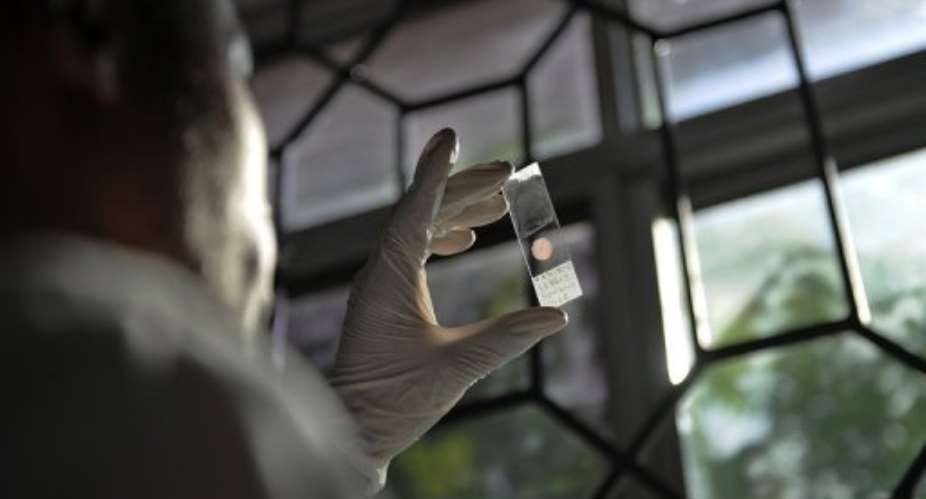
PARIS (AFP) - More than a third of malaria drugs examined by scientists in Southeast Asia were fake, and a similar proportion analysed in Africa were below standard, doctors warned on Tuesday.
"These findings are a wake-up call demanding a series of interventions to better define and eliminate both criminal production and poor manufacturing of antimalarial drugs," said Joel Breman of the Fogarty International Center at the US National Institutes of Health (NIH) in Bethesda, Maryland.
Trawling through surveys and published literature, the researchers found that in seven Southeast Asian countries, 36 percent of 1,437 samples, from five categories of drugs were counterfeit.
Thirty-percent of the samples failed a test of their pharmaceutical ingredients.
In 21 sub-Saharan countries, 20 percent of more than 2,500 samples tested in six drug classes turned out to be falsified, and 35 percent were below pharmaceutical norms.
Sub-standard medications are a major problem in the fight against malaria, a disease which killed 655,000 people in 2010, according to the UN's World Health Organisation (WHO).
Many of the drugs that are being faked or poorly manufactured are artemisin derivatives, the study said.
This is a special worry, for artemisinins are the frontline treatment for malaria, replacing drugs to which the malaria parasite has become resistant.
The study says there are many causes for the problem, ranging from widespread self-prescription of drugs to shoddy controls to monitor drug quality and prosecute counterfeiters.
"Poor-quality antimalarial drugs are very likely to jeopardise the unprecedented progress and investments in control and elimination of malaria made in the past decade," said Breman.
Last month, the Institute of Health Metrics and Evaluation at the University of Washington in Seattle reported that artemisin-resistant malaria which was first spotted in Cambodia in 2006 has since surged 800 kilometers (500 miles) westward to the Thailand-Myanmar border.
 How 70-year-old building was finally demolished over fear of collapse in Osu
 Minority MPs thank Afenyo-Markin for capacity-building programme in Canada
 Ghana has everything needed to prosper yet graduates remain unemployed — Dr Step...
 June 9: Cedi sells at GHS12.50 on forex market, GHS11.85 on BoG interbank
 Stephen Amoah advocates mixed market economy to tackle rising cost of living in ...
 Publish a clear and detailed BoG recapitalisation plan — NPP urges gov't
 Completely abandon idea of selling BoG headquarters — NPP urges gov't
 French President Macron to attend Ghana's Next Steps Conference on Reparatory Ju...
 Nyinahin Catholic SHS teacher seen fighting female student in viral video arrest...
 Trump gets a cold reception at NBA Finals game as Spurs beat Knicks



Comments
The World health Organization (WHO) and world governments are not fighting to stop malaria, or reduce the threat of mosquito infestations; they are fighting to sell chemicals and other false solutions to health problems in the world. There wouldn't be any “Fake Malaria Drugs” if the Truth was known. In 1925 Dr. Charles A. R. Campbell, gave the U.S. and World the solution to problems of mosquitos and how to reduce the infestations naturally and remedy the problems of malaria. His work was not a...