




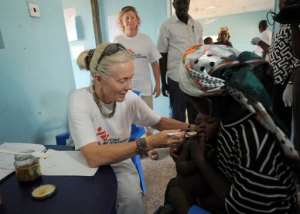
ABUJA (AFP) - International medical aid group Doctors Without Borders said Thursday that 1,500 children in a mining village in northwest Nigeria have suffered lead-poisoning and are not receiving care.
"1,500 children are currently lead-poisoned but are not receiving treatment because it is impossible to deliver effective treatment while they still live in contaminated homes," the group's head of mission in Nigeria, Ivan Gayton, said.
Those children that need treatment are mostly in Bajega village in Zamfara state, he said.
"There are 4,000 children who have been exposed. 2,500 are under treatment because their villages have been remediated," he told reporters in Abuja at the end of a two-day international conference on ending the lead poisoning epidemic.
Geneva-based Doctors Without Borders (Medecins Sans Frontieres) spends over $5 million yearly to treat people affected by lead poisoning which has killed more than 400 children in northern Nigeria since 2010, Gayton earlier told AFP.
The Abuja conference was jointly organised by the medical aid group, the Nigerian Centre for Disease Control and Prevention and the health ministry.
"The expertise that is here today has shown that it is possible to do the medical treatment. It is possible to do the environmental remediation and it is possible to do safer mining," said Gayton, a Canadian.
"We need not die in search of livelihood. It can be done safely."
Human Rights Watch (HRW) said in a statement that lead poisoning in Zamfara was one of the "worst such crises in modern history."
The deaths, affecting children working in artisanal gold mines and those living in surrounding communities, arose from an unusually high concentration of lead in the region's soil, HRW said.
Lead has been dispersed in the villages by the processing of ore for gold extraction. Illicit gold mining is more lucrative than agriculture for the impoverished farming communities.
 One dead, fire officer hospitalised after bee attack at Quarry Site in Sokode Gb...
 Israel and Iran step back from further strikes after renewed clashes
 Patients stranded as doctors, nurses refuse to see new patients over KATH CEO su...
 Avenor Rural Bank CEO’s house destroyed by fire
 Three arrested in Winneba for illegal mining near GWL water lines
 Two pupils of Alice Elite Academy laid to rest after fatal school bus crash
 Here are areas to be affected by ECG's planned maintenance on Tuesday
 Family of civil engineer killed in alleged military shooting demands justice
 SHS teacher allegedly beats female student over unpaid hostel fees
 Blow to EU defence cooperation as France, Germany abandon joint fighter jet prog...


