




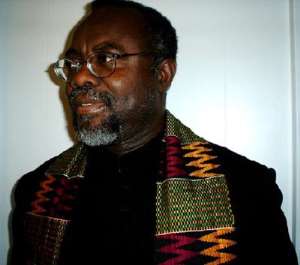
The following statement has been attributed to Mr. Kwesi Pratt, a member of the so-called Socialist Forum of Ghana and editor-publisher of a newspaper ironically christened “Insight.” We must also promptly add that the garrulous Mr. Pratt is a notorious champion of all forms of political dictatorship on the African continent, and has been so fervidly engaged for more than three decades. Anyway, this is the statement attributed to Mr. Pratt, vis-à-vis the Libyan version of the proverbial Arab Spring, particularly in the landmark wake of the capture and corporeal demise of longtime Libyan strongman Col. Muammar Gaddhafy: “Without the intervention of NATO, no force in Libya could have overthrown Gaddhafy, let alone assassinate him. The rebels have been successful primarily because of the support they have received from NATO; and that says something about the support that he has within Libya” (Ghanaweb.com 10/21/11).
It is quite in character with the man who made the foregoing statement, that Mr. Pratt would proudly boast of having been among the vanguard ranks of the activists who forced the late Gen. I. K. Acheampong out of power and yet, somehow, bitterly lament and vitriolically complain that the so-called Benghazi Rebels have so dramatically and decisively obliterated the 42-year dictatorship of the Sirte tribal warlord. Maybe Mr. Pratt needs to be told to do some soul-searching, if, indeed, he has a soul; or better yet, check himself into the Accra Mental Hospital or even the one at Ankaful.
The fact of the matter is that the now-deceased Mr. Gaddhafy had not, in 1969, overthrown a monarchy in the classical sense of the term. There is absolutely no doubt in my mind that the editor-publisher of the so-called Insight newspaper needs to read up on the pre-Gaddhafy history of Libya before presuming to make his kind of perennially and invariably vacuous remarks. To be certain, King Idris, the monarch whom the then-27-year-old Libyan Air Force colonel dislodged from power on September 1, 1969, had been duly elected by the chiefly representatives, or tribal leaders, of Libya to champion their cause of liberty against Italian colonialism. And so in reality, Mr. Gaddhafy was the first, and one also fervidly hopes the last, monarchical tyrant of modern Libya.
Another point also has to be made emphatically clear to Ghanaians and other Africans who think like the impenitently and incorrigibly reprobate Mr. Pratt. And it is the fact that on the eve of his capture and self-induced demise, it was rather Mr. Gaddhafy, and not the members of the Libyan Transitional National Council, who was effectively and practically speaking the rebellious fugitive. But as to whether, indeed, the deposed Libyan dictator was “assassinated,” as Mr. Pratt haughtily claims, remains moot while a widely reported inquest is underway. What is incontrovertibly clear is that in keeping with his own prediction, Mr. Gaddhafy had foolhardily positioned himself for a violent death.
On the other hand, if, indeed, he died exchanging gunfire with forces belonging to the ruling Libyan Transitional National Council, then, properly speaking, Mr. Gaddhafy's death cannot be legitimately described as an assassination. At best, the former Libyan strongman could be aptly described as a quixotic martyr of his own ignoble cause.
On a philosophical level, the battle between forces loyal to Mr. Gaddhafy and Libya's Transitional National Council was a veritable contest between the primitive determination of a pathological tyrant to enslave his people in perpetuity, on the one hand, and the people's determination to assert their providentially decreed inalienable right to collective self-determination, on the other. Thus with his decisive defeat and figurative and literal denudation, the Libyan people could be said to have seen the face of Allah or God. Of course, the cynical tendency has been for Gaddhafy loyalists and sympathizers like Mr. Pratt to brazenly accuse NATO of having sacrilegiously played God or Allah.
Ultimately, what is indisputable is the fact that non-Libyan beneficiaries of Mr. Gaddhafy's stolen wealth like Mr. Pratt have absolutely no right to tell Libyans, rebel or loyalist, how good the deposed late tyrant was, or who really deserves to govern or lord it over the Libyan people. Needless to say, Mr. Pratt has every right to personally envisage the deceased bloody dictator “as a person who worked hard to uplift the living standard of the Libyan people.”
The tragedy in all the foregoing, is the fact that more than a half-century of political self-determination has yet to open the eyes of diehard cynics like Mr. Pratt to the imperative need for dignified democratic leadership on the African continent. And on the latter score, we are woefully the poorer to have rascally characters like Mr. Pratt presume to represent the conscience of a self-determined Africa.
*Kwame Okoampa-Ahoofe, Jr., Ph.D., is Associate Professor of English, Journalism and Creative Writing at Nassau Community College of the State University of New York, Garden City. He is Director of The Sintim-Aboagye Center for Politics and Culture and author of “Ghanaian Politics Today” (Lulu.com, 2008). E-mail: [email protected].

 BoG's $260 million building: It was Ato Forson who first proposed 'sell-and-leas...
 'We have to do soul-searching' — Mahama orders nationwide flood assessment
 Court orders woman beater to pay GHS5,000 compensation to midwife at Tema Commun...
 Over 12,000 women living with obstetric fistula in Ghana — Asokwa MP
 Mahama secures 1,840 farm equipment deal from Belarus
 Titus Glover slams Mahama’s flood report directive, calls it “waste of energy an...
 We have increased posting of doctors from 12 to 100 to underserved regions in 20...
 'You had the effrontery to call me struggling lawyer, you won't come back to pow...
 Belarus manufacturers to storm Ghana next week after President's visit
 Government to offer tax incentives for factories located outside Accra


