




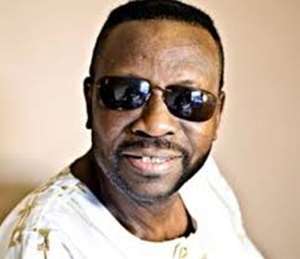
A gentle smile has been wiped off the face of the earth. Kofi Akumanyi, a man of whom it could be said, “This is someone whom you never see without seeing a smile”, is no more. Cruel death has snatched him away from us. At a mere 63 years of age.
My first meeting with Kofi was not under auspicious circumstances. I had left my post as editor of the Daily Graphic for a short journey to Germany and Britain, when, on my return, I heard on the grapevine that there was “unrest in the office”.
What was the trouble? In my absence, the chairman of the board of directors had appointed five new University graduates as journalists, behind my back! How can you appoint editorial staff for an editor without involving him in the selection process?
I was as mad as hell, but the immediate problem I had to deal with was far more serious than my own hurt pride: all the old journalists, none of whom had a degree, were up in arms, afraid that their chances of promotion would be ruined by the new, better-qualified batch of appointees. There were even dark murmurings of a possible strike.
The tension in the office, on the first day I went back to work, was palpable. But I pretended that nothing was amiss. I asked that the new chaps should be presented to me. They came in: Kwamena Anaman, gap toothed and deceptively innocent-looking; Teddy Konu, quiet, self-assured and seemingly preoccupied; Nana Daniels, bright but fidgety; Ben Mensah, with mischief written all over his face; and last but not the least, Kofi Akumanyi, boyish, totally at ease with himself, and -- smiling.
I greeted them and went straight on to the business at hand: “Gentlemen, you are welcome. You've been brought into a profession in which only one thing matters -- the ability to write well. It is on the basis of your writing that I and the other members of staff you've come to meet will judge you. And we ask that you too judge us by the same yardstick. You will be making a mistake if you think that you can look down on the rest of the staff because you have degrees and they don't. In this job, you can't hide behind any piece of paper. Whether you are good or not will come out in what you write and that alone. So try and learn how to write well and everyone will respect you. And if you see that any of your colleagues writes well, accord him respect, for it is not easy to write well under the pressures imposed by a deadline -- as you will soon find out.”
They all looked very serious after I'd spoken. Except Kofi Akumanyi, who broke the silence by impishly remarking, “Chief, I believe it's only seven miles from here to Legon?”
We all laughed uproariously and from that moment on, there was no longer any tension between them and me.
But I needed to convey that same feeling of friendliness I had implanted into them between them and the rest of the staff. So as soon as they left my office, I called in the older members of staff. They were restive as they came in, and one of the more batty reporters, George Naykene, said to my hearing, “Yen dier yempe Graduates biaaa.” (As for us, we don't want any graduates!)
I knew he was speaking for most of them, but didn't take any notice and calmly assured them that as long as I was editor, the only criterion to be used in judging anyone's suitability for promotion would be writing ability, and, of course, reliability. They were totally disarmed when I told them bluntly, “Listen, I am not a University graduate, but I don't think there is anyone you can meet who reads our paper who will tell you that I cannot write. So, if I can write without a degree, and writing is the only business we are engaged in here, then what is there for you to worry about?”
They applauded. I then called in the new appointees and got them to be introduced to the old fellows. We all kidded one another and laughed a lot, and by the end of the session, we were like one happy family. When I judged that the time was ripe, I said, “I think you'd better leave me now to write the editorial or you'll have to write it for me. Any volunteers?” They all laughed and left the room. Very quickly.
From then on, we concentrated on trying to make the Daily Graphic a paper that was both educative and enjoyable to read. The old members of staff willingly imparted their techniques to the new ones, and the new ones helped the old ones with any difficulties they met with when writing about subjects on which they thought one of the University men could be helpful.
Gradually, I got them knitted into a team whose product was beautiful to be behold. I awarded photo-by-lines to all those whose stories were particularly good. I wasn't above putting a good feature on the front page. This was pleasing enough to them, but occasionally, I also persuaded the tight-fisted management to pay bonuses to guys who had brought in scoops. One chap who profited from this a lot was an excellent reporter, Benzet Vivor, who, I was proud to point out to all, was not a graduate.
I took the warmth of the office outside, by socialising a lot with the boys. Most Saturday afternoons were like editorial conferences, with the Star Hotel as our office and good high-life music as our lectures. We drank, we danced and we laughed. We continued some of this socialising even after I had left the paper.
It was always a great regret to me that after circumstances had brought Kofi, Ben Mensah and Kwamena Anaman together in London, we couldn't fully revive the “Graphic spirit” which we had all retained to some extent. And now, Kofi is gone. His beautiful wife, Tina (“Akos”) whom he married in July 1974 and with whom he had three kids, is to be congratulated on the great care she took of Kofi during the many months of his prolonged illness.
How can Kofi be gone? He was bright: I remember smiling to myself in self-congratulation when, soon after he got to London, he managed to land a job with the prestigious news agency, the Press Association. For all sorts of reasons, it is not easy for journalists who have acquired their experience in Africa to obtain employment with UK journalistic establishments and I was proud that Kofi had broken down that particular barrier. His children have a right to be very proud of their dad, as do Akos and all of Kofi's many friends.
Adieu, “Prinkrooman” (the term, incidentally, is a corruption of “plain-clothesman” -- the sort of guys who used to tail others in the bad old days of political repression.) I am sure Kofi will not be able to resist laughing in his grave, whenever he remembers the circumstances under which he first heard the term, “Prinkrooman”!
Development / Accra / Ghana / Africa / Modernghana.com

 One dead, fire officer hospitalised after bee attack at Quarry Site in Sokode Gb...
 Israel and Iran step back from further strikes after renewed clashes
 Patients stranded as doctors, nurses refuse to see new patients over KATH CEO su...
 Avenor Rural Bank CEO’s house destroyed by fire
 Three arrested in Winneba for illegal mining near GWL water lines
 Two pupils of Alice Elite Academy laid to rest after fatal school bus crash
 Here are areas to be affected by ECG's planned maintenance on Tuesday
 Family of civil engineer killed in alleged military shooting demands justice
 SHS teacher allegedly beats female student over unpaid hostel fees
 Blow to EU defence cooperation as France, Germany abandon joint fighter jet prog...


