




The recent raiding of the Arts Center Market in Accra by Interpol, in search of illegal ivory merchandise, reminded me of another widely publicized incident that occurred in 1987 and involved then-President Daniel arap Moi of Kenya (see “Police, Interpol Raid Arts Center Market” Ghanaweb.com 11/17/08).
In the Kenyan incident, globally televised and, here in the United States, accorded prime-time play by ABC-TV, Mr. Moi personally set alight $ 7 Million worth of ivory tusks reported to have been harvested by some illegal game poachers. In publicly setting these ivory tusks alight, President Moi hoped to send a strong signal to these illegal game poachers that their environmentally degrading activities would come to naught and would neither be tolerated under any circumstances.
What was deeply mortifying and outright unpardonable about the entire process, however, was the fact that ABC-TV accompanied its footage of Mr. Moi setting alight the bonfire of elephant tusks with subtitles. The obvious and unmistakable implication hurt like a raw and fresh wound, at least to this Afrocentric writer, then an undergraduate student at the City College of New York. President Moi had made a brief speech prior to conflagrating the contraband ivory; and the speech was rendered in English, at least the version of English instructed East Africans by the British colonialists. Somehow, though, the news editors of the aforementioned American television station had decided that the newsmaker's East-African accent was too incoherent to meet the standard phonetic quality preference of a mainstream American audience.
But that President Moi would torch $ 7 Million worth of ivory at a time that the economy of Kenya was in dire straits, impugned the common sense of this leader of a major African country, and thus called the intelligence of many an African leader into serious question. It also did not help matters that already the average American's idea of African leadership capacity, or lack thereof, for that matter, was invariably epitomized by the patently unsavory likes of Presidents Mobutu Sese Seko, Gnassingbe Eyadema and Bedel Bokassa, among a phalanx of other equally repugnant dictators of various shades and ideological thrusts.
At school, an African-American professor who was passably familiar with continental African affairs, having journeyed to the proverbial “Motherland” some five times or more, and of which epic achievement he was quick to declare with pride, posed the following question: “Has any one of you (students of his Introduction to Black Studies class) witnessed New York City cops or the FBI set fire to illegal drugs like crack-cocaine or even marijuana on network television?” The prompt and thunderous response was an obvious “No!”
Professor James Small, a staunch apostle of the irredentist ideological principles and precepts of the legendary human and civil rights activist Malcolm X, used the preceding rhetorical question to highlight the glaringly unfortunate differences in psychological orientation between the culturally and politically cannibalized and alienated ex-colonial and the immutably proactive and decidedly self-serving and unflappably self-interested and jingoistic patriot or single-minded nationalist.
Consequently, rather than facilely envisage President Moi as one who was intellectually addled and psychologically alienated, Professor Small charitably chose to envisage the now-former Kenyan premier as the veritable product of neocolonialist education. He, therefore, assigned our class Dr. Carter G. Woodson's timeless historical classic “Mis-Education of the Negro.”
In the Accra Arts Center Market raid by the Ghanaian police, Interpol representatives and staff of the Department of Wildlife, a reported 500 kilograms of ivory-generated products were seized. The value of the latter was pegged at ¢ 350,000 or nearly a half-million dollars. Speaking to the Ghanaian press in the wake of the raid, Assistant Superintendent of Police (ASP) Fii Ochil (Kofi Okyere?) observed that the suspected illegal ivory traders would shortly be arraigned before a legitimately constituted court of law and those found guilty would be sentenced up to 12 months imprisonment and/or fined “200 penalty units,” whatever the latter expression means. Mr. Ochil further added that “The court would decide what should be done with the items, that is, whether they are to be kept as state possessions or they are to be destroyed.”
It is the dire and eerie possibility of a judge ordering these otherwise commercially valuable products to be destroyed with which we are herewith concerned. More so, because we are also informed in the same Ghana News Agency (GNA) news item that there are, indeed, some traders who have been licensed to purchase and retail such ivory products. If this observation has validity, then there appears to have been imposed only a partial ban on ivory products. In brief, the fact that these ivory products continue to be legally traded on the market, per se, makes any attempt by the courts to order the destruction of illegally acquired ivory counterproductive.
Rather, what needs to be done is to ratchet up the level of education on the partial ban. There may also need to be periodic review of the list of traders authorized to deal in ivory products, with the constructive view to augmenting the same in consonance with optimal levels of wildlife preservation. The levels of depletion of other equally significant and endangered animal species also need to be perennially, consistently and constructively highlighted, particularly vis-à-vis the imperative need to maintain a balanced ecological system for the long-term benefit of the global community at large.
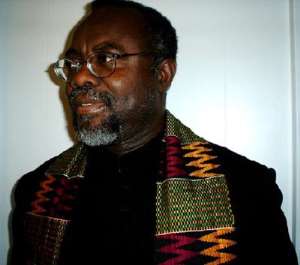
*Kwame Okoampa-Ahoofe, Jr., Ph.D., is Associate Professor of English, Journalism and Creative Writing at Nassau Community College of the State University of New York, Garden City. He is the author of 18 books, including “Ghanaian Politics Today” (Atumpan Publications/lulu.com, 2008). E-mail: [email protected].

 One dead, fire officer hospitalised after bee attack at Quarry Site in Sokode Gb...
 Israel and Iran step back from further strikes after renewed clashes
 Patients stranded as doctors, nurses refuse to see new patients over KATH CEO su...
 Avenor Rural Bank CEO’s house destroyed by fire
 Three arrested in Winneba for illegal mining near GWL water lines
 Two pupils of Alice Elite Academy laid to rest after fatal school bus crash
 Here are areas to be affected by ECG's planned maintenance on Tuesday
 Family of civil engineer killed in alleged military shooting demands justice
 SHS teacher allegedly beats female student over unpaid hostel fees
 Blow to EU defence cooperation as France, Germany abandon joint fighter jet prog...


