




As a people, Fourth-Republican Ghanaians have become so preoccupied and obsessed with “constitutionalism” that we often forget that as “citizens,” in the postcolonial sense of the term, “Ghanaians” have only become “Ghanaians” for only about 31 years. Some even put the number of years that Ghanaians have, constitutionally speaking, become bona fide Ghanaians at 27 years. And the subscribers to the latter figure may be aptly labeled as the “BOAHENISTS.” These are those, largely supporters and sympathizers of the now-ruling New Patriotic Party (NPP), who firmly and sincerely believe that, indeed, the 1992 election that legitimized the presidency of ex-Flt.-Lt. Jeremiah John Rawlings was indubitably, brazenly and unconscionably rigged in favor of the latter, who had by 1992 been ruling Ghana as a de facto dictator, or strongman, for nearly eleven years.
In sum, our contention here is that since as a modern, postcolonial multi-ethnic and multi-nation state the sole “Social Contract,” in Rousseauean terms, of course, that binds Ghanaians together as a modern polity, or state, is the 1957 Republican Constitution and, thereafter, any other constitution collectively sanctioned by the people, for that matter, anytime that military intervention, such as occurred in 1966, 1972, 1979 and 1981, caused the summary suspension of the Constitution, technically speaking, Ghana as a postcolonial nation-state immediately ceased to exist. This, indeed, was precisely what Dr. J. B. Danquah, perhaps continental Africa's greatest constitutional lawyer, at least in the twentieth century, sought to consistently and persistently highlight to President Kwame Nkrumah, each and every time that the latter attempted to meddle with the 1957 Constitution. Thus for between 20 to 24 out of its 51-year history as a postcolonial sovereign nation, the legitimacy of Ghanaian citizenship has held as such for only about 31 years or even less, depending on one's calculation. For the balance of 20 or so years when the military effectively held the reins of governance, Ghanaians have, at best, been held as “subjects” and, at the worst, as “captives” of the operatives of the military juntas that dominated us and routinely trampled our fundamental human and civil rights as citizens.
And as Dr. Danquah aptly pointed out, anytime that our national Constitution was indefinitely suspended, Ghanaians reverted to their pre-colonial status as indigenes belonging to their various ethnic polities. Thus technically speaking, any Ghanaian who acquired an American, or foreign, citizenship between December 31, 1981 and January 1992, when Flt.-Lt. Jeremiah John Rawlings summarily suspended the Third-Republican Ghanaian Constitution, could in absolutely no legitimate way be accused of having acquired “Dual Citizenship,” for the latter designation presupposes that between December 31, 1981 and January 1992, Ghanaians held any other form of citizenship than their pre-colonial citizenship as bona fide members of their indigenous ethnic affiliations.
With the preceding outline in perspective, it is quite tempting for many an ardent Nkrumaist to impugn the political legitimacy of the National Liberation Council (NLC) junta, led by then-Col. E. K. Kotoka, that ousted Kwame Nkrumah's Convention People's Party (CPP). And here, two observations must be promptly registered. The first of these regards the fact that, indeed, practically speaking, the NLC was not a legitimate government, because it was not constitutionally sanctioned by the Ghanaian electorate as a whole. Nonetheless, a second mitigating factor inheres in the fact of the military personnel that constituted the membership of the NLC having promptly recognized the fact of its patently unconstitutional nature. And such recognition, of its unconstitutional nature, as a mitigating factor, is incontrovertibly corroborated by the fact of the NLC having promptly constituted itself as a “Transitional Government” with a self-mandated three-year reign. Of course, leaders like Dr. K. A. Busia had argued for a shorter transitional period but to no avail. Still, the indisputable legitimacy of the National Liberation Council was boosted by the fact of the then-ruling Convention People's Party (CPP) having flagrantly flouted the mandate of Ghanaian electors by blindly consenting to both the unilateral declaration of Ghana as a one-party state, an ideological move that had not been originally agreed upon by the multi-ethnic polities, as well as all the political parties, that negotiated into functional legitimacy the 1957 Constitution. Of course, the other move that indisputably prejudiced the legitimacy of Ghana's maiden Constitution was President Nkrumah's unilateral declaration of himself, via a CPP majority parliamentary rubber-stamp, as Ghana's President-for-Life. And so, in essence, the transitional legitimacy of the Kotoka-led National Liberation Council was by default, on the part of the then-ruling CPP.
Ultimately, our contention here is that any Ghanaian who departed the shores of our proverbial motherland during any of the periods of military intervention delineated above and ended up acquiring citizenship in another country other than Ghana, his/her country of birth, cannot be legitimately faulted with having mischievously, or even expediently, bought into a suspect status of “Dual Loyalties.” For one cannot be legitimately faulted for the acquisition of “Dual Loyalties,” when Ghana as a contemporary, postcolonial sovereign nation did not exist as such. And since in the absence of a democratic and legitimately constituted government there can be no bona fide postcolonial Ghanaian state as such, at best, the legitimate test of a returnee Diaspora Ghanaian's citizenship and right of political participation ought to be determined by the indigenous leaders and voters of the returnee Diaspora Ghanaian's own home district, and not by some political party kingpins sitting in our nation's capital and relatively removed from the local political culture of the subject returnee's home state. For at the end of the day, all politics, as the dictum goes, is local.
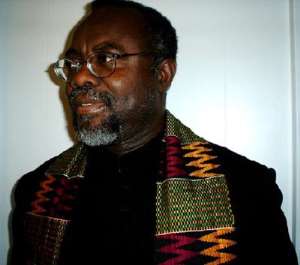
*Kwame Okoampa-Ahoofe, Jr., Ph.D., is Associate Professor of English, Journalism and Creative Writing at Nassau Community College of the State University of New York, Garden City. He is the author of 17 books, including “Dr. J. B. Danquah: Architect of Modern Ghana” (iUniverse.com, 2005) and “Romantic Explorations” (Atumpan Publications/lulu.com, 2008). E-mail: [email protected].

 One dead, fire officer hospitalised after bee attack at Quarry Site in Sokode Gb...
 Israel and Iran step back from further strikes after renewed clashes
 Patients stranded as doctors, nurses refuse to see new patients over KATH CEO su...
 Avenor Rural Bank CEO’s house destroyed by fire
 Three arrested in Winneba for illegal mining near GWL water lines
 Two pupils of Alice Elite Academy laid to rest after fatal school bus crash
 Here are areas to be affected by ECG's planned maintenance on Tuesday
 Family of civil engineer killed in alleged military shooting demands justice
 SHS teacher allegedly beats female student over unpaid hostel fees
 Blow to EU defence cooperation as France, Germany abandon joint fighter jet prog...



Comments
After core analyses of this clause in our constitution - A person with dual nationality will not be allowed to contend as Presidential nor Paliamentarian candidate in our beloved country. Why on earth do we need such stringent and ludacrous law? What is the motive behind such unthoughtful decision? I believe the law makers at the time thought that Ghanaians who have allegiance to other countries may pose a greater risk to Ghana by indulging in expionage, but we know for fact that the activi...