




Emerging economies must make the fight against inflation their top priority, International Monetary Fund (IMF) said yesterday, as it sharply raised its forecast for price increases in the developing world this and next year.
The Fund said many emerging markets including Ghana needed to raise interest rates, cut government deficits and allow their currencies to appreciate more to contain the inflation risk.
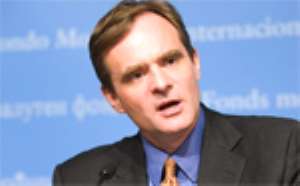
Simon Johnson, IMF's outgoing chief economist, said emerging economies in Asia in particular were in danger of falling behind the curve on inflation, while praising Brazil as an example of a country that was taking steps to curb price pressures.
The IMF said it now expected inflation to hit 9.1 percent in the emerging world this year and remain high, at 7.4 percent, next year.
The Fund also marked up its forecast for inflation in the industrialized world but said price rises there would dip much more quickly, from 3.4 percent this year to 2.3 percent next.
“The threat from inflation is mounting everywhere and for most countries, the top priority for policymakers is to head off rising inflationary pressure, while keeping sight of the risks to growth.
“The global economy is in a tough spot, caught between sharply slowing demand in many advanced economies and rising inflation everywhere, notably in emerging and developing economies,” Johnson wrote in the update to the World Economic Outlook.
Headline inflation in the emerging economies had risen to 8.6 percent on average in May, the IMF said, with core inflation (excluding food and energy) up to 4.2 percent- both the highest rates since the start of the decade.
By contrast, while headline inflation in the industrialized economies had risen to 3.5 percent, there had been much less of a move up in core inflation, which stands at 1.8 percent.
The IMF said in the industrialized world, the rise in inflation this year was expected to be reversed in 2009. But it said:
“In emerging and developing countries, inflationary pressures were mounting faster, fuelled by soaring commodity prices, above-trend growth and accommodative macro-economic policies.”
By Felix Dela Klutse
 Nyinahin Catholic SHS teacher seen fighting female student in viral video arrest...
 Beijing condemns US move to blacklist Chinese companies
 Trump gets a cold reception at NBA Finals game as Spurs beat Knicks
 One dead, fire officer hospitalised after bee attack at Quarry Site in Sokode Gb...
 Israel and Iran step back from further strikes after renewed clashes
 Patients stranded as doctors, nurses refuse to see new patients over KATH CEO su...
 Avenor Rural Bank CEO’s house destroyed by fire
 Here are areas to be affected by ECG's planned maintenance on Tuesday
 SHS teacher allegedly beats female student over unpaid hostel fees
 Blow to EU defence cooperation as France, Germany abandon joint fighter jet prog...


