





The Minister for Local Government, Chieftaincy and Religious Affairs, Ahmed Ibrahim, has directed Regional Coordinating Councils as well as Metropolitan, Municipal and District Chief Executives across the country to prioritize the provision of logistics and essential tools for environmental health officers to enable them to carry out their duties effectively.
He described environmental health officers as central to the progress of local assemblies, stressing that their work is vital to improving public health, sanitation, and urban cleanliness.
According to him, environmental health officers remain on the frontline of sanitation management, disease prevention, and community education, adding that without their efforts, assemblies would struggle to make meaningful progress.
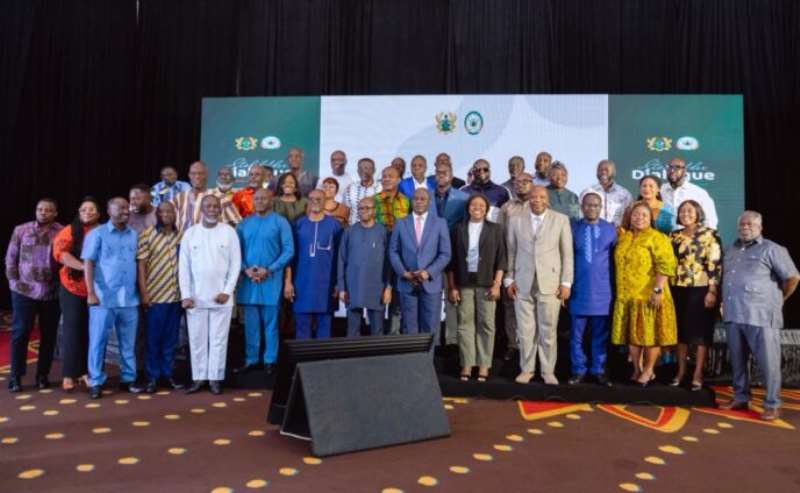
He made the remarks in response to concerns raised by an environmental health officer during a high level stakeholder dialogue on landfill and waste management in the Greater Accra Metropolitan Area, where challenges relating to mobility and operational logistics were highlighted as major constraints to field work.
The dialogue, held under the theme “Strengthening Final Disposal Site Operations and Sustainable Solid Waste Management Infrastructure in the Greater Accra Region,” was organized by the Ministry of Local Government, Chieftaincy and Religious Affairs in collaboration with the Jospong Group of Companies. It brought together representatives of 26 Metropolitan, Municipal and District Assemblies in the region, along with government officials, waste management stakeholders, environmental groups, and development partners.
Other participants included members of the Environmental Service Providers Association, chief executives, waste management companies, landfill operators, tricycle and waste collection groups, officials from the Environmental Protection Authority, the Ministry of Finance, as well as NGOs, volunteer organizations, and community based groups.
Mr. Ibrahim urged MMDCEs to move quickly to close the identified gaps, particularly by providing transportation, protective equipment, and other operational logistics for environmental health officers.
He stressed that expecting officers to carry out inspections, monitor waste disposal sites, and engage communities without proper mobility support was no longer acceptable.
He added that equipping them should be seen as an investment in public health rather than an optional expense.
The Minister further indicated that the Ministry would monitor how assemblies respond to the directive, and that logistical support for environmental health officers would form part of future performance assessments of local authorities.
Environmental health officers are responsible for tasks such as inspecting food vendors, monitoring solid and liquid waste disposal, supervising fumigation exercises, and educating households on hygiene practices. Their ability to reach communities quickly is considered crucial in preventing outbreaks of diseases such as cholera and typhoid.
The President of the Environmental Service Providers Association, Dr Joseph Siaw Agyepong, said the association plays an important advocacy role in improving environmental sanitation and strengthening collaboration between the public and private sectors in waste management.
He explained that the association, established in 2001 as a company limited by guarantee with over 40 members, works to support improved delivery of waste management services in partnership with Metropolitan, Municipal and District Assemblies.
Dr Agyepong, who is also Executive Chairman of the Jospong Group of Companies, noted that ESPA focuses on promoting best practices through training programmes, workshops, and seminars for its members.
He added that the association also supports recycling initiatives and environmentally friendly waste management solutions while encouraging greater private sector participation in the sector.
According to him, ESPA continues to play a key role in promoting investment and innovation in waste management to advance sustainable environmental practices in the country.
The Chief Director of the Ministry, Amin Abdul Rahaman, said the dialogue provided a platform for stakeholders to share perspectives and strengthen coordination in the sanitation sector.
He noted that the sector brings together different actors including policy makers, regulators, financiers, operators, and service providers, making collaboration essential for effective outcomes.
He emphasized that continuous engagement remains one of the most effective ways of building trust, improving coordination, and enhancing service delivery, adding that the Ministry remains committed to sustaining such partnerships.
Participants at the forum discussed issues including landfill capacity, operational challenges, financial obligations, preparations ahead of the rainy season, environmental compliance, long term infrastructure needs, and opportunities for waste recovery and recycling.




 Mahama secures 1,840 farm equipment deal from Belarus
 Titus Glover slams Mahama’s flood report directive, calls it “waste of energy an...
 We have increased posting of doctors from 12 to 100 to underserved regions in 20...
 'You had the effrontery to call me struggling lawyer, you won't come back to pow...
 Belarus manufacturers to storm Ghana next week after President's visit
 Government to offer tax incentives for factories located outside Accra
 White House World Cup chief defends visa ban for Somali referee, Iranians
 Talensi DCE courts investors for revival of Pwalugu Tomato Factory
 Manhyia South MP says free speech under threat, cites 17 arrests in 16 months un...
 Korle Bu Teaching Hospital conducts Ebola emergency simulation to strengthen fro...


