




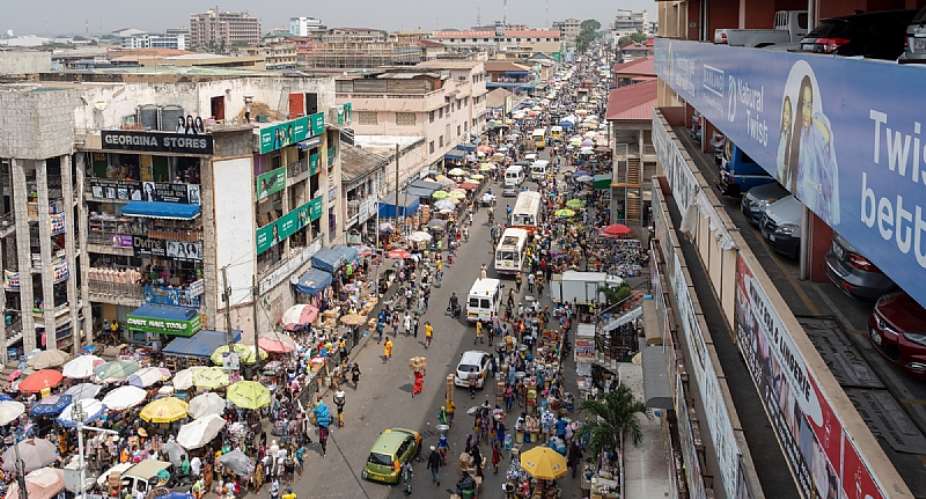
The World Bank has projected Ghana’s GDP growth at 4.8 percent in 2026, down from an estimated 6.0 percent in 2025, indicating a slowdown in economic momentum following a strong post-pandemic rebound.
In its latest Africa Economic Update, the Bank attributed the moderation to tightening domestic conditions and external pressures, even as overall macroeconomic fundamentals continue to show signs of improvement.
At the same time, inflation is expected to ease. The World Bank projects Ghana’s end-of-year inflation for 2026 at about 9 percent, keeping the country within single-digit levels.
This disinflation trend is expected to be supported by relative currency stability, a tight monetary policy stance, and a gradual easing of external pressures.
The outlook presents a mixed picture for businesses. Slower domestic demand, cautious investor sentiment, and global economic uncertainty may limit expansion in several sectors. However, easing inflation could strengthen consumer purchasing power and help reduce operating costs for firms.
The World Bank cautions that Ghana remains vulnerable to external shocks, including volatility in commodity prices, uncertain global financial conditions, and geopolitical tensions affecting trade and energy markets. These risks could potentially reverse gains in both growth and inflation if not managed effectively.
Despite the projected slowdown, Ghana’s medium term outlook is expected to remain stable, with growth anticipated to hover around 5 percent in the years ahead.
On the regional front, Sub-Saharan Africa is projected to grow by 4.1 percent in 2026, unchanged from 2025. However, the World Bank notes that risks to the outlook are increasing, as the region’s recovery from multiple global shocks continues to lose momentum. Growth projections have also been revised downward by 0.3 percentage points compared to the October 2025 forecast.
Rising geopolitical tensions in the Middle East, elevated debt servicing burdens, and structural constraints continue to weigh on economic growth and job creation across the region. The report further points to escalating conflicts, disruptions to energy infrastructure, and instability in global shipping routes as additional pressures on the outlook.
Overall, while Ghana faces a slowdown in growth, the World Bank suggests the country is entering a phase of gradual and steady recovery, where maintaining stability becomes more prominent than pursuing rapid expansion.
 One dead, fire officer hospitalised after bee attack at Quarry Site in Sokode Gb...
 Israel and Iran step back from further strikes after renewed clashes
 Patients stranded as doctors, nurses refuse to see new patients over KATH CEO su...
 Avenor Rural Bank CEO’s house destroyed by fire
 Three arrested in Winneba for illegal mining near GWL water lines
 Two pupils of Alice Elite Academy laid to rest after fatal school bus crash
 Here are areas to be affected by ECG's planned maintenance on Tuesday
 Family of civil engineer killed in alleged military shooting demands justice
 SHS teacher allegedly beats female student over unpaid hostel fees
 Blow to EU defence cooperation as France, Germany abandon joint fighter jet prog...


