




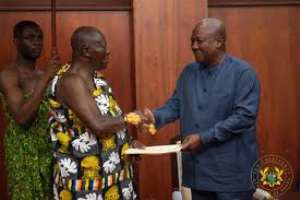
The recent involvement of Otumfuo Osei Tutu II, the Asantehene, in the Bawku conflict has reignited national conversations about the delicate balance between mediation and arbitration in resolving long-standing disputes. When the Asantehene, Otumfuo Osei Tutu II, was invited to mediate, expectations were high that his moral authority and knowledge of the chieftaincy institution would help chart a new path toward reconciliation. Still, the recommendations presented leaned heavily on constitutional interpretations rather than the traditional chieftaincy style of mediation and arbitration. By affirming one chief and recommending relocation of the rival claimant, the process resembled arbitration rather than mediation—raising concerns about inclusivity and long-term stability. Depending on legalities to settle a protracted chieftaincy dispute like Bawku would not be necessary because there is already a contested supreme court rulling. The mediator’s stature as a revered traditional leader and peacemaker made him the natural choice to lead efforts toward reconciliation between the Kusasi and Mamprusi factions. Yet, as his mediation report was presented to the government, reactions from both sides revealed a dangerous misinterpretation: some viewed the process as a ruling rather than a healing exercise.
Mediation as Healing
The Asantehene himself was clear: his role was not to declare winners or losers, but to present facts and foster dialogue. Mediation, by its nature, is about building trust, encouraging compromise, and restoring relationships. It is a process of healing wounds, not deciding verdicts. When mediation is mistaken for arbitration, the spirit of reconciliation is undermined, and one side inevitably feels defeated. Mediation is not binding on the conflicting parties. It only ends when conflicting parties agree to a resolution and co-sign by all parties and the mediator. That is when it becomes successful. The rejection of the report by the Overlord of the Mamprugu Kingdom brings an unsuccessful termination of the exercise and needs a second look at. Section 81 of the Alternative Dispute Resolution Act 2010 (Act 795) also mandates that if parties agree on the settlement of a dispute, they may sign a written settlement agreement assisted by the mediator. The question is, have the parties signed the mediation report? Certainly no. This makes the report not binding on the parties and cannot be implemented by the government if indeed the government wants to settle the Bawku conflict.
The Security Implications of the Enforcement of Otumfour’s Verdict
Should the government attempt to enforce the mediation report as though it were an arbitration ruling, the consequences could be grave and could lead to the following, among others:
- Expansion and escalation of violence: Communities that feel sidelined or “judged against” may resort to violent resistance, worsening the already fragile security situation in Bawku.
- Erosion of trust in mediation: If mediation outcomes are enforced like rulings, future peace efforts will lose credibility. Factions may refuse to engage, fearing predetermined outcomes.
- National security strain: Enforcement could stretch security forces thin, as they would be tasked with suppressing unrest rather than supporting reconciliation. These risks are destabilising not only Bawku but also the surrounding regions.
- Political polarisation: Perceptions of bias in enforcement could inflame ethnic and political divisions, undermining national unity.
- Emergence of the numerous acephalous societies will lead to a request for their freedom from their inhabitable kingdoms, which will create a lot of problems for the country. Remember, purported numbers do not determine qualification to form kingdoms but historical royalties. Groups that feel they are mature with time will rise to request their freedom from the Kingdoms they inhabit.
A Path Forward
The government must resist the temptation to treat the Asantehene’s mediation report as binding arbitration. Instead, it should:
- At worst, ensure a win-win situation and not a complete win-lose, especially as contained in the mediation report. It is not tenable. There should be a compromise where both sides feel respected and involved.
- Convene forums where Mamprusi and Kusasi elders recount their histories and grievances through a public hearing, just like the 2012 election petition, if we really want to ensure peace. This will help Ghanaians to better appreciate the situation.
- Facilitate dialogue by using the Otumfor’s report as a foundation for continued discussions.
- Involve conflict mediation experts in the mediation process.
- Involve the National House of chiefs that is mandated to handle chieftaincy issues and not a sole arbiter.
- Invest in reconciliation structures, including community peace councils and joint development projects, to foster shared interests instead of announcing funding. No amount of money can settle the emotions and traditions of people.
Conclusion
The Asantehene’s role in Bawku is best understood as that of a bridge-builder. His mediation should heal, not decide. For the government, the lesson is clear: peace in Bawku cannot be imposed—it must be nurtured. Enforcement of mediation as arbitration risks deepening divisions and destabilising the region. Healing, dialogue, and reconciliation remain the only sustainable path to lasting peace.
By Elijah Adam, International Relations and National Security practitioner.
 Belarus manufacturers to storm Ghana next week after President's visit
 Government to offer tax incentives for factories located outside Accra
 White House World Cup chief defends visa ban for Somali referee, Iranians
 Talensi DCE courts investors for revival of Pwalugu Tomato Factory
 Manhyia South MP says free speech under threat, cites 17 arrests in 16 months un...
 KATH doctors suspend strike after Otumfuo’s intervention
 Mahama is losing control of his government — NPP Communicator
 Health Minister’s suspension of KATH CEO technically right — Prof Beyuo
 Korle Bu Teaching Hospital conducts Ebola emergency simulation to strengthen fro...
 Abandoned newborn baby found near gutter at Agona Swedru Woaraba



Comments
Can you give concrete examples of a win - win situation in the Bawku conflict? Thank you