




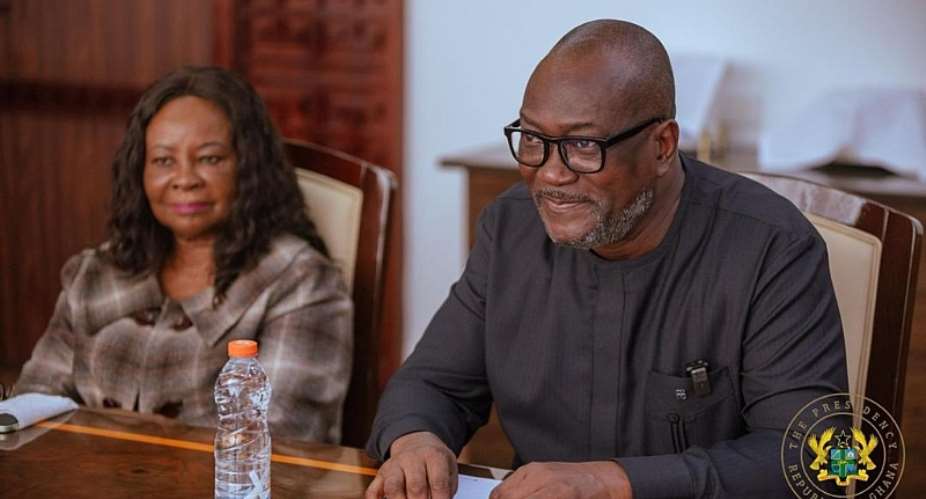
Professor H. Kwasi Prempeh, Executive Director of the Ghana Center for Democratic Development (CDD-Ghana), has urged comprehensive reforms to Ghana’s anti-corruption institutions, warning that failure to innovate risks rendering key agencies ineffective.
His comments come amid a growing national debate over the future of the Office of the Special Prosecutor (OSP), following proposals by private legal practitioner Ace Ankomah for structural changes aimed at boosting the independence and efficiency of criminal prosecutions.
Ankomah argued that the creation of the OSP was an implicit acknowledgment that the Attorney-General’s Office had struggled to manage corruption and economic crime cases effectively. Highlighting issues such as political interference and the frequent use of nolle prosequi to discontinue cases, he suggested merging the OSP, the Economic and Organised Crime Office (EOCO), and the criminal prosecution division of the Attorney-General’s Office into an independent National Prosecutions Authority.
Such an authority, he contends, should operate with judicial-level independence, secure tenure, and financial autonomy to shield it from political pressure.
Speaking on Channel One TV’s The Point of View on December 8, Prof. Prempeh stressed that Ghana must adopt globally recognised mechanisms like lifestyle audits and unexplained wealth laws if the country is serious about tackling corruption. While these measures may appear unfamiliar locally, he noted they are increasingly standard in mature democracies.
“This office [OSP] is new. We are not used to it… There are many tools for fighting corruption that we are not accustomed to and may even resist, including lifestyle audits and unexplained wealth laws. This is the global trend,” he said. “Given evolving technologies, we must adopt these approaches to combat corruption effectively.”
Prof. Prempeh further argued that Ghana must embrace innovative strategies rather than relying solely on the Attorney-General’s traditional prosecutorial role. He noted that entrenched constitutional and institutional arrangements currently hinder anti-corruption efforts, making reform essential.
“If we continue to treat prosecution as exclusively the AG’s function, we cannot fight corruption effectively. We must innovate around this challenge,” he explained.
He also suggested that Ghana may need a constitutional solution to resolve ongoing tensions around anti-corruption prosecutions, warning that without such reform, the Office of the Special Prosecutor risks being undermined or rendered obsolete.
 How 70-year-old building was finally demolished over fear of collapse in Osu
 Minority MPs thank Afenyo-Markin for capacity-building programme in Canada
 Ghana has everything needed to prosper yet graduates remain unemployed — Dr Step...
 June 9: Cedi sells at GHS12.50 on forex market, GHS11.85 on BoG interbank
 Stephen Amoah advocates mixed market economy to tackle rising cost of living in ...
 Publish a clear and detailed BoG recapitalisation plan — NPP urges gov't
 Completely abandon idea of selling BoG headquarters — NPP urges gov't
 French President Macron to attend Ghana's Next Steps Conference on Reparatory Ju...
 Nyinahin Catholic SHS teacher seen fighting female student in viral video arrest...
 Trump gets a cold reception at NBA Finals game as Spurs beat Knicks


