




A lot of calls have gone out to Ghanaians, largely members, supporters and sympathizers of the ruling New Patriotic Party (NPP), to desist from “politicizing” the ongoing national currency re-denomination exercise. Needless to say, it would be politically unsound and outright suicidal for the NPP to flatly refuse to capitalize on this momentous exercise as a salutary attempt by a government that knows how to govern far better than any of its opponents, and also one that is staffed by the best and brightest of Ghanaian society, to put the country on an effective and sound keel towards industrial and enviable democratic development.
Personally, this writer is enthused by the fact that among the celebrated Big Six founding fathers of modern Ghana, a full-four were unwavering patriarchs of the democratic ideals of the New Patriotic Party. This means that the overwhelming majority of modern Ghanaian leaders, at least those that matter to the development of a people-sensitive, property-owning democracy, unabashedly subscribe to the civilized culture of proportionate compensation for occupational diligence.
On the other hand, there also exists the perpetual political minority that believes in the patently unjust and irrational and wholesale redistribution of wealth created by such hardworking entrepreneurs as the rural Ghanaian cocoa farmer irrespective of individual input in the creation of such wealth. The latter brand of political culture, going by the curious designation of “Socialism,” and recently dubiously characterized as “Social Democracy,” believes in the outright seizure of rural wealth for the exclusive benefit of urban development. Indeed, this is exactly what Ghanaians witnessed and experienced under the infamous Convention People's Party (CPP), with the bulk of modern infrastructure and tertiary educational institutions located in urban centers, even at the same time that greedy politicians like Krobo Edusei (of gold-bed infamy) hypocritically attempted to discourage the isolated and rural poor from migrating into the bright “Akosombo Lights” of the municipal and metropolitan communities.
But what is even more significant about the ongoing currency re-denomination exercise is the fact that it highlights the abject lack of appreciation for the dynamics of modern economic development on the part of the so-called Provisional National Democratic Congress (P/NDC), the pseudo-party that literally hijacked Ghanaian democracy for two decades and continues to gleefully and selfishly facilitate socioeconomic and political regression in Ghana through rampant parliamentary boycotts.
The public also needs to be constantly reminded that such healthy policies as the ongoing currency re-denomination, which is certain to facilitate a remarkable reduction in the unprecedented spate of armed robbery and mugging, do not accidentally fall out of the open skies, but are direct result of the workings of powerful brains that patriotically foreground the collective interests of the nation before and above all else.
For whereas the clinically stolid and pathologically self-centered operatives of the P/NDC grossly devalued the economy by simply adding zeros indiscriminately to make believe that Ghanaians had gotten wealthier, the NPP has intelligently and rationally sought to ensure that not only would the Cedi be respected on the global market, but also that Ghanaians would be able to readily use such convenient modern banking technological facilities as Automated Teller Machines (ATMs), a facility whose convenient usage was rendered virtually impossible by the P/NDC government.
It also ought to be frequently and broadly highlighted that whereas the Central Committee members of the P/NDC, such as the Life-President of the 31st December Women's Movement, have viciously and unwisely attempted to discredit and thus unpatriotically reverse the currency re-denomination exercise, the government of the New Patriotic Party has constructively lived up to the mandate of the electorate by ensuring that hardworking but unschooled and under-schooled Ghanaians would be able to surmount the unnecessary transactional burden imposed on them by the opposition Provisional National Democratic Congress.
Interestingly enough, some cynics who feel undermined by the currency re-denomination exercise, for whatever capricious and idiosyncratic reasons, have predictably sought to pick up a battle with the incontrovertibly intelligent decision of the New Patriotic Party government to etch the group portrait of the celebrated Big Six on the new Cedi notes. These cynics, perhaps presuming the bulk of the Ghanaian electorate to be simple-minded or outright gullible, have sought to mount a faux-patriotic resistance against the new currency notes by vacuously contending, quite curiously, that the new Cedi notes would have looked more appealing and nationally representative if they had depicted anonymous, cartoon stereotypes of what these cynical critics presume to constitute the multi-ethnicity and cultural diversity of Ghana and Ghanaians.
And here, it is worthwhile pointing out to these cynics that a cursory look at the monetary currency notes of any significant or major polity among the global comity of nations, including the United States and some of the other Western powers, would readily indicate that the norm or tradition has been for nations to imprint the icons – or images – of their foremost citizens and patriots on their currency notes, obviously to accord these currency notes the validity of history. For let no-one mistake the fact that currency notes are national monuments, on the same order of significance as museums and statuary memorials, in salutary celebration of the distinguished, the selfless and the sacrificial.
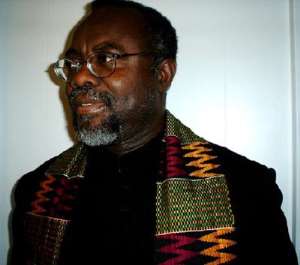
*Kwame Okoampa-Ahoofe, Jr., Ph.D., teaches English and Journalism at Nassau Community College of the State University of New York, Garden City. He is the author of “Dr. J. B. Danquah: Architect of Modern Ghana” (iUniverse.com, 2005). E-mail: [email protected].

 One dead, fire officer hospitalised after bee attack at Quarry Site in Sokode Gb...
 Israel and Iran step back from further strikes after renewed clashes
 Patients stranded as doctors, nurses refuse to see new patients over KATH CEO su...
 Avenor Rural Bank CEO’s house destroyed by fire
 Three arrested in Winneba for illegal mining near GWL water lines
 Two pupils of Alice Elite Academy laid to rest after fatal school bus crash
 Here are areas to be affected by ECG's planned maintenance on Tuesday
 Family of civil engineer killed in alleged military shooting demands justice
 SHS teacher allegedly beats female student over unpaid hostel fees
 Blow to EU defence cooperation as France, Germany abandon joint fighter jet prog...


