




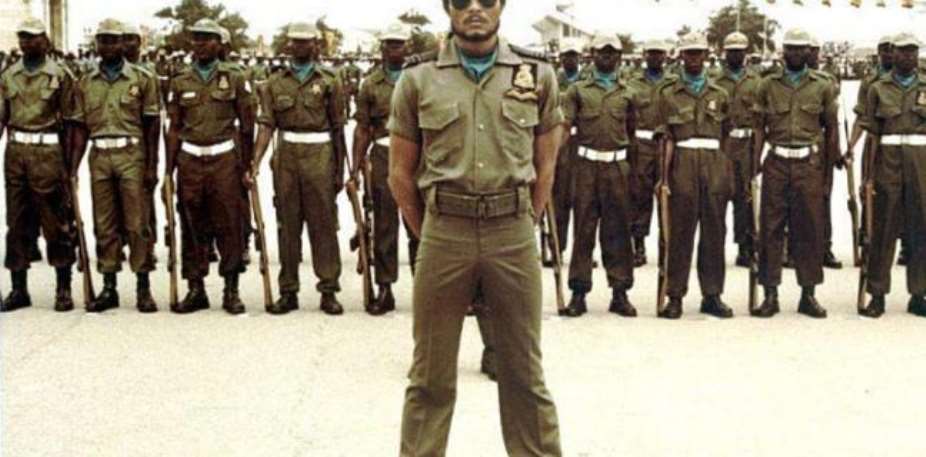
On the 43rd anniversary of the 31st December Movement, celebrated on 31st December 2024 at Nungua Town Park in the Krowor Constituency, the legacy of President Jerry John Rawlings remains a key subject of reflection in Ghana’s political and developmental discourse. The event, held in memory of the late Rawlings, emphasized his contributions as the founder of the 31st December Movement and reminded citizens of the ideals of the revolution that shaped his presidency. At the same time, it highlighted the current administration under President John Dramani Mahama, urging a "Resetting of the Nation"—a call to revisit Ghana's past policies and transform the country once again for the future.
The celebration was a poignant reminder of how Rawlings' political life, marked by highs and lows, had a profound impact on the nation's trajectory. His legacy is both revered and contentious, but his leadership undeniably played a crucial role in shaping modern Ghana. However, as we examine his leadership, we must also scrutinize some of the policy choices, including the adoption of World Bank educational reforms that have had far-reaching consequences for Ghana's development.
The Rise of Jerry John Rawlings: From Revolution to Presidency
Jerry John Rawlings first came to national prominence as a young military officer in the Ghanaian Air Force. His military coup on 4th June 1979, which ousted then-President General Fred Akuffo, was the beginning of his journey as a revolutionary figure. While the coup was initially aimed at addressing rampant corruption and poor governance, it was met with public support as Rawlings positioned himself as the champion of the masses, committed to restructuring the country and tackling injustice.
However, his first term as a military leader was short-lived. After a brief military junta, Rawlings handed over power to a civilian government following democratic elections in September 1979. But his return to power was inevitable. On 31st December 1981, Rawlings led another coup, this time to restore what he considered the nation’s ideals and principles of justice and accountability. This coup set the stage for his long reign as Ghana’s leader.
Rawlings' second tenure, under the banner of the Provisional National Defence Council (PNDC), soon transitioned into a civilian government after democratic elections in 1992, where he won the presidency under the banner of the National Democratic Congress (NDC). He would go on to serve two full terms, from 1992 to 2000, winning both elections with overwhelming support.
Rawlings' Legacy: Revolutionary Principles and Economic Policies
Rawlings is often celebrated for his vision of social justice, anti-corruption reforms, and his steadfast stance on defending Ghana's sovereignty. His "revolutionary" ideals, which emphasized equality, grassroots democracy, and accountability, became synonymous with his brand of leadership. In his early years as a leader, he pushed for land redistribution, improvements in education, and a commitment to fighting corruption.
The 31st December Movement, which later evolved into the foundation of the National Democratic Congress (NDC), also symbolized Rawlings' attempts to restructure the political and economic landscape of Ghana, often with an eye toward protecting the interests of the poor and marginalized.
His administration was characterized by efforts to stabilize the economy through fiscal reforms and the introduction of a mixed economy, which combined elements of state intervention with a market-oriented approach. Despite some criticisms of his authoritarian style of leadership, Rawlings’ tenure saw the establishment of democratic institutions, the restoration of multi-party politics, and the promotion of free speech, which paved the way for Ghana’s reputation as a beacon of democracy in Africa.
However, Rawlings' leadership was not without controversy. He faced accusations of being a “benevolent dictator” and frequently clashed with opposition figures and civil society organizations. Some critics argue that his long rule cultivated a culture of political repression and patronage, with key state institutions such as the judiciary and the media frequently coming under his scrutiny.
The World Bank Educational Reform: A Controversial Shift
One of the more contentious aspects of Rawlings' presidency was his adoption of the World Bank’s structural adjustment programs (SAPs) during the 1980s and early 1990s. These reforms were supposed to revitalize Ghana's economy through fiscal austerity, the liberalization of markets, and a shift towards privatization. However, their implementation led to mixed results, particularly in the education sector.
In 1987, Rawlings introduced a major educational reform program, in collaboration with the World Bank and other international financial institutions, which changed Ghana's educational system. The introduction of the new system, which included the "Free Compulsory Universal Basic Education" (FCUBE), was seen as a response to the pressing need to increase literacy and address the widespread poverty in rural areas.
However, critics of the policy argue that the implementation of World Bank-backed reforms came at the expense of Ghana's long-term development. The shift towards privatization, the reduction in government spending on public services, and the introduction of cost-recovery fees in the educational sector led to a dramatic rise in inequality. Although more children gained access to education, the quality of that education suffered, particularly in rural areas where infrastructure and resources were scarce.
The education system became more focused on quantity rather than quality, with schools overwhelmed by overcrowded classrooms, inadequate teaching materials, and an understaffed workforce. The World Bank’s influence in shaping these policies has been a subject of continued debate in Ghana, as many argue that they contributed to a widening gap in educational outcomes between the rich and the poor. These reforms, designed to boost the country's economic growth, arguably failed to deliver on their promises, stunting long-term human capital development.
Rawlings' Highs and Lows as President of Ghana
Rawlings' presidency saw both remarkable achievements and significant setbacks.
Highs:
- Democratization: Rawlings' transition from military rule to democratic governance in 1992 marked a turning point in Ghana’s history. His acceptance of electoral defeat in 2000 after two terms in office was a remarkable gesture of statesmanship and strengthened Ghana's democratic institutions.
- Economic Stability: Despite the structural challenges posed by World Bank reforms, Rawlings oversaw a period of relative economic stability, including increased foreign investment, infrastructure development, and international trade relations.
- International Recognition: Rawlings garnered international acclaim for his role in advocating for African unity and political stability. His leadership also attracted significant foreign aid and investments.
Lows:
- Authoritarianism: While Rawlings promoted democracy, his tenure was also marked by significant authoritarian tendencies, including the suppression of political opponents, media censorship, and restrictions on civil liberties.
- Economic Reforms: The World Bank-backed structural adjustment programs had mixed results, with negative consequences for many Ghanaians, particularly in education and healthcare.
- Political Polarization: Rawlings' polarizing style led to a deeply divided political environment, which persists in Ghana’s political landscape to this day.
Conclusion: A Complex Legacy
As Ghana celebrated the 43rd anniversary of the 31st December Movement, the legacy of President Jerry John Rawlings continues to resonate across the political and social landscape of the country. His role as a revolutionary leader, his push for democratic reforms, and his vision of social justice will always be remembered. However, his economic policies, particularly those linked to the World Bank's structural adjustments, left a controversial mark on the nation's development, particularly in the education sector.
Ultimately, Rawlings' legacy is a blend of triumph and failure—an embodiment of the complexities of leadership in a developing country. His contributions to Ghana’s political maturation and democratization will always be remembered, but the challenges that arose from some of his key economic decisions continue to shape Ghana’s development today. The ongoing debate over his legacy and the impact of his reforms is a reflection of the challenges that all nations face in reconciling revolutionary ideals with the practicalities of governance and sustainable development.

 Nyinahin Catholic SHS teacher seen fighting female student in viral video arrest...
 Beijing condemns US move to blacklist Chinese companies
 Trump gets a cold reception at NBA Finals game as Spurs beat Knicks
 One dead, fire officer hospitalised after bee attack at Quarry Site in Sokode Gb...
 Israel and Iran step back from further strikes after renewed clashes
 Patients stranded as doctors, nurses refuse to see new patients over KATH CEO su...
 Avenor Rural Bank CEO’s house destroyed by fire
 Here are areas to be affected by ECG's planned maintenance on Tuesday
 SHS teacher allegedly beats female student over unpaid hostel fees
 Blow to EU defence cooperation as France, Germany abandon joint fighter jet prog...


