




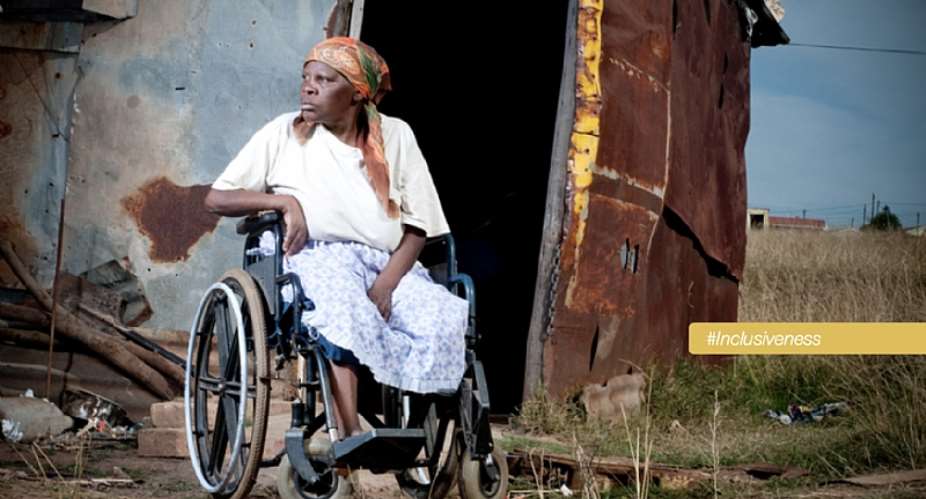
The systemic challenges facing people with disabilities in Nigeria go beyond personal stories; they reflect broader societal issues, ODIMEGWU ONWUMERE examines in this report that there is a large gap between policy development and actual implementation. The story finds out that governments at state and federal levels do not effectively enforce these laws, resulting in no real change in the lives of people with disabilities
In Nigeria, people with disabilities face significant barriers that affect their daily lives. Yasmin Bawa, a 24-year-old graduate who lives with multiple forms of scoliosis, is one example of these challenges.
She lives in a world filled with inaccessible infrastructure, unreliable transport, and social prejudice. Every day, she has to carefully plan her route and check the accessibility of buildings, which often results in frustrating experiences such as crawling up stairs or relying on help from others.
Yasmin's story highlights the widespread realities faced by the World Health Organization's (WHO), which estimated that nearly 25 million people with disabilities are in Nigeria. Despite protective laws such as the Discrimination (Prohibition) Act of 2018, many still face discrimination and barriers to accessing needed services.
The law aims to promote the integration of people with disabilities into society, but its implementation remains weak. As if that wasn't enough, Fatima Aliyu recounts her own experience of being wheelchair-bound and begging in Abuja due to paralysis from a childhood accident. She explains how she struggles to find places she can reach on her own due to a lack of ramps and accessible paths.
"My reliance on traditional healing instead of medical care further compounded my difficulties, forcing me to walk through harsh urban environments while caring for my son," she says. Amina Abdullahi's story illustrates the plight of people with disabilities in Nigeria.
Even after surgery, Amina's mobility impairment has not been fully resolved, forcing her to use a wheelchair for more than 30 years. Their frustration is further exacerbated by local security concerns and a lack of government support for people with disabilities.
"The systemic challenges facing people with disabilities in Nigeria go beyond personal stories; they reflect broader societal issues," she says.
Public infrastructure such as schools and hospitals are reportedly often lacking basic accessibility features such as ramps and elevators. The government’s failure to enforce existing laws or provide adequate support helps the exclusion of people with disabilities. Economic factors play a key role.
Studies show that about 40% of Nigerians live below the poverty line, with people with disabilities disproportionately affected, accounting for almost a third of those living in poverty. Unemployment among adults with disabilities is a staggeringly high 62.5%, compared to 21.5% for able-bodied adults. The stories of Yasmin, Fatima, and Amina highlight the urgent need for improved infrastructure, better enforcement of disability rights laws, and increased support from government and society at large.
Their resilience in difficult times is a stark reminder of the ongoing struggle for equality faced by people with disabilities in Nigeria. Some say the quality of medical care they receive is not something they can take home. The experiences of people with disabilities highlight systemic issues of neglect and discrimination that can have devastating consequences. There is the inspiring story of Rabi Ibrahim, a double amputee from Abuja. Despite her physical limitations, she consistently ensured her children were vaccinated but for how long.
The road to healthcare is full of obstacles. Ravi recalls a traumatic experience of being ignored by medical staff during childbirth because of her disabilities. She was left alone during childbirth, while another woman received emergency care.
"When I finally needed help, the nurses wouldn't help me get onto the delivery table, which was too high for me to climb on my own," she says. This had tragic consequences: her first child was stillborn due to the delayed care.
The incident left Rabi with a deep distrust of medical personnel and led her to avoid giving birth in hospitals altogether. As if that was not enough, Salamatu Saidou is a visually impaired woman who lives in the same community as Rabi. She said she faces challenges getting her baby to health centers through unmaintained routes.
“Even with a guide, every journey is dangerous as there is a risk of tripping on a stone or falling in the mud,” she says.
Their determination to ensure the health of their children highlights the added burden for disabled parents, who must overcome both physical barriers and social neglect. Shakirat Adegoke's story illustrates the neglect that people with disabilities face within the health system.
"After experiencing complications during pregnancy that led to the death of my fetus, I underwent surgery at a private hospital but was left with severe damage to my legs due to suspected medical malpractice," she explains.
The initial removal surgery did not remove all the remaining material from my uterus, necessitating further surgeries and leaving me in chronic pain for over 20 years. Shakirat's experience highlights how inadequate medical care can lead not only to physical disability but also to lifelong suffering and psychological scars.
These stories reflect wider systemic issues in Nigeria's health system, where people with disabilities are often excluded and subjected to discriminatory practices. A lack of adequate facilities and trained staff further worsens these challenges, leaving many people with disabilities vulnerable at critical moments such as childbirth and routine medical visits.
The stories of Rabi Ibrahim, Salamatu Saidu, and Shakirat Adegoke show how neglect of people with disabilities can manifest in life-altering ways, from loss of trust in medical professionals to ongoing physical pain and mental distress.
These people often face human rights violations, including prejudice, discrimination, and violence. Societal perceptions of disability can lead to exclusion from community activities and social services, increasing feelings of isolation and hopelessness for people with disabilities.
Access to basic services such as health care, education, and employment remains a key issue. Less than 1% of people with disabilities are reported to be employed in the formal sector, and access to education is similarly low, with less than 2% having the opportunity to receive an education. This lack of access not only limits their economic potential but also contributes to a cycle of poverty that is difficult to break.
The physical environment poses further challenges. Many public buildings and transport systems were not designed with accessibility in mind. The law provides for a five-year transitional period to transform public infrastructure to accommodate people with disabilities, but progress has been slow. Without barrier-free facilities, people with disabilities find it difficult to fully participate in social life.
They often face corruption in various sectors, such as health and education. They may be subject to bribery and other forms of exploitation when accessing services that should be legally available to them. This further worsens their vulnerability and reinforces their exclusion. Despite these challenges, there is ongoing advocacy work aimed at improving the situation of persons with disabilities in Nigeria. Organizations work tirelessly to raise awareness of the rights of persons with disabilities and advocate for better implementation of existing laws such as the Anti-Discrimination Act.
These efforts include training journalists to report fairly on disability issues and advocating for inclusive policies within government. However, in practice, regardless the ratification of the Anti-Discrimination Act for Persons with Disabilities in 2018, there is a lack of implementation and enforcement of the policy.
Research shows that there is a large gap between policy development and actual implementation. Governments at state and federal levels do not effectively enforce these laws, resulting in no real change in the lives of people with disabilities. Many states have enacted their own laws for people with disabilities, but the level of enforcement varies widely and often has minimal impact on accessibility and legal protections.
Ignorance about disability issues is widespread among policymakers, employers, and the public. This ignorance contributes to negative attitudes towards people with disabilities and can manifest as prejudice and discrimination. Many public service providers lack training on how to effectively support people with disabilities.
Without proper education on inclusion and disability rights, policies remain more theoretical than practical. People with disabilities in Nigeria also face significant economic challenges that impede their access to services and opportunities. The high unemployment rate of this population (almost twice that of the general population) is further exacerbated by structural barriers such as inaccessible jobs and lack of resources. These economic constraints make it difficult for people with disabilities to assert their rights or benefit from existing policies. Cultural beliefs surrounding disability often perpetuate stigma, leading to social exclusion and discrimination against people with disabilities.
Misconceptions about the causes of disability can lead to negative attitudes within families and communities, further isolating affected people from support systems that could help them overcome social barriers. Nigeria lacks reliable data on the prevalence and needs of disability. This lack of information hinders effective policy responses and programs tailored to the specific challenges faced by people with disabilities. Without comprehensive data collection efforts, it becomes difficult for policymakers to understand the scope of the problem or measure progress towards inclusion.
Indeed, for people with disabilities, access to basic services such as healthcare, education, and transport remains a major challenge as infrastructure does not meet their needs. Many facilities do not have necessary accessibility features such as ramps or special medical equipment, limiting their participation in social life. In this regard, the United Nations (UN) plays a key role in supporting people with disabilities in Nigeria through various initiatives and structures aimed at promoting the rights of people with disabilities and ensuring their inclusion in society.
This support is primarily manifested through the UN Convention on the Rights of Persons with Disabilities (CRPD), which Nigeria ratified in 2010. The CRPD creates a comprehensive framework for protecting the rights of people with disabilities, emphasizing their right to full participation in all aspects of life. The UN is committed to implementing policies that are in line with international standards set out in the CRPD. This includes encouraging the Nigerian government to enact laws prohibiting discrimination against persons with disabilities, such as the Disability Discrimination (Prohibition) Act, which came into force in January 2019.
The UN supports civil society and disability rights organizations in Nigeria that are working tirelessly to raise awareness and drive policy changes that benefit people with disabilities. The UN is providing technical assistance to help Nigeria develop effective strategies to implement its disability inclusion policy. This includes capacity-building programs to improve the understanding of government officials, NGOs, and local leaders on disability rights and building an inclusive environment.
By conducting workshops, trainings, and seminars, the UN is helping stakeholders learn best practices for integrating people with disabilities into education, health care, employment, and other key areas. The UN also monitors Nigeria's progress in implementing its obligations under the Convention on the Rights of Persons with Disabilities. This includes reviewing reports from the Nigerian government on its efforts towards implementing the disability rights law and assessing whether these measures are effectively meeting the needs of persons with disabilities.
The information collected is used to provide feedback and suggestions for improvement. Collaboration with local organizations is another important aspect of the UN's support for persons with disabilities in Nigeria. Working with grassroots organizations that understand the local context enables the UN to better address the specific challenges faced by people with disabilities. These partnerships enable community-based efforts to promote accessibility, awareness campaigns, and support services tailored to local needs.
The UN has integrated disability considerations into its broader development agenda through the Sustainable Development Goals (SDGs). Goal 10 aims to reduce inequalities within and among countries, including by removing barriers to people with disabilities. The UN encourages Nigeria to adopt inclusive practices in all sectors, including education, health, and employment, to ensure that people with disabilities can contribute to and benefit from the country's development efforts.
Onwumere is Chairman Advocacy Network On Religious And Cultural Coexistence (ANORACC). Photos credit: Online

 One dead, fire officer hospitalised after bee attack at Quarry Site in Sokode Gb...
 Israel and Iran step back from further strikes after renewed clashes
 Patients stranded as doctors, nurses refuse to see new patients over KATH CEO su...
 Avenor Rural Bank CEO’s house destroyed by fire
 Three arrested in Winneba for illegal mining near GWL water lines
 Two pupils of Alice Elite Academy laid to rest after fatal school bus crash
 Here are areas to be affected by ECG's planned maintenance on Tuesday
 Family of civil engineer killed in alleged military shooting demands justice
 SHS teacher allegedly beats female student over unpaid hostel fees
 Blow to EU defence cooperation as France, Germany abandon joint fighter jet prog...


