




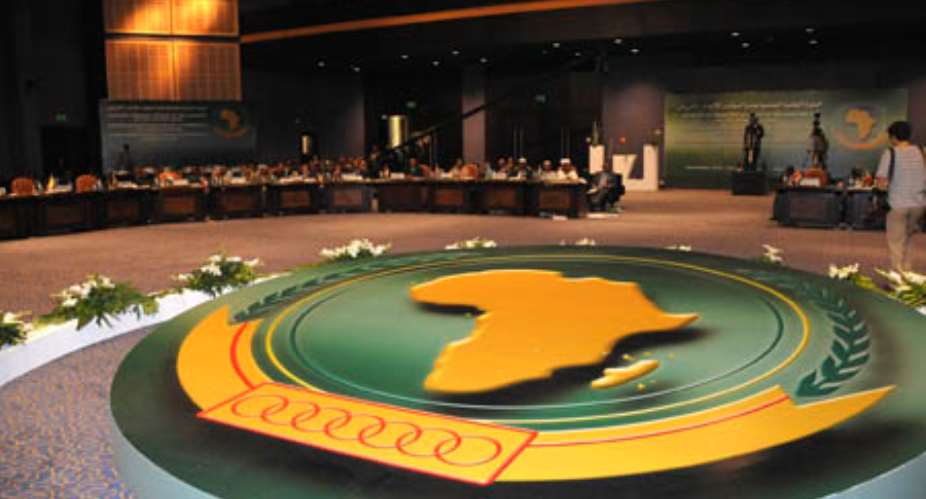
The African Union (AU) is a union consisting of all the African nations established on 9 July 2002, as a successor to the Organization of African Unity (OAU). Among the objectives of the AU are; to achieve peace and security in Africa; to accelerate the political and socio-economic integration of the continent; to promote and defend African common positions on issues of interest to the continent and its peoples; and to promote democratic institutions, good governance and human rights.
As AU celebrates another AU Day on 25th May 2013, the Center for African Democratic Affairs (CADA) looks at elections, diversity and democracy in Africa, with a specific focus on post-election violence, ethnic divisions and how they can be avoided. Not too distance past and following a number of hotly contested presidential election, the world watched some African countries plunge into chaos as political parties and militia groups took to the streets. It seemed a throwback to the 1980s, when Sub-Saharan Africa was known for its violent coups, bloody civil wars and autocrats.
Similar situations have been witnessed in countries like Kenya and Zimbabwe, but they are now the exception rather than the rule. Over the past years, CADA has noticed that the continent has been home to a virtual democratic renaissance, evidenced by the organisation of a number of democratic elections and remarkable improvements in governance. Today, regional institutions, like ECOWAS, SADC and the East African Community, now keep a close watch on national politics, going as far as suspending countries which experience unconstitutional changes of government.
Elections are an essential component of democratisation in Africa. They enable people to choose among a host of competent parties and leaders, facilitate peaceful change, foster more open societies and in most cases lead to increased economic growth and long-term development. Success stories abound. However, against all odds, a number of countries on the continent continues to organize generally democratic election and transitioned to civilian rule in ballots widely hailed as example for the rest of Africa.
While Africa is clearly and generally becoming more democratic, elections taking place on the continent don't always lead to more democracy. For ballots to serve their intended purpose, politicians and political parties must compete equally for power and accept the results, elections must be peaceful and intimidation-free and the scores if possible must be kept by independent bodies. But first and foremost, elections succeed when civil society is actively involved.
When these conditions are absent, elections can in fact become theatres for manipulation, division and chaos, fuelled by undemocratic political parties. In such settings, sectional, tribal, ethnic or religious tensions - combined with 'winner takes all' mindsets - can explode into deadly cocktails of violence. Kenya knows that lesson well. In 2007, contested elections in East Africa's economic giant descended into anarchy as politicians stirred up ethnic violence, leading to 1,200 deaths and 600,000 people internally displaced.
Making elections work in Africa requires that governments, election management bodies, political parties and civil society organisations not only join efforts to ensure free, fair, peaceful, credible and transparent elections, but address the root cause of political violence: exclusion.
High rates of unemployment, lack of political participation, gender inequalities and deep imbalances in the distribution of local level resources, accentuated by political patronage, lie at the heart of the continent's failed democracies.
Youth and women are among the most marginalised populations in sub-Saharan Africa. Young people below the age of 35 account for 65% of Africa's total population, yet their unemployment rate, at 27%, stands at twice the world average.
In the absence of meaningful political inclusive participation, these youths are prone to political manipulation and violence. Unemployment and exclusion from decision-making processes render them hopeless and desperate. The potential for the continent's youth to contribute to sustainable economic development, democracy and peace still remains untapped.
Furthermore, while there are more women in decision-making positions and in parliament than ever before women still struggle to make themselves heard as policy makers. African countries and the international community must continue to invest in elections to strengthen democracy. At the same time, they must strive to promote developmental programmes that focus on people. Such developmental programmes must allow all sections of society to take an equally active part in shaping the future of the continent.
Paving the way for critical elections in the years ahead, new constitutions and constitutional reviews must be designed to achieve just that. It must include a wide-ranging set of reforms to correct the errors of the past: a new Supreme Court; a comprehensive bill of rights, balanced planning and resource allocation in the different regions and countries; and a one-third quota for women in the public sector.
Within a year of changing government, a number of countries have embarked on drafting a new constitution-with active civil society participation. Attention must be geared towards positive economic growth in Africa aimed at building institutions that are more responsive and representative of all ethnic groups and encourage more inclusive development.
Such initiatives will definitely inspire and investments for sustainable democratic development on the continent. This is because CADA believe that the international community nowadays are looking at how the continent to manages diversity so that it becomes not a liability but an asset for democracy and development in Africa.
In years ahead, CADA prays that elections will be held across the continent in a more free, fair, peaceful, credible and transparent manner. And how the ballots turn out will have a profound impact on Africa's development. Together, let us work to create an open and vibrant society that responds to the needs of African men, women and youths of all ages.
 Over 12,000 women living with obstetric fistula in Ghana — Asokwa MP
 Mahama secures 1,840 farm equipment deal from Belarus
 Titus Glover slams Mahama’s flood report directive, calls it “waste of energy an...
 We have increased posting of doctors from 12 to 100 to underserved regions in 20...
 'You had the effrontery to call me struggling lawyer, you won't come back to pow...
 Belarus manufacturers to storm Ghana next week after President's visit
 Government to offer tax incentives for factories located outside Accra
 White House World Cup chief defends visa ban for Somali referee, Iranians
 Talensi DCE courts investors for revival of Pwalugu Tomato Factory
 Manhyia South MP says free speech under threat, cites 17 arrests in 16 months un...


