




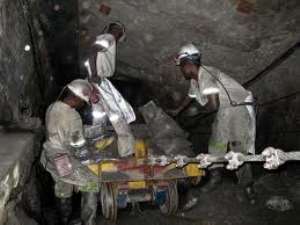
Ghana is no longer the preferred investor' destination for mining business as the cost of mining operations rises, says Dr. Toni Aubynn, Chief Executive of the Ghana Chamber of Mines.
Excessive taxation of mining as well as increased prices of electricity and other commodity, according to him, has positioned the country as the most expensive place for mining business in the world.
“If we are not careful, the industry will be wobbling, leading to job loss and hardship”, Dr. Aubynn told journalists in Kumasi.
The mining industry has been leading the country's foreign exchange earnings since 2000, accounting for an annual average of 38% and 42% of Ghana's gross export in 2011.
The sector also contributes highest to the Ghana Revenue Authority, paying about Gh₵1billion in 2011 – representing 27.6 percent of the GRA's total collections for the year.
Foreign Direct Investments (FDIs) in the production, exploration and support service companies sub-sectors of the mining industry shot up from $6million in 1983 to $780million in 2011.
Dr. Aubynn however says interruptions through the review of existing fiscal regimes, especially without due consultations, distorts the free flow of operations which is detrimental to the mining business.
Recent imposed fiscal measures on mining companies include the increase in corporate tax from 25% to 35%, proposed windfall profit tax of 10%, review of Stability Agreements and changed mineral royalty from a 3-6% range to a flat rate of 5%.
The CEO of the Chamber of Mines noted that these increases in the fiscal regimes have adverse effects to business, emphasizing that “mining should be a catalyst for development and not just an exclusive industry that provides fiscal imports”.
“We think that tax is good but we believe that for the State to maximize the benefits from the exploitation of its natural resources, fiscal imposition is not the only and probably the best way to do that”, Dr. Aubynn told Luv Biz Report in an interview.
He rather said mining should be fully integrated into the local economy, stating that the Chamber is encouraging the involvement of local enterprises in the business of mining to generate more employment, deepen economic integration and increase revenue for government.
“There should be a mix of ensuring that there is significant local participation in the mining value chain; that is where you can generate more revenue. If you only focus on the front end of mining and then you start taxing more, what happens is that those who are yet to bring their money will see a country which is taxing more and sometimes it will indicate our lack of understanding of the mining business”, stated the Mines Chamber CEO.
Story by Kofi Adu Domfeh/Luv Fm/Ghana
 Former MASLOC CEO Sedina Tamakloe returns to Ghana after extradition to serve 10...
 Tension in Birim North as angry NDC youth attempt to disrupt cooperative mining ...
 One dead, several injured in tipper truck and fuel tanker crash on Accra–Tema Mo...
 How 70-year-old building was finally demolished over fear of collapse in Osu
 Minority MPs thank Afenyo-Markin for capacity-building programme in Canada
 Ghana has everything needed to prosper yet graduates remain unemployed — Dr Step...
 June 9: Cedi sells at GHS12.50 on forex market, GHS11.85 on BoG interbank
 Stephen Amoah advocates mixed market economy to tackle rising cost of living in ...
 KMA to reintroduce enhanced ‘Samansaman’ sanitation enforcement system from July...
 Nyinahin Catholic SHS teacher seen fighting female student in viral video arrest...


