




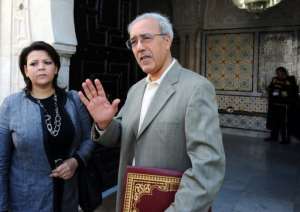
TUNIS (AFP) - The independent Tunisian authority charged with reforming the media announced on Wednesday that it had shut down after failing to achieve its objective, accusing the Islamist-dominated government of censorship.
"The body does not see the point in continuing its work and announces that it has terminated its work," said Kamel Labidi, who heads the National Body for the Reform of Information and Communication (INRIC).
Labidi justified the decision by saying the government had reverted to "censorship and disinformation."
INRIC was created after the revolution that overthrew president Zine El Abidine Ben Ali in January last year to reform the media sector, and particularly state media organs, to guarantee Tunisia's previously restricted press freedom.
Labidi, the organisation's director, is himself a journalist who lived in exile during Ben Ali's dictatorship.
INRIC and several human rights organisations have repeatedly criticised the government for lacking the will to take steps to guarantee the independence of the media.
It has cited the failure to apply decrees 115 and 116, which are designed to ensure the protection of journalists and provide the basis for a framework regulating new audiovisual media.
 BoG's $260 million building: It was Ato Forson who first proposed 'sell-and-leas...
 'We have to do soul-searching' — Mahama orders nationwide flood assessment
 Court orders woman beater to pay GHS5,000 compensation to midwife at Tema Commun...
 Over 12,000 women living with obstetric fistula in Ghana — Asokwa MP
 Mahama secures 1,840 farm equipment deal from Belarus
 Titus Glover slams Mahama’s flood report directive, calls it “waste of energy an...
 We have increased posting of doctors from 12 to 100 to underserved regions in 20...
 'You had the effrontery to call me struggling lawyer, you won't come back to pow...
 Belarus manufacturers to storm Ghana next week after President's visit
 Government to offer tax incentives for factories located outside Accra


