




KHARTOUM (AFP) - An airlift of up to 15,000 ethnic South Sudanese began on Monday from Khartoum, taking them back to a homeland some have never known.
The first of dozens of planes chartered by the International Organisation for Migration (IOM) took off at 0615 GMT with around 160 South Sudanese.
They are among 12,000-15,000 Southerners who have been waiting to travel South from the Kosti way-station 300 kilometres (190 miles) from Khartoum.
Kosti became home to the biggest single concentration of South Sudanese needing transport to South, with many living in makeshift shelters or barn-like buildings for up to a year, and dependent on foreign aid.
The governor of the Kosti area declared the migrants a threat to security and the environment and ordered them out by May 5, sparking concern from the United Nations and the IOM which has already helped thousands of South Sudanese head South.
Officials extended the deadline to May 20 but then told IOM to disregard the time limit after plans for the airlift were devised.
Khartoum authorities hung a banner at the airport wishing the Southerners a safe journey.
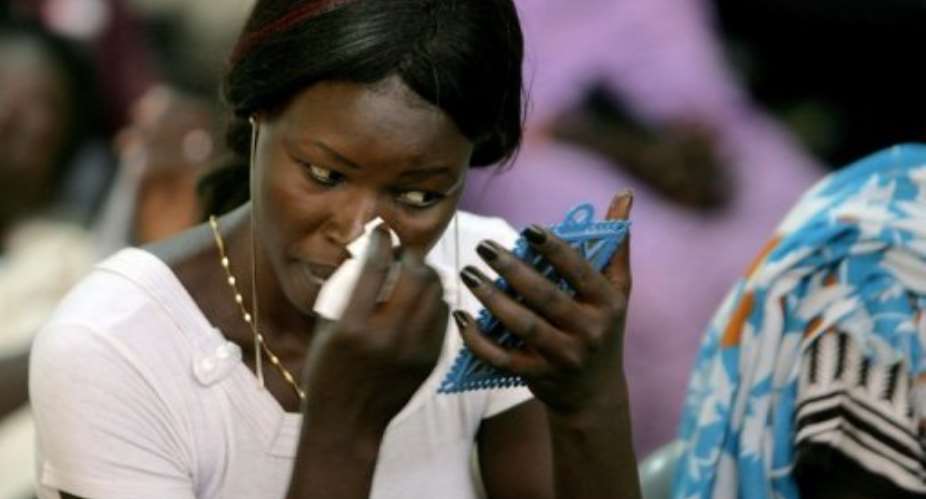
"It is my first time to the South. I was born here," Cecilia Peter, 27, said through a translator as she lined up for a boarding pass with her five tiny children.
Peter said the family had spent 13 months in Kosti, after losing her job as a teacher.
All ethnic Southerners were dismissed from Sudan's civil service ahead of South Sudan's independence last July under a peace deal that ended 22 years of civil war which killed two million people and drove many more to the north.
The South Sudanese in Kosti are among about 350,000 ethnic Southerners who the South Sudanese embassy estimates remain in the north after an April 8 deadline to either formalise their status in the north or leave the country.
Hundreds of thousands of others have already gone to South Sudan.
Asked whether she could not get documentation to stay in the north, Peter said simply, "No." Passengers on the IOM flights do not require individual travel documents.
Peter said her husband will accompany the family's luggage by truck to Renk, just over the border in South Sudan. Luggage is a big concern for the returnees, who want to bring as much as possible to the poverty-stricken South.
Adelino Jovida, 31, also lost his government job, as a policeman in Gedaref state, and then spent 11 months in Kosti.
He said he came to northern Sudan from the South in 1983 -- when he was about as young as the small child sitting in his lap. His wife and their other infant sat beside him, in the waiting room of the airport terminal normally used by people travelling to Mecca for the hajj.
Although this is his first trip back to the South Jovida said, unsmiling, "I'm happy to be able to see my relatives again."
One older woman in a blue floral shawl shuffled through the terminal in yellow sandals, with a long wooden walking stick.
A younger girl lugged a large ghetto blaster.
The IOM said most of the Southerners in Kosti did not have their own means to arrange transportation.
Jill Helke, who heads the IOM in Sudan, said a second flight may take more Southerners to Juba later Monday.
Initial plans had called for six flights a day, but the aircraft and crews have been delayed in arriving, she said.
Even with six daily flights the airlift would require about two weeks to move all the Kosti Southerners, who are first bussed to Khartoum.
The IOM had plans for transporting thousands of people from Kosti by barge but Sudan's military expressed security concerns.
Since late March, Sudan and South Sudan have been fighting along their border, raising fears of wider war amid a climate of heightened nationalism in the north.
A UN Security Council resolution on May 2 ordered both sides to cease hostilities and to resume by May 16 negotiations on unresolved issues including the status of each country's nationals in the other country.
South Sudan's ambassador in Khartoum, Kau Nak, climbed the stairs of the airplane to leave his citizens with some parting words. Although they may have had "some bad experiences", he urged them not to direct anger towards innocent Sudanese.
"Because the separation that took place is a political separation," which should not overshadow cultural and other factors that bring Sudan and South Sudan together.
"We shall remain as permanent neighbours," Nak said.
 Belarus manufacturers to storm Ghana next week after President's visit
 Government to offer tax incentives for factories located outside Accra
 White House World Cup chief defends visa ban for Somali referee, Iranians
 Talensi DCE courts investors for revival of Pwalugu Tomato Factory
 Manhyia South MP says free speech under threat, cites 17 arrests in 16 months un...
 KATH doctors suspend strike after Otumfuo’s intervention
 Mahama is losing control of his government — NPP Communicator
 Health Minister’s suspension of KATH CEO technically right — Prof Beyuo
 Korle Bu Teaching Hospital conducts Ebola emergency simulation to strengthen fro...
 Abandoned newborn baby found near gutter at Agona Swedru Woaraba


