





A five year old boy recently caught the spectacle of many people when he was seen clad in President Obama's T-shit, cup and other paraphernalia's chanting Obama, Obama, Obama in the streets of Accra. The boy who apparently was filled with excitement because he had heard so much about President Obama and his visit to Ghana became the toast of the day.
Ghanaians across the length and breadth of the country are filled with ecstasy over the two-day visit of the first black President of America, Barack Obama.
His visit which is the first to a sub-Saharan African country upon assuming office as the 44th President of the United States has entrenched Ghana's democratic credentials in the sub-region.
The Obama fever which has griped both the young and old is evident in all the major cities of the country with mad rush for Obama T-shirt, handkerchief, cloth, cup, flag and key-holders. Many are making brisk business out of Obama's souvenirs in the country.
It is no surprise at all that President Obama who has an African father that hails from Kenya decided to visit Ghana. Ghana over the years has emerged strongly as the beacon of African democracy and has held four successive Parliamentary and Presidential elections. Ghana is the first 'sub-Saharan' African country to gain political independence and was at the forefront of the Pan-African struggle against Western imperialism and domination. In addition to that Ghana was at the centre of the infamous Trans-Atlantic enslavement of Africans and since President Obama's visit coincides with the annual PANAFEST celebrations it is appropriate that he comes to Ghana.
Throwing more lights on why Obama chose Ghana, the White House Senior Director for African Affairs, Michelle Garvin noted that “the Ghana stop is an acknowledgement of the nation's stability and that Obama certainly looks forward to travelling more widely in Africa in the future. And Ghana is a truly admirable example of a place where governance is getting stronger, on thriving democracy. They just had an extraordinary close election at the end of last year, decided ultimately by about 40,000 votes”.
Political and good governance observers have all admitted that Ghana deserves this visitation.
Although there is a need for Ghanaians to celebrate over this historic visit, conscious effort must be made by the government to ensure that every opportunity in this visit is maximized to facilitate the attainment of the Millennium Development Goals (MDGs). Ghana which is still struggling to achieve the eight-bound goals must take advantage of this visit to discuss how the US government can double her assistance to address the problem of poverty and hunger, employment, health, energy, education, water, sanitation, climate change and environment.
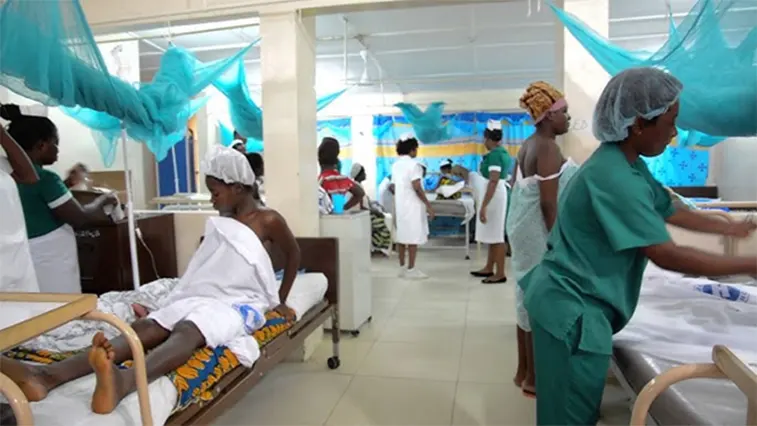
Ghana's poverty level which stands at 28.5 per cent according to the Ghana Standard Living Survey is very worrying and if not addressed aggressively the nation's quest of achieving goal one and the others may be a mirage. The country is still confronted with high rate of child and maternal mortality. This is because most mothers and children do not have access to an improved and affordable medical service. Although majority of Ghanaians are enjoying low cost of medical services via the National Health Insurance Scheme (NHIS), the available facilities are extremely in adequate to meet the demand chain. Some nursing mothers on many occasions have to face the pains of lying on a wooden chair meant for visitors at some of these hospitals because the beds are not enough to cater for them. To add to this unfortunate health problem facing the country, most of the hospitals lack the basic drugs for the treatment of diseases. I recently visited one of the government hospitals and to my uttermost dismay they did not even have a paracetamol tablet for patients.
The country, even though can boast of an increased rate of enrollment in primary education, the issue of quality and access to a standard educational facilities leaves much to be desired in her quest to achieve goal 2. The enrollment rate does not measure with the available classrooms, teachers, books and other educational materials facilities needed for quality education. Some children still study under trees and do not have access to books and teachers. In some parts of the country, children do not have any inspiration to go to school because they end up getting irritated and burdened by the extremely uncomfortable educational facilities they have in their schools. This has led to low retention rate despite government's intervention policy of the capitation grant and school feeding programme.
The issue of sanitation is also another burden on the country. The country is still confronted with the management of filth despite efforts made by the government in partnership with the private sector. The emergence of Zoomlion Ghana Limited has seen some improvement in the management of waste. However, this efforts needs to be doubled if the nation wants to achieve the goal on environmental sustainability. According to government sources, only 70% of waste generated in Accra is lifted to the final disposal sites. Record on liquid disposal is even worse. Statistics from the MDGs Annual Report reveal that only ten per cent of Ghanaians have access to improved toilet facilities. It is therefore no surprise that up-to four-fifth of out-patients complaints may be directly related to sanitation.
Notwithstanding these challenges, one cannot underestimate the fact that Ghana is one of the few African countries making strides with respect to the attainment of the MDGs. However, with the pace of progress, she may miss it if government fails to holistically embrace the MDGs by putting in place prudent and aggressive policies that will effectively engage citizens and development partners.
This is why President Obama's visit offers the country the finest opportunity to seek for an enhanced partnership for development. The U.S has been a major development partner to Ghana for decades. This was what brought Presidents Bill Clinton and George Walker Bush to Ghana in 1998 and 2008 respectively. Ghana is currently enjoying an excess of $500 million of U.S Millennium Challenge Account. This facility is enhancing food security, providing credit to farmers to grow their businesses, rehabilitating roads to help farmers to access markets and building schools to educate the next generation. Ghana is also taking advantage of U.S African Growth and Opportunity Act (AGOA) to intensify her trade relations.
Most importantly, apart from the existing support Ghana is enjoying from the U.S government toward economic development, President Obama has committed himself to the MDGs. Some of his policy direction to achieving the MDGs include: Doubling annual foreign assistance from $25 billion to $50 billion, signing the Education for All Act and request the funding needed to fulfill our share of the $10 billion needed annually to put 100 million children in school. Others include lifting the 33% cap on US contributions to the Global Fund, ensuring at least 4.5 million people are on ARV treatment by 2013, and preventing 12 million new infections. He has also promised building on the $1billion per year commitment to malaria in the recent PEPFAR reauthorization and dramatically expanding access to mosquito nets and the treatment of malaria. President Obama has also tasked himself to half the number of people living on less than a dollar a day and suffering from hunger by 2012.
This is a very clear opportunity for Ghana to take advantage of these policies outline by President Obama to make the MDGs a reality by 2015. Ghana should be the first African country to benefit from this U.S policy. I expect government's discussion with President Obama to centre on these areas. It must also position the country to take advantage of the many opportunities that will come after the visit. There is an urgent need to begin to plan what it will do next after President Obama's visit. What is the country going to do to maximize the global attention it has gotten and its subsequent benefits to Ghanaians.
In conclusion, we should be mindful of the fact that our destiny lies in our hands, even though in this globalised world no country can stand alone.
By Leonard Ackon
A Development Communication Consultant
(Abibimman Foundation)
[email protected] +233 249175629
 Former MASLOC CEO Sedina Tamakloe returns to Ghana after extradition to serve 10...
 Tension in Birim North as angry NDC youth attempt to disrupt cooperative mining ...
 One dead, several injured in tipper truck and fuel tanker crash on Accra–Tema Mo...
 How 70-year-old building was finally demolished over fear of collapse in Osu
 Minority MPs thank Afenyo-Markin for capacity-building programme in Canada
 Ghana has everything needed to prosper yet graduates remain unemployed — Dr Step...
 June 9: Cedi sells at GHS12.50 on forex market, GHS11.85 on BoG interbank
 Stephen Amoah advocates mixed market economy to tackle rising cost of living in ...
 KMA to reintroduce enhanced ‘Samansaman’ sanitation enforcement system from July...
 Nyinahin Catholic SHS teacher seen fighting female student in viral video arrest...




Comments
Come on Obama. Make it a serious crime punishable with a lengthy prison term to offer a bribe to any African politician, official, bureaucrat, cop, judge, etc. It's cold cash bribes from the rest of the world that are, generally speaking, responsible for the so-called African corruption problem. Bribes are used to cheaply mine resources (including oil and diamonds)without regard to the people or environment, sell weapons, and dump toxic waste across Africa and on its shores. Without outside b...