




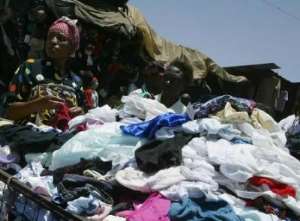
It's impossible to have a conversation about fashion in Africa—traditional or contemporary — without talking about the used-clothing industry and how damaging some people say it's been.
A whole industry has cropped up around apparel that's been donated to charities located oceans away, imported throughout the African continent and then sold cheaply in African marketplaces. These low prices undercut local retailers and undermine the entire textile and garment business in Africa.
The importing is sometimes done by enterprising individuals, but, more often than not, this huge, multimillion-dollar industry is orchestrated by charitable multinational organizations. These aid agencies' primary mission is, ostensibly, to provide various forms of relief to residents—not only in the harrowing face of disaster, but also through the challenging facts of day-to-day life. That's one major aspect of the controversy surrounding the industry.
But it's not the only one. The psychological—and, as a result, financial—blows of the used-clothing industry have been crippling. What seems to be carried over, along with the previously worn clothing, is that old-colonial mentality of "ours is better than yours," the often unspoken belief heralding all that is Western as superior, and all that is African as inferior.
Especially telling are the various names, phrases and labels attached to the industry. In Togo, the garments are referred to as "dead yovo" clothing. Translation: “dead white person clothing.” Across the border, in Ghana, my native country, the used clothing is called "broni wa wo." Literally translated, this expression means: “a white man has died.” After all, only death could separate a white person from such wonderful clothing: jeans—skinny, bootleg, stonewashed, stretch; faux Burberry dresses, trousers, scarves; T-shirts advertising products, Web sites, conferences and other events; bras—lace, Wonder, padded, with underwire, without underwire.
In some countries, the preference for used clothes has all but killed the local textile industry. The used-clothing industry is Kenya's seventh largest import, raking in well over 60 million euros per year. Hundreds of thousands of African workers have lost their jobs as a result of these imports. In Malawi, the largest textile company had to close its doors. Other such companies in Mozambique and Uganda are headed toward bankruptcy. Zambian textile workers have staged several strikes in an effort to promote national and international awareness of their plight.
In Ghana, the government has tried to rejuvenate their local textile industry by announcing a program called National Friday Wear, which encourages all citizens to dress in traditional clothes in hopes that the trend will spill over into other days.
African designers have mounted a spirited defense. Many are biting back at the Western world and revitalizing the fashion industries in their own countries, industries which had nearly been brought to a grinding halt by the demands of a changing market.
Part of the problem is that younger generations no longer want to wear "outdated" traditional attire; instead, they crave the sort of sophistication and modernity promised in the pages of American and European magazines. They covet the styles they see on the latest television shows—Hollywood sitcoms and celebrity gossip shows imported by a fast-paced cable market. And the controversial used-clothing trade is quick in its attempt to fill each and every one of those fashion desires.
So what should we do about it?
There are no easy answers. But what many don't understand is that African textiles are much more than an assemblage of brightly colored cloth. Many of the designs have names, usually in the form of an aphorism. And they contain stories, folklore which is sometimes literally written into the cloth. Africans use fabric in much the same way that the Western world uses newspapers and magazines to commemorate, document and celebrate events, accomplishments and individuals.
When Barack Obama was elected as America's first black president, Africans all throughout the continent sewed their pride into their cloth. When Miriam Makeba died, she was honored the same way. In traditional engagement ceremonies, fabric is a requisite part of the dowry that a male suitor presents to the woman's family. Fabric is handed down from one generation to another. I inherited a number of my grandmother's outfits. I will pass them on, along with the history and culture they carry, to my daughter. Because of what I've seen first-hand, I believe that donating used clothing to charities which then export them to Africa will ultimately result in the death of such traditions and legacies—which is why I won't do it.
By: Meri Nana-Ama Danquah
Source: www.theroot.com
Meri Nana-Ama Danquah is the editor of The Black Body, a collection of personal essays, which will be published this September by Seven Stories Press.

 How 70-year-old building was finally demolished over fear of collapse in Osu
 Minority MPs thank Afenyo-Markin for capacity-building programme in Canada
 Ghana has everything needed to prosper yet graduates remain unemployed — Dr Step...
 June 9: Cedi sells at GHS12.50 on forex market, GHS11.85 on BoG interbank
 Stephen Amoah advocates mixed market economy to tackle rising cost of living in ...
 Publish a clear and detailed BoG recapitalisation plan — NPP urges gov't
 Completely abandon idea of selling BoG headquarters — NPP urges gov't
 French President Macron to attend Ghana's Next Steps Conference on Reparatory Ju...
 Nyinahin Catholic SHS teacher seen fighting female student in viral video arrest...
 Trump gets a cold reception at NBA Finals game as Spurs beat Knicks



Comments
I am suggesting, the Textile Factories should team up back home and organise FREE Fashion Shows through out the year (at lest once in every month) in every Region exhibiting their products in different uses and styles. Taylors and Seamstresses should be encouraged and also come out with beautiful styles to attract the people like what we see in our neigbouring francophone countries.