




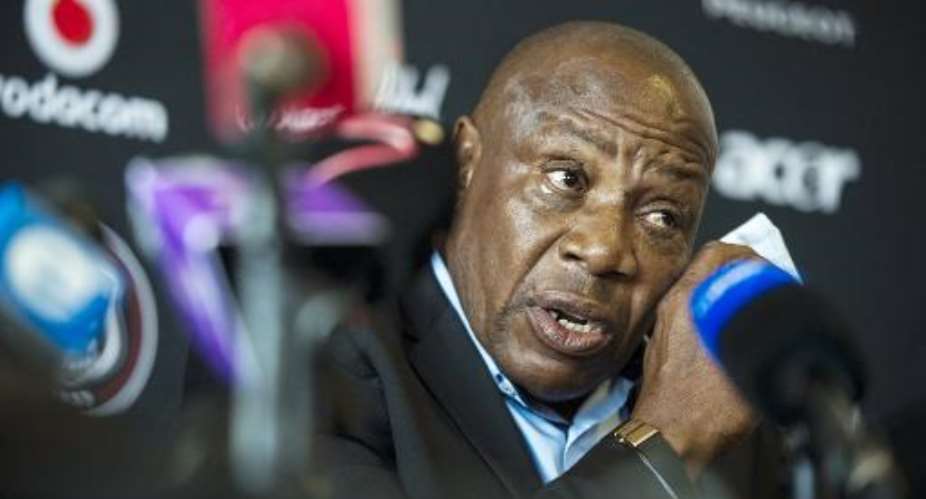
Mongomo (Equatorial Guinea) (AFP) - South Africa coach Ephraim 'Shakes' Mashaba has insisted his team have nothing to be ashamed of despite crashing out of the 2015 Africa Cup of Nations at the first hurdle.
Bafana Bafana (The Boys), the 1996 African champions, finished bottom of Group C with a point from three matches after going through the qualifying phase unbeaten.
They were beaten 3-1 by Algeria, drew 1-1 with Senegal and lost 2-1 against Ghana in their group games.
Mashaba said his young team held their own in both the qualifiers as well as Equatorial Guinea 2015 and have taken a lot of positives from the experience.
“It was a good learning lesson for the boys. We went through the qualifiers -- they did very well. We played against some of the best teams in the continent and we stood (up) for ourselves,” said Mashaba.
“The results were not a true reflection of what we showed here and, unfortunately, we will be judged by these results.”
Questions have already been raised over the future of the coach, but Mashaba, who was appointed last August, said that had his team taken their chances at this tournament that would not be the case.
“If we had taken our chances in all three games, there wouldn't be these kinds of question we are getting here,” he said.
"We are building a team for the future. We are starting to see the fruits, but the problem is -- are we going to be able to keep them together to be with us?”
Bafana Bafana now shift their focus to qualifying for the 2017 Africa Cup of Nations and the 2018 World Cup in Russia.
“We hope to keep the core of this squad. We have a team for the qualifiers for the next Nations Cup and the World Cup,” said South Africa assistant coach Thabo Senong.
Belgium-based goalkeeper Darren Keet also said they must now look ahead.
“We are obviously disappointed. We played some good football, but at the end of the day we needed the results,” said Keet, who lost his place after blunders in the opening group game against Algeria.
“We didn't do as well as we wanted to," he said.
 One dead, fire officer hospitalised after bee attack at Quarry Site in Sokode Gb...
 Israel and Iran step back from further strikes after renewed clashes
 Patients stranded as doctors, nurses refuse to see new patients over KATH CEO su...
 Avenor Rural Bank CEO’s house destroyed by fire
 Three arrested in Winneba for illegal mining near GWL water lines
 Two pupils of Alice Elite Academy laid to rest after fatal school bus crash
 Here are areas to be affected by ECG's planned maintenance on Tuesday
 Family of civil engineer killed in alleged military shooting demands justice
 SHS teacher allegedly beats female student over unpaid hostel fees
 Blow to EU defence cooperation as France, Germany abandon joint fighter jet prog...


Comments
Nestime prepared well before you come,