




THE MACHINERY OF THE STATE PLANNING
In our earlier article- Travellers without Destination- with the by-line The Nkrumahs Development Plans is Found- Not in India But in Ghana [Ghanaweb, 19 Dec. 2005], we submitted that Ghana, having tested almost all political faiths, we are inclined to reason that the first point of our economic growth and solution to our stewardship-trap and uncertainties is self-empowerment- in everything. Our personalities, homemade products- and above all, as one nation, one people, and with one destiny- as Ghanaians.
Why not, if other nations and nationalities belief so, why not we? We argued that we must hold fast our precious talents and refuse these false prophets, imams and soothsayers, who because of their wavering stewardships, preach prosperity and ignore salvation. We projected and applied the parable of the conscientious servant, steward and that sower.
As Col Abaka Jackson (rtd), recently wrote, we cannot expect any nation or external helper to lift us out of our [self-inflicted] poverty and keep us prosperous. In that we will be given fish to eat instead of us being taught how to fish? So we [truly] remain raw human beings without skills to perform? (Daily Graphic, Aug 31, 2005, p. 7)
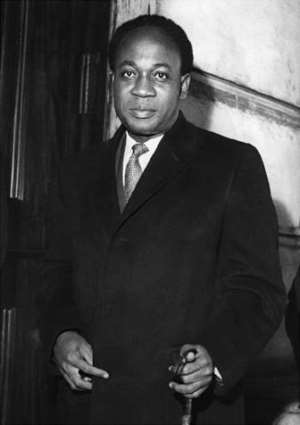
Influenced probably by the life and works of Osagyefo Dr Kwame Nkrumah, The regimental but philosophical in writing, army officer explains that nature's law is that natural resources are raw materials that must be exploited and processed into useful products for our benefit. This he says requires knowledge and skills. Thus as human beings, he argues, we [men and women] are also raw resources that must undergo self-development and become creators. "We must develop by acquiring knowledge and the practical application of that knowledge so that we have capacity to exploit our [own] natural resources and have dominion over everything nature has created," he says (Ibid)
This explains that our society known for its seasonal bumper harvest, stocking in times of plenty seems prudent. But it is hard to believe whether our governments had been doing enough to bring this about. Every bit of our culture is riddle with festivals that have been confined to hooting hunger and chanting tribal war victories. Yet, without a mummer of protest against political and social unrest that it gives rise to. We still hold up a mirror to this idea, as positive tradition? Yes, we must blame bribery and corruption for our naked "ethnic suspicions" and injustices that hover around us. To use a familiar word, lack of defined state policy direction has also been the cause for ambiguity- that is really to blame for inequities that blind and launches many of us abroad in search of our (mis) fortunes?
Although our history has it that in the prosperous 1950s and the early 1960s, Ghana- a shining trigger of Africa, shelled not only thousands of migrant workers from “impoverished” cousins like Benin and Upper Volta but also gave save-haven to future leaders of giant nations like Nigeria and Southern Africa. But as friends turned foes and jobs become scarcer, these guests of ours found themselves less welcome. And like most other countries, the government of the CPP- under the leadership of Dr Nkrumah, was held responsible as our homeland's economic future was haunted by fear and uncertainties.
The result is on the table. After nearly four decades governments and civil society as a whole have been unable to develop institutions or political personalities strong enough and popular enough to direct our national affairs. This we may probably say is just one symptom of Ghana's self-rule deficit. The principle of independence by republican mandate- it appears has gradually being displaced by tried-and-trusted custom of tribal hereditary rule, which remains common with most “saviours” who have come and gone.
In this context, we often think ours is a lost opportunity- let's face it- the infrastructure is appalling, the people are made poor- our governments acknowledge this. And yet, most of us talk about 'golden oldies' when describing music from the old good days. But the meaning of gold, according to Duncan Brooker, a London-based DJ, should be perhaps been taken more literally as the economic potential of both new and old African music has yet to be fully recognised (BBC Focus on Africa Magazine, Apr. - Jun. 2002, p.56).
Thus we are grown now, facing the realities ourselves- so let us discover how the old-fashioned Osagyefo has become the fashionable. Unlike in the past, where leaders such as Dr Nkrumah saw music as integral to Ghana's promotion, by travelling with either the E. K.'s Band or Uhuru Dance Band, Africa leaders and those connected to the promotion of the arts in Africa, according to Brooker, have failed to develop and reassess such a valuable and renewable commodity. For example, The World Bank alone, in the words of Brooker, has designed over $300 million a year to arts and cultural programmes in the continent, but non of the countries that are entitled to the money have claimed it (Ibid).
In Ghana, despite our leaders' rhetorical subscription to values abroad, there seem to be a set of untapped interests- political, economic and even moral- to which one could say they could lay claim and which might yield political dividends at home. Faced by all these problems, one might ask whether this country will survive in its development goals at all. Yes, the crows always come home to roost, as an old saying goes. So after taking a closer look at our current political dispensation, we may exclaim optimistic about the future.
But Ghana, with only a few years old from independence, is the roots of glorious empires still not running deep? It shouldn't be a real shock, though, as our historical past is littered with infamous alliances, which even today, it seems, the issue is still not resolved? Yes. But perhaps the greatest threat to our future is the disheartening possibility that whilst most of us might be yearning for the restoration effective public services, through the revalidation of the machinery of the state planning, our governments might rather prefer buying the plan abroad without due consideration to local architects, draughtsmen and women. We therefore, present to our generation the Seven-Year Development Plan of 1963, which of course, we have to read it through 2006 political and economic spectacles.
THE DEVELOPMENT PLAN- [FACTS TO REMEMBER]
Nervous to promote the economic advancement of Ghana, the CPP- controlled Government launched a Seven-Year Development Plan in 1963 planned to be carried out between then and 1970. The Government intended not only at transforming Ghana from an agricultural to an industrial community but also hoped to drive the state into a socialist society.* [We must remember, this was and, is still our strength?]
In the industrial area the objectives of the development plan were as follows:
(i) To produce so far as was possible, Ghanaian substitutes for those manufactured goods, which formed part of Ghana's imports.
(ii) To process and manufacture before exportation, agricultural and mining commodities which were currently being exported in an unprocessed state.
(iii) To expand the building materials industry and develop other basic industries in the area of metals and chemicals.
(iv) To make a start in the field of machine industries, electronics and the manufacture of electrical equipment.
(v) To develop industries that were relevant to the development of other African countries.
It was estimated that by 1969 the fallowing quantities of commodities would be produced:
Paper 25,000 tons Shoes 2,000.000 pairs Cotton 22milllion square yards Sugar 100,000 tons Cement 600,000 tons
To achieve these ideals, the Administration designed to control the economy of Ghana from the centre. * [With our huge human and natural resources, today, would we have democratised through the Internet? See, US' argument on China's democratisation?] It was expected that by about 1983 the state would have been completely transformed into a socialist community where want would be unknown.*
In a pragmatic and determined manner, the Government fixed a total investment of 1,016.5 million, depreciation inclusive. This amount was to be realized from the following estimates:
Direct investment by the Government: £335.3 million Private investment without Government participation: £269.3 million Government's share of the joint investment by both Government and private investors in industry and transport: £147.7million Private investment with Government participation: £126.6 million.
The plan aimed at an annual economic growth rate of 5.5 per cent* and hoped to provide direct employment for some 200,000 new workers* and indirect employment for a further 300,000. * It should be noted that the total population of Ghana shown by the 1966 estimate was 7, 945,000******* [Co-incidentally, it seems our expected economic growth remains the same, where Ghana, with some 20 million effective population?]
The Seven -Year Development Plan was the work of the five special bodies set out below:
(1) The National Planning Commission. Appointed by the Government and consisting of Ministers of State and representatives of such bodies as the Ghana Trade Union Congress, the United Farmers Council, the Co- operative Movement and the Ghana Women's Movement, the Commission was among other function, charged with the task of examining and evaluating the existing economic projects in Ghana and of formulating the broad outlines of the Development Plan.
(2) The State Planning Committee: Composed of the President who was its Chairman, Ministers of State, the Executive Secretary of the CPP, professional experts and some other members, the Committee was charged with the duty of working out the details of the plan. It had power to give directives to the Ministries, Public Corporations and other bodies engaged in the economic development of Ghana.
(3) The Budget Committee: This Committee was composed of the Minister of Finance who was Chairman, the Deputy Governor of Bank of Ghana, the State's Chief Statistician, the Executive Secretary of the National Planning Commission and the officials of the Ministries of Trade and Industry. It assumed the three- folds duty of considering the ways of raising Government's Revenue, examining Government expenditure in relation to the plan, and of making recommendations to the State Planning Committee.
(4) The Foreign Exchange Committee: With the Governor of the Bank of Ghana as its Chairman, and had the duty of drawing up annual budgets of imports and exports, making recommendations to the State Planning Committee and adjusting foreign exchange rates. (5) The State Management Committee supervised the management of all the forty-seven Government Corporations* (now?) and drew up annual working programmes for them.
To ensure the smooth and efficient working of the State Planning machinery, the activities of these five Committees were thoroughly co-ordinated. Admittedly, by the middle of the decade the CPP Government was left with a badly depleted reserve.* However, as our learned Brother Francis Adigwe, points out, whatever may have been the shortcomings of the CPP-controlled Government, it must be conceded that it achieved considerable economic progress within a relatively short span of time.* [Source:] (Adigwe, F., Essentials of Government for West Africa, (1975) UPL, ISBN 0 19 575243 0, pp136-38)
It is worth mentioning that the development Plan, according to our learned Author, who at the time of writing this book, was a Solicitor and Advocate of the Supreme Court of Nigeria, was abolished by the Military Government in 1966 as it hoped to worked out a new plan within two years (Ibid). Whether this major change in direction achieved its goals or not, we think, must be left with history to judge. However, it could be suggested, for example, that even after this shake-up, which one might be tempted to described as the genesis of our long search, given the fact that development is top on agenda in our era, is the protection of national assets not to be part of sustained drive on poverty eradication?
Is our chronic dependence on imports seems not to be making us economically vulnerable to high unemployment in all levels of our society? And can we not choose another route. We could, perhaps, all be inspired by the compelling “Charter of Redemption”- as declared by General Acheampong /Akuffo Supreme Military Council. This includes total manpower development and deployment. By this, we mean that we need to launch a new National Development Plan, which facilitates bridges from the old to the new. Of course, there are real reasons to worry about all these challenges. True, some sceptics might even be right in arguing that these are simply over ambitious dreams, although it remains an issue?
But can we run away from it unresolved? For the sake of posterity, probably, No. As British Philosopher Adam Ferguson points out, “The individual, in every age, has the same race to run from infancy to manhood. And every infant or ignorant person now is a model of what man was in his original state. He enters his career with advantages, peculiar to his age. But his natural talent is probably the same. They build on foundation laid by their ancestors. And in succession of years, tend to a perfection in the application of their faculties to which many generations must have combined in their endeavours.” (History of Civil Society, 1767). Yes, we are not ignorant, so we agree that we have a historic duty.
For Ghana to avoid yet another embarrassing failure or succeed and command credibility and genuine support for its development drive, we must be bold and fair to eradicate old structures and ideas that have lost their ability to inspire loyalty and democracy. Which will also help withstand over-dependence and external influence and manipulation? Asante Fordjour Student, Department of Law, Governance and International Relations, London Metropolitan University, London, UK.
 We’ll no longer tolerate your empty, unwarranted attacks – TUC blasts Prof Adei
 Bawumia donates GHc200,000 to support Madina fire victims
 IMF to disburse US$360million third tranche to Ghana without creditors MoU
 Truck owner share insights into train collision incident
 Paramount chief of Bassare Traditional Area passes on
 Two teachers in court over alleged illegal possession of BECE papers
 Sunyani: Victim allegedly shot by traditional warriors appeals for justice
 Mahama vows to scrap teacher licensure exams, review Free SHS policy
 Government will replace burnt Madina shops with a new three-story, 120-store fac...


