




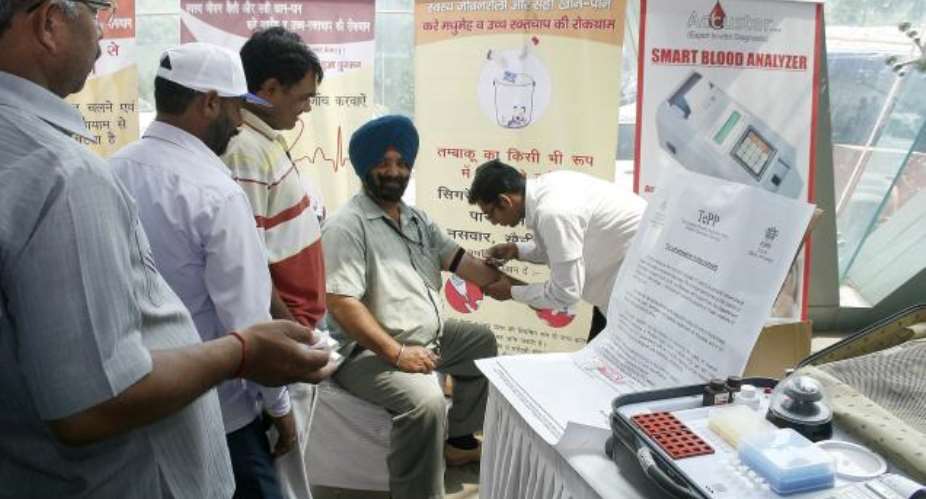
Amidst the ever increasing population of people with kidney diseases in the country, the Provost, College of Health Sciences, Osun State University, Professor Olutayo Alebiosu has said the two major enemies of the kidney were diabetes and hypertension.
Professor Alebiosu, in an inaugural lecture he delivered at the university entitled, “Emerging Epidemic of Non-communicable diseases- conspiracy against the Kidney” described hypertension and diabetes as principal “accomplice” in the development of chronic kidney disease.
The don remarking that chronic kidney failure was a devastating medical, social and economic problem for patients, their families and the country as a whole, stated that community studies put kidney disease in adults between 19 and 30 per cent.
He pointed out that “chronic kidney disease continues to affect people in their productive years and most patients continue to die due to their inability to sustain dialysis treatment in view of the high cost.”
Aside stating that well-recognised risk factors for chronic kidney disease include diabetes, hypertension, and increasing age, family history of kidney disease, cigarette smoking, exposure to heavy metals such as lead and the use of herbal remedies, Professor Alebiosu mentioned that in Nigeria long term ingestion of herbal concoctions, abuse of pain killers, obesity and bleaching lotions, soap and creams were some socio-cultural practices linked with development of kidney disease.
The don stated that considering the damage caused by hypertension on the heart, brain, kidneys and blood vessels, there was the need for physicians to pay more attention to ensure lesser damage to these important body organs in hypertensive patients.
In addition, the expert recommended that pre-employment urine screening and health education will go a long way in educating, increasing awareness and preventing the deleterious complications of uncontrolled hypertension, diabetes and glomerulonephitis
Professor Alebiosu also declared the urgent need to implement prevention strategies that include health education policies geared towards adoption of healthy lifestyle measures that prevent or delay the onset of diabetes and hypertension; strengthening of the health care for people with non-communicable diseases; and integration of non-communicable disease prevention in national programmes for sustainable development.
He stated: “much of the burden of non-communicable diseases such as hypertension and diabetes can be averted through primary prevention and the complementary identification of early stage disease, combined with effective treatment of existing conditions.”
Professor Alebiosu warned:”Unless concerted action is taken, the rising financial burden of non-communicable diseases will reach unmanageable levels.”
 Former MASLOC CEO Sedina Tamakloe returns to Ghana after extradition to serve 10...
 Tension in Birim North as angry NDC youth attempt to disrupt cooperative mining ...
 One dead, several injured in tipper truck and fuel tanker crash on Accra–Tema Mo...
 How 70-year-old building was finally demolished over fear of collapse in Osu
 Minority MPs thank Afenyo-Markin for capacity-building programme in Canada
 Ghana has everything needed to prosper yet graduates remain unemployed — Dr Step...
 June 9: Cedi sells at GHS12.50 on forex market, GHS11.85 on BoG interbank
 Stephen Amoah advocates mixed market economy to tackle rising cost of living in ...
 KMA to reintroduce enhanced ‘Samansaman’ sanitation enforcement system from July...
 Nyinahin Catholic SHS teacher seen fighting female student in viral video arrest...


