




By Aderanti Adepoju
Human Resources Development Center, Nigeria
1. Introduction: framing the issue with a key question
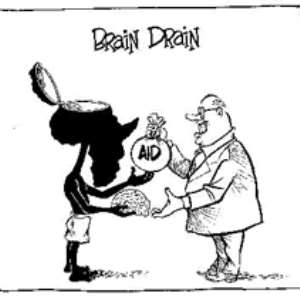
Migration of skilled professionals to promote development is a global issue, and is of concern to both poor and rich countries, albeit from opposite perspectives. It is also a contentious issue because of the diversity of stakeholders and interest groups – with conflicting agendas. Rich countries need highly skilled professionals for knowledge-intensive economic activities, and, because of local shortages, these people must be recruited from poor and emerging market economy countries. For poor countries – especially Africa and Asia – the loss of specialists in IT, and in engineering and medicine, has impacted far beyond the numbers involved. This brain drain migration process denies these poorer regions the optimum utilisation of the skills of those now in diaspora.
Specialists in new technologies, engineering, medicine and healthcare are a small proportion of the emigrants from, for instance, sub-Saharan Africa, but they cost the region in a variety of ways and far beyond their numbers – not least because of the lost opportunity for the training of replacement cohorts: tertiary educational institutions lack experienced leaders to train those required for a variety of development activities and to undertake research for development. The large exodus of doctors has impacted negatively on the training of new doctors and on the quality of health services delivery and millennium development goals. A very similar scenario holds for the education sector, and other development agendas in poor countries are being compromised by the emigration of their scarce skilled manpower. A major challenge now facing sending countries is twofold: how to attract qualified nationals back from the OECD countries, and how to utilise effectively the rare skills of those remaining, for national development.
This paper provides a basis for discussions on how can we ensure that migration of highly skilled workers benefits both destination countries, in terms of matching labor demand and supply, and countries of origin, in terms of development. What sorts of joint approaches between public and private sector can help ensure a better balance of interests and results? And what measures do civil society organizations (CSOs) propose to tackle brain drain?
2. The key issues: the scope of the 'problem'
In both rich and poor countries, economic and demographic factors underpin current debate and policy on the emigration of highly skilled professionals. To use Africa as an example: more than 100 000 sub-Saharan Africans living in Europe and North America are professionals – ironically, about the same as the number of expatriate professionals employed by aid agencies as part of the overall aid package – at a cost to the region of about $4 billion .
The overall magnitude and impact of the brain drain is captured in a UN report which estimates, for instance, that 'over the next decade sub-Sahara Africa will need to train an additional 1 million health care professionals' concluding that 'The leaders must find ways to retain more of the doctors, nurses, pharmacists and laboratory technicians it currently produces.' The report blames rich countries for contributing to the crisis by creating a 'fatal flow' of health professions from the region .
Sending countries' policies and potential migrants' perceptions often contribute to this crisis. In the Philippines, for example where the government and the private sector have each played a key role in the labour export process, the perceptions of the international labour market have also been intricately interwoven into the educational and work aspirations of Filipinos. Anticipating future demand for nurses, nursing schools have expanded dramatically with a remarkable increase in student enrolment in nursing programmes in recent years. Indeed, doctors are also studying to be nurses to enhance their chances of working abroad.
At the micro level, migrant professionals are able to enhance their skills, as well as their income and living standards and those of their families, but many face problems of diploma accreditation, and are therefore often de-skilled through lack of appropriate employment, resulting in brain waste. Thereby, remittances, no matter how large or how desperately needed, do not compensate for the loss of the contribution of skilled emigrants through training and transfer of expertise to younger cohorts at home. So the loss at the macro level often has a long-lasting impact on development in both home and receiving countries.
3. Current policies and their flaws
The 'battle for brains', or 'talent hunt', is propelled by the dynamics of knowledge-based economies, and based on the possibilities offered by technology and the globalisation of economic activities. In many developed economies, highly qualified labour – for knowledge-intensive activities – is being recruited from poor and emerging market economy countries.
Examples abound. For Nigerians and Zambians, highly skilled professionals constitute about a half or more of expatriates living in OECD countries; 20 per cent of the nationals of Benin, Tanzania, Zimbabwe, Cameroon, Lesotho, Malawi and South Africa in the diaspora are highly skilled professionals; more Ethiopian doctors are practising in Chicago than in Ethiopia; over half of Malawian nurses and doctors have emigrated, and more Malawian doctors practice in Manchester, UK, than in Malawi; 550 of the 600 Zambian doctors trained in medical school over the last decade have emigrated; Ghana has lost 60 per cent of its doctors to Canada, Britain and the USA; 75 per cent of Zimbabwe's doctors have emigrated since the early 1990s, and half of its social health workers have relocated abroad since 2001. About 23 000 university graduates and 50 000 executives leave sub-Saharan Africa annually – and about 40 000 of them with PhD degrees now live outside Africa.
Unilateral policies: Migrations such as these have recently become less problematic for qualified and skilled workers from the developing world to rich countries which have adopted (unilateral) policies to proactively and aggressively attract and/or recruit such professionals. Germany's new migration law facilitates the recruitment of specialists in the technology sector by offering them permanent residence. France's new bill on immigration and integration focuses on migrants with specific talents. Britain's points system offers highly-skilled migrants a residence permit for a maximum of five years. The Netherlands government's 'inviting policy' has simplified the admission, from developing countries, of highly qualified professionals on a points system – based on personal talents, age, education and work experience. Africans with professional, technical and managerial skills have been enticed by the 'diversity visa' (or Green Card lottery) programme, to enter the USA. The private sector also plays a role: many American and European companies are for instance recruiting graduates from India's top business-schools who are willing to begin their careers at lower entry-level positions than their locally available counterparts, and are able to function in multicultural environments, as most grew up speaking two or more languages.
Bilateral agreements: Some bilateral agreements can also contribute to the brain drain problem. The Japan-Philippines Economic Partnership Agreement bilateral trade agreement including a section based on GATS mode 4 approach on the free movement of natural persons is one example of encouraging emigration of highly skilled migrants.
Highly skilled professionals were – and continue to be – attracted by the relatively high salaries and better living conditions in rich countries. Rich countries also engage in direct recruitment of professionals by means of unfair competition: they decide how many workers to recruit and from where, and select the best workers in the international market. Poor regions which lose their 'best and brightest' pay the price of producing the human capital for use by the rich countries, and simultaneously lose a significant proportion of the wealth needed to establish a foundation for future growth.
Policies and initiatives: These issues are finally starting to attract the attention of policy-makers. In 2004, an International Code of Practice on the Ethical Recruitment of Health Workers was drafted by the UK and South Africa, based on the British Commonwealth's code of practice. The UK was the first to produce guidelines on international recruitment based on ethical principles, and the first to develop a Code of Practice for Employers in 2001 . . The UK is an exception amongst rich countries in having a policy of not actively looking for healthcare workers in deprived countries to staff their National Health Service (NHS). A list of countries, including all those in sub-Saharan African, has been drawn up by DFID and the Department of Health, to ensure the NHS does not “poach” doctors and nurses that are needed elsewhere. In addition, the Department of Health has secured a groundbreaking agreement for this code to apply to many private healthcare providers so they too do not recruit staff from the world's poorest countries.
Another example is the Pacific Island Countries, an area from which between 5 and 15 percent of doctors and nurses emigrated between 2000 and 2004. In 2005, the ministries of health of these countries – in partnerships with other government sectors, training institutions, recipient and destination countries, and international agencies (including WHO) and development partners – developed a Pacific Code of Practice for the Recruitment of Health Personnel, designed to better manage the migration of health workers to Australia, New Zealand and the Pacific Rim countries. The problem with ethical codes of conduct lies, however, with their enforcement. To be effective, these have to be at the minimum of a regional scope and/or have a global remit, and also require international standards and monitoring.
Some international companies have taken, from their side, steps against 'brain drain'. For example BP plc, in Tbilisi, Georgia include in their agreements that set out the framework of requirements for their operations on the projects, that they give preference on the use of local labour in the construction and operating phases. They also implemented a programme in 2005 to ensure that all long-term employees had appropriate development opportunities and launched a Georgia Leadership Development Programme providing briefings, training, carreer planning and succession planning. They have further started development planning to help ensure that the long-term BP Georgia positions are ultimately filled by Georgian Nationals
Other initiatives to help enhance positive impact of highly skilled migration include the South Africa–UK Memorandum of Understanding on the Reciprocal Educational Exchange of Healthcare Concepts and Personnel of October 2003 that created a structure for the reciprocal exchange of skills and knowledge, and facilitates the recognition of qualifications of South African health professionals. Under a hospital twinning programme, managers share experiences and best practices. Other good practices are the circulation of competencies programmes organized by the IOM through the Migration for Development in Africa (MIDA) programme and in association with UNDP, the Transfer of Knowledge through Expatriate Nationals, later replaced by the Return of Qualified African Nationals scheme. The MIDA project encourages Africa's diaspora living in EU countries to share their expertise in medicine, agriculture and so on and to invest and participate in the development of their country and aims to build relationships between host countries and countries of origin, to foster the positive effects of migration for their mutual benefit, and to limit the negative effects of brain drain, and as a form of co-development.
External factors are also to blame for the negative impact of government policies on exodus of skilled professionals. The fiscal policies imposed by international financial institutions (IMF, World Bank) that restrict provision for health and education by poor countries often have adverse effect on the brain drain phenomenon. This is the case in Kenya where, for instance, in the face of shortage of 5.000 nurses in public facilities, 6.000 nurses are either unemployed or working outside the health sector because of a freeze on recruitment. It is imperative for governments to improve working conditions and enhance productivity through higher remunerations, revamp dilapidated equipments and infrastructure and promote workers rights in order to retain highly skilled workers.
Brain circulation: In spite of the above, there is another change taking place. In many regions of the South, brain drain is being gradually transformed into brain circulation. Highly skilled professionals, pressured to leave their countries by uncertain economic conditions, have found China, India, Taiwan, South Africa and Botswana, attractive alternatives to Europe, North America and the Gulf States, thus transforming the erstwhile brain drain from Africa, into brain circulation within Africa, and other regions of the South. The acute shortage of doctors from South Africa following the emigration of white doctors shortly before majority rule in 1994 forced the government to recruit foreign doctors, especially from Zimbabwe, Democratic Republic of Congo (DRC) and Cuba, the latter to work in the under-served rural areas. In Rwanda and Burundi, over a quarter of the teachers come from the DRC.
Replacement migration: The flow of migration is not unidirectional. Another phenomenon is “replacement migration”. In the past five years, Britain and Germany, in particular, have experienced an outflow of professionals, mostly to Ireland, USA and Australia, fleeing what they perceive as declining living conditions: relatively low salaries and higher taxes, rising inflation, and steep mortgage payments for first-time house owners. Concurrently their counterparts from Eastern Europe are occupying the vacuum in their trail. Polish health workers who have recently migrated in large numbers to Sweden are now being replaced by Moldovan health workers, thereby shifting the brain drain problem to other countries as well.
4. Highly Skilled migration and the gender dimension
Globalisation has introduced new labour market dynamics, including a demand for highly skilled health care workers. A general increase in autonomous female migration has been recorded: no longer confined by national borders, professional women – both single and married ¬– now engage in international migration. A significant proportion of these women are educated migrants who move independently to fulfil their own economic needs; they are no longer simply joining a husband or other family member.
Married women now leave their spouses behind with the children, who, in a reversal of responsibilities, are looked after by their fathers or by other female members of the family. The remittances these women send home are a lifeline for family sustenance. This phenomenon of independent female migration constitutes an important change, and indeed can imply a turn-around, in traditional gender roles, creating new challenges for public policy and a role for CSOs in respect of advocacy, and public enlightenment.
Among examples of female professional migrants are the many female nurses and doctors who have been recruited from sub-Sahara Africa and the Philippines and are working in the UK's National Health Service, as well as in private care homes and as domestic servants in the Gulf States. In the UK, nurses and midwives are admitted through the UK Nursing and Midwifery Council (UKNMC). From a trickle recruited in 1998/99, their number rose sharply, with a peak in 2000/2001, and continued to rise steadily (as a result of changes in recruitment codes). A further unknown number were recruited by private agencies to work in care homes for the elderly. In Mexico, too, more women are now migrating independently, mostly to the USA; and since the 1990s, the exodus of Filipino nurses to that country and UK, has intensified. In 2002/2003, for example, 5,593 Pilipino nurses and midwives were admitted to the UKNMC. By 2005/2006, 3,550 such personnel were recruited from India, up from 1,830 in 2002/2003.
Overall, women highly skilled migrants are however in the minority compared to their male counterparts who dominate the IT and business sectors. The exception is for the nursing professionals
5. The role of civil society organisations, private sector, and governments and partnerships
Among the problems faced by all migrants – no less by skilled than unskilled – is lack of basic rights in the receiving country, and an attitude of xenophobia from the general populace. Public discourse, and sentiments and myths about migration in the North, affect whether migrants can be effectively included and integrated into the more 'open' societies. They also affect the ways in which this could happen – hence the critical nature of the role of civil society, and civil society organisations.
As already described, a major problem is the drain of skills from home countries. Business, particularly the professional business sector, benefits from a multinational skilled labour, and as a key stakeholder, is part of the cause of this drain and must therefore develop pragmatic approaches and solutions to the contentious highly-skilled migration from poor countries. The 'world-wide workers' labour database, an internet job site for the Oil and Gas industry, which facilitates the matching of employers and potential employees worldwide could be placed in this context. So also is the BP's Georgia Leadership Development Programme in the United States that provides training, career and succession planning to stem brain drain.
As part of the Corporate Social Responsibility (CSR) function, business must build partnerships with CSOs and governments to match the demand and supply of skills thereby minimising brain waste, promote the human rights of the highly mobile skilled migrants, and help create a conducive economic climate for domestic employment generation, and assist in the return of skills. Lessons learnt from the establishment of the Overseas Chinese Scholars Pioneering Parks and implementation of the IOM's Transfer of Knowledge through Expatriate Nationals project could be useful in attracting back and retaining skilled professionals. Partnerships such as these can fast-track and help sustain initiatives to identify and attract back engineers, medical doctors, professors, scientists, information technologists and other highly skilled professionals – and promote environments to productively utilise their expertise for national development.
As part of actions that could be taken in both sending and receiving countries, CSOs should organise pre-departure sessions, advocacy workshops, check if migrants have relevant documents and monitor the work of recruitment agencies. In recruitment, NGOs can partner with governments on establishing procedures and standards, and on offering services and a relationship with government and migrants that are dramatically more decent, economical, trustworthy and accountable than most private recruitment agencies. Furthermore, recruitment agencies should ascertain that the correct work conditions are in place before they send people to the country of destination, and should also set up cultural orientation programmes. CSOs from countries of origin should work together with diaspora organisations in gathering pertinent information on the conditions in the destination country and should be involved in campaigns to raise awareness.
All strategies to reduce the negative impact of brain drain developed by governments and CSOs should also involve migrants themselves. In the area of healthcare specifically, sustained and successful implementation of any human resources policy requires the support of health workers, more so that their knowledge of local conditions and incentives to stay or leave is critical for effective policy formulation. CSOs can also encourage local governments to institute employment policies in key areas such as health and education and to support measures to persuade the skilled professionals to stay at home and contribute to national development.
Policymakers should consult with trade unions, within a social dialogue framework, in order to ensure that migrants' human and trade union rights are respected. Through the ILO's Tripartite model for consultations approach, for instance, the partners in Ireland have committed to systematic consultations at the national level to deal with issues such as residency status and work permits and developing a code of practice against racism in the workplace. This framework could be used for promoting CSR and monitoring compliance of the private sector (employers and recruiters) with agreed ethical codes of practice that ensure the protection of the rights of skilled migrants . Agreements could be reached to extend union membership and protections to migrant workers, and to use collective bargaining as an instrument to ensure equal rights and treatment of foreign professionals with nationals.
6. Key questions on issues on which civil society actors can have added value
Migration matters should no longer be handled bilaterally; a regional, or even global, approach that harmonises migration policies is required. CSOs should advocate for:
• Openness and transparency and a spirit of co-responsibility by rich countries to help foster local development, reduce poverty and create domestic employment;
• Dialogue and consultation between various stakeholders to discuss common approaches to their migration concerns and interests, to share ideas and to enhance understanding and cooperation in the management of skilled migration;
• Compensation for the brain drain in the form of supporting projects which involve professionals going back to their countries of origin for short periods, to work in special health and education programmes, among others;
• Ethical recruitment of highly-skilled professionals based on multilateral agreements, to minimise adverse consequences on the development of source countries and also to address issues of the haemorrhaging poor countries' scarce skilled manpower resources;
• International standards and monitoring of ethical recruitment code of conduct; even the much-quoted Philippine's skills-export strategy has frequently led to compromising labour conditions imposed by receiving countries – at the expense of migrants' rights.
• Flexible residential rules in rich countries, to give skilled professionals the opportunity for virtual relocation without losing their residence rights; (this is also an issue for discussion in the session on circular migration)
• Support from receiving countries to help cover the investments of the countries of origin in training and education and in revamping the health sector could be achieved – in the form of a 'brain tax'; To reduce the negative impact of highly skilled migration, the primary response of governments and donors must be to support the health systems and the human resource base of developing countries.
• Strengthening linkages with diaspora communities overseas, providing infrastructural facilities and opportunities for overseas nationals to invest in their home countries; promoting active involvement of local communities in developing and implementing reintegration programmes for returnees; and fostering possibilities for investment and entrepreneurship.
Questions for discussion
- What are the impacts of temporary migration schemes on highly skilled migration and development at macro level and micro level?
- Are bilateral / unilateral agreements good or bad? What should be improved? Examples of good practices (and eventually of worst practices)
- What (other) concrete measures do CSOs propose to tackle brain drain?
- What sorts of joint approaches between public and private sector can we suggest to help ensure a better balance of interests and results?
Paper reviewed by:
Nicola Piper (Centre for Migration Policy Research, United Kingdom), Gemma Adaba, International Trade Union Confederation (ITUC)
The views presented here do not represent those of the King Baudouin Foundation.This paper has been prepared by Prof. Aderanti Adepoju on the basis of a concept note developed by the King Baudouin Foundation, and incorporates some of the findings from the online discussions organised in preparation of the Civil Society Day from 14 May to 3 June 2007. This paper has been reviewed by above mentioned persons to ensure that it includes the views of different civil society actors. Its objective is to inform and facilitate the discussions during this first GFMD meeting. It is based on open sources and does not aim to be exhaustive. Any reproduction, partial or whole, of this document should cite the source.
The Civil Society Day is organised at the request and with the support of the government of Belgium. Funding for this event is also provided by the John D. and Catherine T. MacArthur Foundation, the King Baudouin Foundation, the governments of Norway and Sweden, and the Ford Foundation.
 One dead, fire officer hospitalised after bee attack at Quarry Site in Sokode Gb...
 Israel and Iran step back from further strikes after renewed clashes
 Patients stranded as doctors, nurses refuse to see new patients over KATH CEO su...
 Avenor Rural Bank CEO’s house destroyed by fire
 Three arrested in Winneba for illegal mining near GWL water lines
 Two pupils of Alice Elite Academy laid to rest after fatal school bus crash
 Here are areas to be affected by ECG's planned maintenance on Tuesday
 Family of civil engineer killed in alleged military shooting demands justice
 SHS teacher allegedly beats female student over unpaid hostel fees
 Blow to EU defence cooperation as France, Germany abandon joint fighter jet prog...


